Mouth Breathing in Children: Is It Always Due to Adenoids?
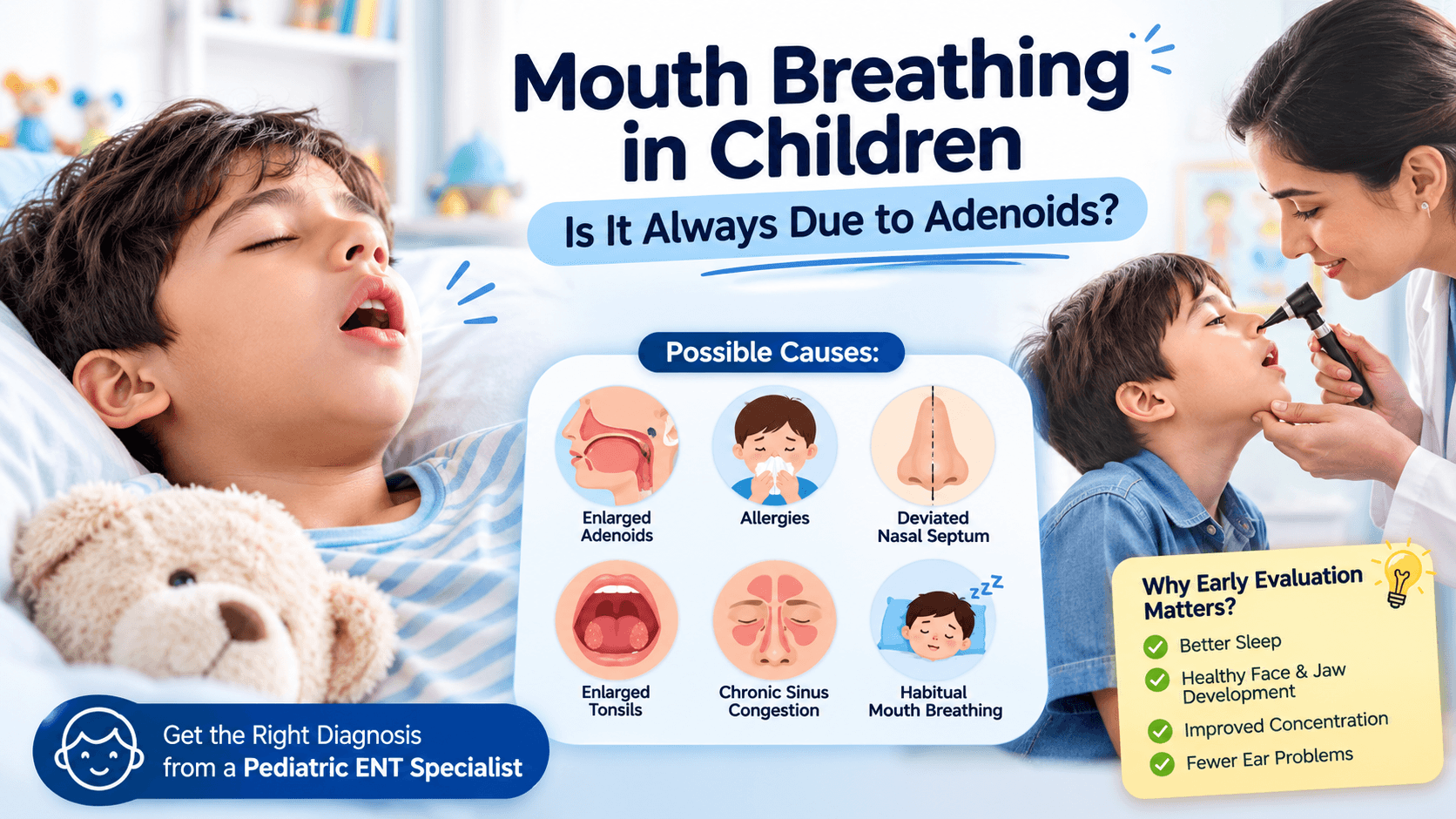
A mother notices her son sleeping with his mouth open every night, waking up groggy despite a full night's rest, and assumes it's just how he sleeps. A teacher mentions he seems distracted in class. Someone suggests enlarged adenoids as the obvious explanation, and the parent starts searching for answers online at midnight. It's a reasonable place to start — but not always the right one.
Is Mouth Breathing in Children Always Caused by Adenoids?
No, not always. Enlarged adenoids are one of the most common reasons children breathe through their mouth, particularly during sleep, but they're far from the only one. Allergic rhinitis, a deviated nasal septum, chronic sinus congestion, enlarged tonsils, and habitual mouth breathing that persists after an earlier blockage resolves can all produce the same sign. This matters because treating adenoids in a child whose real issue is untreated allergies won't solve the problem.
What Mouth Breathing Actually Does to a Growing Face
This isn't just a nighttime habit worth shrugging off. Children's facial bones are still developing, and chronic mouth breathing can influence jaw and palate growth, sometimes contributing to a narrower upper jaw, dental crowding, or a longer facial appearance. It also affects sleep quality — mouth breathing is less efficient at filtering and humidifying air, which can fragment sleep even when a child appears to sleep through the night. Parents often notice the downstream effects first: irritability, poor concentration at school, or a child who seems constantly tired despite enough hours in bed.
The Other Culprits Parents Often Overlook
Adenoids get most of the attention because they're a well-known cause, but allergic rhinitis is just as common in children and often goes unrecognised, especially without obvious sneezing or itchy eyes. Persistent nasal congestion from allergies can make the nose feel blocked enough that mouth breathing becomes the default, even with normal-sized adenoids. A structural issue like a deviated septum, sometimes present from birth or after minor trauma, can do the same. This is why an accurate diagnosis matters more than a quick assumption.
When Adenoids Really Are the Reason
That said, adenoids remain a genuinely common cause, particularly in younger children between roughly three and seven, when adenoid tissue is naturally larger relative to airway size. Signs pointing more specifically toward adenoids include loud snoring, breathing pauses during sleep, a nasal-sounding voice, and recurrent ear infections, since enlarged adenoids can also affect the eustachian tube's function. Dr. Manish Prakash notes that recurrent middle ear fluid in young children is often connected to adenoid size, which is why pediatric hearing loss treatment in Gurgaon (https://www.entgurgaon.com/pediatric-hearing-screening.php) sometimes begins with an adenoid evaluation.
How a Pediatric ENT Tells the Difference
Distinguishing between these causes usually starts with a straightforward exam and a detailed history — how long it's been present, whether it's worse seasonally, and whether snoring or ear infections accompany it. A nasal endoscopy or imaging may directly assess adenoid size when needed, rather than relying on guesswork. This is where consulting a pediatric ENT doctor in Gurgaon (https://www.entgurgaon.com/) becomes genuinely useful, since evaluating a child's airway requires a different approach than assessing an adult's.
What Happens If This Goes Unaddressed
Not every case of mouth breathing needs urgent intervention. But persistent, unaddressed mouth breathing over months or years can compound its effects on sleep quality, facial development, and even behaviour, since poor sleep in children often shows up as irritability or inattention rather than obvious tiredness. This is generally the deciding factor in whether a specialist recommends monitoring, medical management of an underlying cause like allergies, or Child Adenoid Treatment in Gurgaon (https://www.entgurgaon.com/cobalation-adenoidectomy.php) where enlarged adenoids are clearly obstructing breathing.
Making Sense of Next Steps
If your child breathes through their mouth regularly, especially during sleep, it's worth having it evaluated rather than assuming it will resolve on its own or automatically needs adenoid treatment. The right approach depends on what's actually causing it, and only a proper exam can determine that. Dr. Manish Prakash and the team at ENT Gurgaon can help identify the specific cause and guide you toward whatever step, if any, makes sense next.
Frequently Asked Questions
How can I tell if my child's mouth breathing is from allergies or adenoids? Allergies often come with signs like sneezing or itchy eyes, or symptoms that worsen seasonally, while adenoid issues are more often paired with snoring or ear infections. A proper evaluation is the only reliable way to tell them apart.
Does every child with enlarged adenoids need surgery? No. Many children with mildly enlarged adenoids are monitored or managed medically, particularly if symptoms are mild. Surgery is typically considered when breathing, sleep, or hearing are significantly affected. Can mouth breathing correct itself as a child grows older? Sometimes, particularly if linked to adenoid tissue that shrinks with age. Habitual mouth breathing can persist even after the original cause resolves, which is why ongoing evaluation matters.
Is snoring in children always something to worry about? Not always, but frequent, loud snoring or breathing pauses during sleep are worth mentioning to a specialist, since these can indicate airway obstruction worth evaluating.
Can untreated mouth breathing affect a child's hearing? It can, particularly when linked to adenoid enlargement, since this tissue sits near the eustachian tube opening. Chronic blockage can contribute to fluid buildup and temporary hearing changes in children.
Appreciate the creator