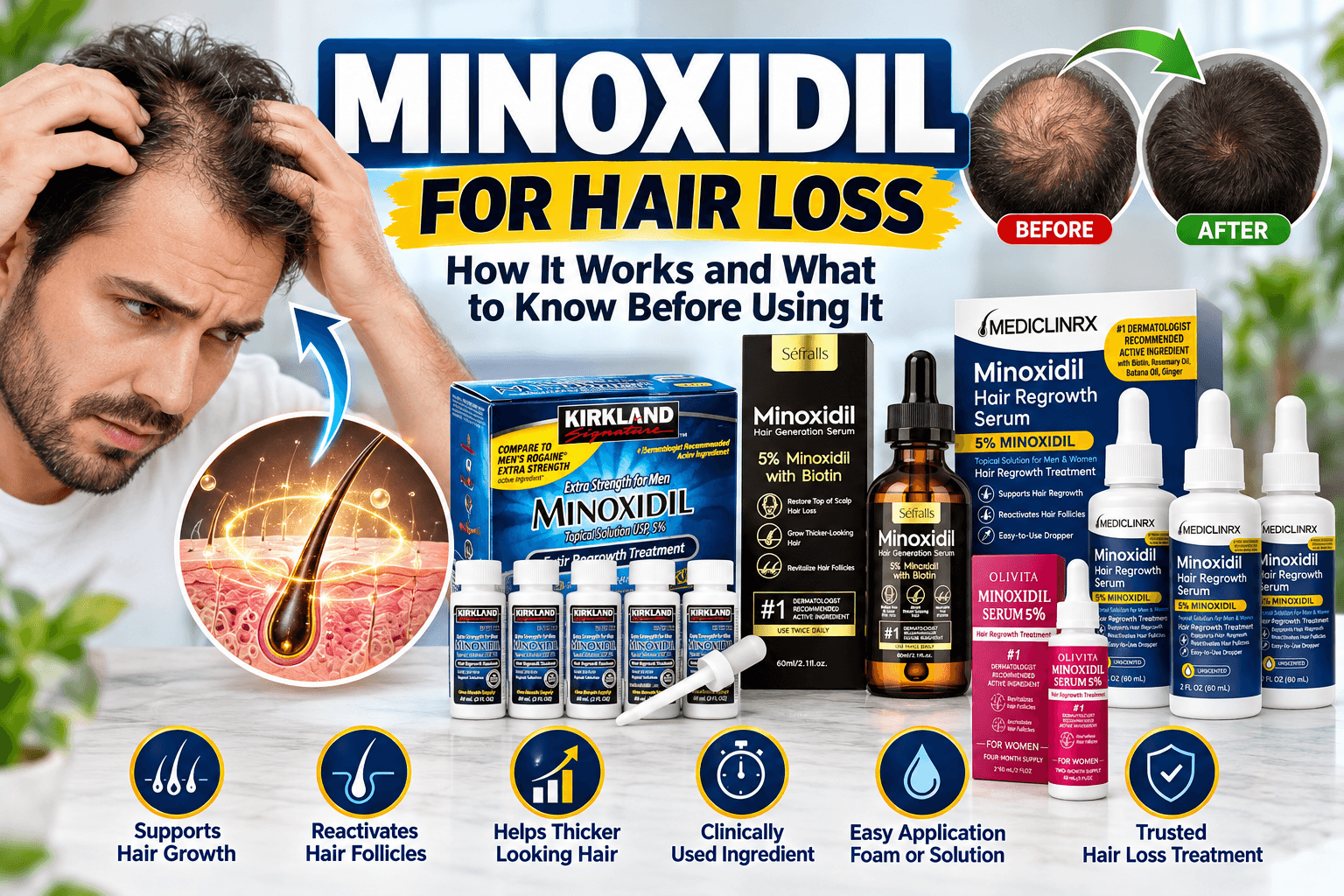
Minoxidil for Hair Loss: How It Works and What to Know Before Using It
Hair thinning and hair loss can happen for many different reasons, including genetics, hormonal changes, certain medical conditions, nutritional deficiencies, stress, and aging. Because the cause is not always obvious, choosing a hair loss treatment can feel confusing.
One of the most widely recognized treatments for certain types of hair loss is minoxidil. It is available in topical forms such as foam and solution and is commonly used as a minoxidil hair treatment (https://www.overshopping.pk/minoxidil-hair-loss-treatment/) for people experiencing thinning hair.
But how does minoxidil work, who may benefit from it, and what should you know before using it?
This guide explains minoxidil for hair loss, how it is typically used, what results may look like, possible side effects, and important questions to consider before choosing a product.
What Is Minoxidil?
Minoxidil is a medication used in topical formulations to help treat certain types of hair loss. It is available without a prescription in many countries and is commonly sold as minoxidil foam or minoxidil solution.
Topical minoxidil is most commonly associated with androgenetic alopecia, also known as pattern hair loss. This type of hair loss can affect both men and women and often develops gradually.
The exact mechanism through which topical minoxidil promotes hair growth is not completely understood. However, it is believed to influence the hair-growth cycle and support follicles in remaining in the growth phase for longer.
When considering minoxidil for hair growth, it is important to understand that it is not a universal solution for every form of hair loss. Sudden or unexplained hair loss may have an underlying cause that requires evaluation by a healthcare professional.
For people researching treatment options, it is also useful to compare ingredients, concentrations, formulations, application methods, and product instructions rather than choosing a product based only on marketing claims.
If you are comparing available options, you can explore a minoxidil hair loss treatment (https://www.overshopping.pk/minoxidil-hair-loss-treatment/) to better understand the types of products available.
How Does Minoxidil Work?
The precise way minoxidil works on hair follicles is still not fully established. One of its known effects is related to blood vessels and potassium channels, and topical use is thought to influence the environment around hair follicles.
For people with pattern hair loss, minoxidil may help follicles produce thicker hairs and may prolong the anagen, or active growth, phase of the hair cycle.
This is why minoxidil hair regrowth is generally gradual rather than immediate.
Hair follicles naturally move through several stages:
· Anagen: The active growth phase.
· Catagen: A short transitional phase.
· Telogen: The resting phase.
· Exogen: The shedding of older hairs.
Minoxidil may help shift some follicles toward or maintain them in the active growth phase. However, individual responses vary, and treatment does not necessarily restore all previously lost hair.
Another important point is that minoxidil generally needs to be used consistently to maintain its benefits. Stopping treatment can result in a gradual loss of the regrown or maintained hair associated with treatment.
Who Commonly Uses Minoxidil?
Topical minoxidil is commonly used by adults with pattern hair loss or certain types of gradual thinning. The appropriate formulation and concentration can depend on factors such as age, sex, medical history, and the specific product.
It may be considered for people experiencing:
· Gradual thinning on the scalp
· Pattern hair loss
· A widening part
· Thinning around the crown
· Receding or thinning areas associated with pattern hair loss
However, not every type of hair loss should automatically be treated with minoxidil.
For example, sudden hair loss, patchy bald spots, scalp inflammation, or hair loss accompanied by other symptoms may require medical assessment first. Conditions such as alopecia areata, thyroid problems, nutritional deficiencies, certain medications, and scalp disorders can require different approaches.
If you are unsure why your hair is thinning, identifying the underlying cause should be part of the treatment decision.
Minoxidil Foam vs Solution
Two common forms of topical minoxidil are foam and solution. Both are designed for application to the scalp, but they can differ in texture, application experience, and ingredients.
Differences in Application
Minoxidil solution is typically a liquid formulation applied directly to the scalp. Depending on the product, it may use an applicator designed to help distribute the medication across the affected areas.
Minoxidil foam has a lighter texture and generally spreads across the scalp without the liquid consistency of a solution.
Some users may prefer foam because it can feel less liquid on the scalp, while others may find solution easier to apply precisely to specific areas.
The choice can therefore come down to personal preference, scalp sensitivity, hair length, application habits, and the instructions associated with the particular product.
Product Format Considerations
When comparing minoxidil products, don't focus only on whether a product is labeled "foam" or "solution." Check the following:
· Active ingredient and concentration
· Application instructions
· Recommended frequency
· Ingredients in the formulation
· Packaging and applicator
· Warnings and precautions
· Whether the product is intended for your age group and type of hair loss
A formulation that is convenient for you may make it easier to follow the recommended treatment routine consistently.
How Is Minoxidil Typically Used?
The exact instructions depend on the product, concentration, and formulation. Always follow the label or instructions provided by a healthcare professional.
Generally, topical minoxidil is applied directly to the scalp rather than the hair itself. The goal is to place the product on the areas where thinning is occurring.
Common considerations include:
1. Apply it as directed. Don't assume that using more will produce faster results.
2. Target the scalp. The medication is intended for the affected scalp areas.
3. Use consistently. Results depend partly on regular use.
4. Allow the product to dry. Follow the product's instructions regarding washing or styling afterward.
5. Wash your hands after application. This helps prevent unnecessary contact with other areas.
6. Avoid contact with the eyes and irritated skin.
7. Don't exceed the recommended amount.
Using more minoxidil than directed does not necessarily accelerate hair growth and could increase the risk of side effects.
If you miss an application, follow the product instructions rather than applying an excessive amount to compensate.
What Should Users Know About Results?
One of the most important things to understand about minoxidil for hair loss is that results take time.
Hair grows through a natural cycle, so a topical treatment cannot usually produce visible changes overnight. Some people may notice changes after several months of consistent use, while others may see less noticeable improvement.
Results can vary depending on:
· The underlying cause of hair loss
· How long hair loss has been present
· The area being treated
· Individual response
· Consistency of use
· The specific formulation
Some people may initially notice increased shedding after starting treatment. This can occur as hair follicles transition through their growth cycle, but not every episode of shedding should automatically be attributed to minoxidil.
If shedding is severe, persistent, or accompanied by other symptoms, consult a healthcare professional.
It is also important to have realistic expectations. Minoxidil hair regrowth may improve hair density or slow progression in some people, but it is not guaranteed to completely reverse baldness.
Most importantly, benefits generally depend on continued use. If treatment is discontinued, hair that was maintained or regrown because of minoxidil may gradually be lost.
Possible Side Effects and Precautions
Like any medication, topical minoxidil can cause side effects.
Some people may experience scalp-related effects such as:
· Irritation
· Redness
· Dryness
· Itching
· Burning or discomfort
· Flaking
Unwanted hair growth on areas other than the scalp can also occur, particularly if the product spreads to the face or other skin.
Rarely, topical minoxidil can be associated with systemic effects. Seek medical attention if you experience concerning symptoms such as chest pain, rapid heartbeat, dizziness, fainting, or significant swelling.
People with certain medical conditions, those taking particular medications, pregnant or breastfeeding individuals, and younger users should discuss appropriate use with a healthcare professional before starting treatment.
Never apply minoxidil to damaged, inflamed, or infected skin unless specifically instructed by a medical professional.
Common Minoxidil Mistakes
Even when someone chooses an appropriate minoxidil treatment, mistakes in application can affect the experience.
1. Using More Than Recommended
More product does not automatically mean faster hair growth. Stick to the recommended amount.
2. Applying It Mainly to the Hair
Minoxidil is intended for the scalp. Applying it primarily to the hair shaft doesn't target the follicles effectively.
3. Expecting Immediate Results
Hair growth takes time. Evaluating the treatment too quickly can lead to unrealistic expectations.
4. Using It Inconsistently
Skipping applications frequently can make it harder to achieve or maintain the intended effect.
5. Stopping as Soon as Hair Improves
Improvement does not necessarily mean the underlying tendency toward hair loss has disappeared. Continued use may be necessary to maintain benefits.
6. Ignoring the Cause of Hair Loss
Not all hair loss is pattern hair loss. If the diagnosis is uncertain, treating without understanding the cause may delay appropriate care.
7. Getting Product on Unwanted Areas
Careful application and hand washing can help reduce accidental exposure to the face and other areas.
Questions to Ask Before Choosing a Minoxidil Product
Before buying a product, consider asking the following questions:
What type of hair loss do I have?
Minoxidil is not designed for every cause of hair loss.
Which concentration is appropriate for me?
Different products may have different concentrations and instructions. A healthcare professional can help determine what is appropriate.
Should I choose foam or solution?
Consider application preferences, scalp sensitivity, ingredients, and convenience.
How often should I apply it?
Follow the exact instructions for the product you are using.
How long should I use it before evaluating results?
Hair growth is slow, so give treatment an appropriate period unless you experience concerning reactions.
What happens if I stop?
Hair maintained or regrown through treatment may gradually be lost after discontinuation.
Could another condition be causing my hair loss?
If your hair loss is sudden, patchy, severe, or unusual, professional evaluation is important.
When comparing minoxidil products, also check the packaging carefully and purchase from a reliable source. Verify the active ingredient, concentration, instructions, expiration information, and storage requirements.
FAQ
Is minoxidil effective for hair loss?
Minoxidil can help some people with certain types of hair loss, particularly pattern hair loss. However, results vary and it does not work equally well for every cause of hair loss.
How long does minoxidil take to work?
Visible improvement generally takes time. Some users may notice changes after several months of consistent treatment. Individual results can vary.
Can minoxidil regrow completely bald areas?
Minoxidil may help improve hair density in suitable candidates, but it cannot guarantee complete regrowth of areas that have been bald for a long time.
Is minoxidil foam better than solution?
Neither format is universally better for everyone. Foam and solution differ in texture and application experience. The best choice depends on the product instructions and individual preferences or sensitivities.
Does minoxidil cause shedding?
Some users may notice increased shedding when beginning treatment. Because shedding can also have many other causes, significant or persistent hair loss should be discussed with a healthcare professional.
Can women use minoxidil?
Certain topical minoxidil products may be used by women for appropriate types of hair loss. However, product labeling and precautions vary, so women should follow the relevant instructions and seek professional advice when appropriate.
Do you have to keep using minoxidil?
Minoxidil generally needs to be continued to maintain benefits. If treatment is stopped, hair that was maintained or regrown during treatment may gradually be lost.
Can I use minoxidil for thinning hair?
Minoxidil may be an option for certain types of thinning hair, particularly pattern hair loss. However, determining the cause of thinning is important before selecting a treatment.
Final Thoughts
Minoxidil for hair loss is one of the better-known topical approaches for managing certain types of gradual hair thinning. It is available in formats such as foam and solution, and consistent use is an important part of treatment.
However, choosing a minoxidil hair treatment should involve more than simply selecting the first product you find. Consider the cause of your hair loss, product concentration, formulation, application instructions, possible side effects, and realistic expectations about results.
If your hair loss is sudden, severe, patchy, or accompanied by scalp symptoms, consider speaking with a dermatologist or other qualified healthcare professional before starting treatment. Understanding why hair loss is happening can be just as important as choosing a treatment.
Learn more about shampoo and conditioner: https://www.overshopping.pk/hair-loss-treatment-baldness-solutions-pakistan/ (https://www.overshopping.pk/hair-loss-treatment-baldness-solutions-pakistan/)
Appreciate the creator