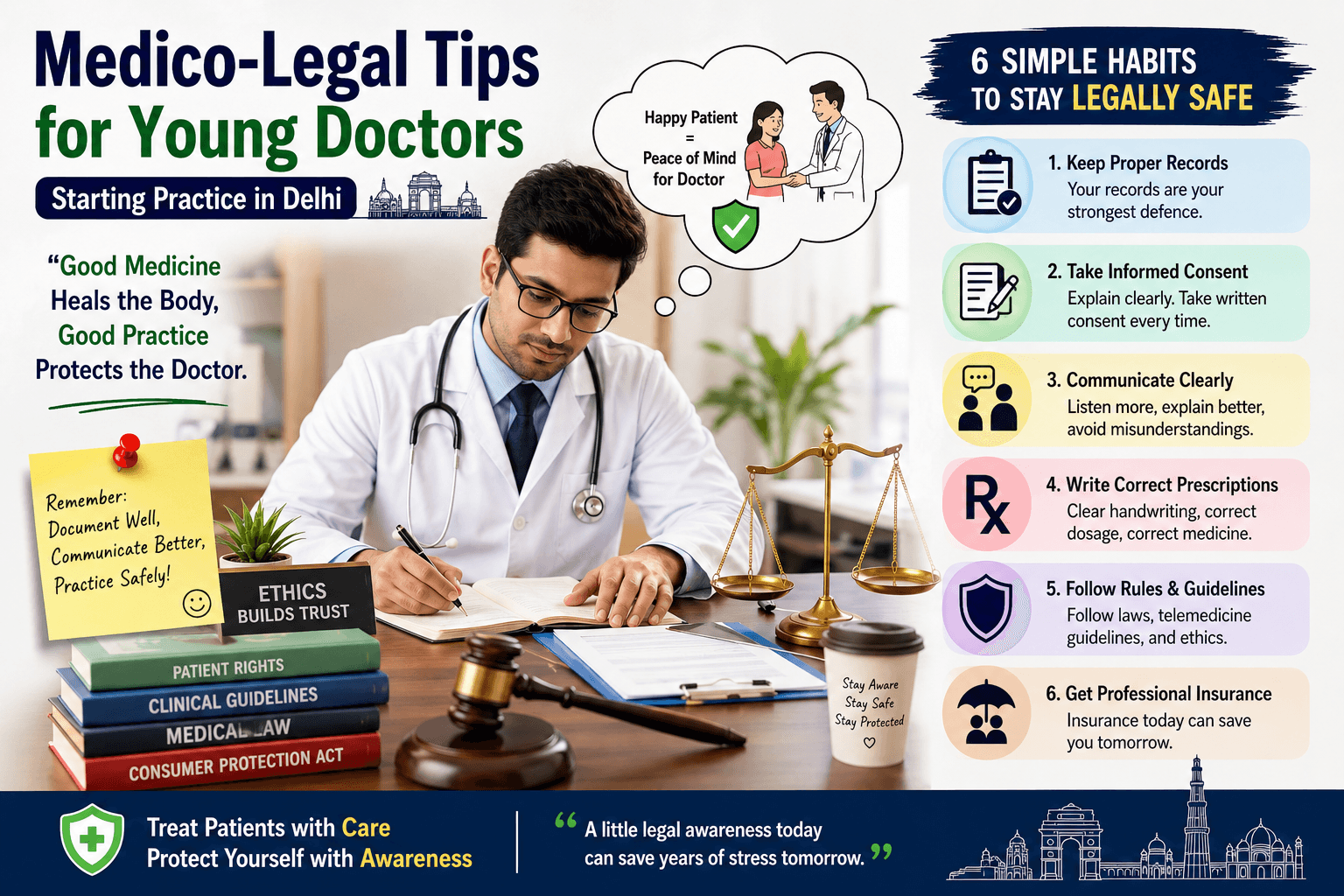
Medico-Legal Tips for Young Doctors Starting Practice in Delh
Introduction
Starting your medical career feels exciting. After years of study, training, exams, and hard work, finally becoming an independent doctor is a proud moment. But along with treating patients, young doctors also need to understand one important thing — medico-legal safety.
Today in Delhi, patients are more aware of their rights. Even small misunderstandings can sometimes become legal complaints. Many young doctors focus only on medical treatment and forget about documentation, communication, and legal protection.
According to Dr. Vimalkant Goyal, doctors can avoid many legal problems by following a few simple habits from the beginning of their practice.
If you are looking for guidance from a Medico legal consultant in Delhi, this blog will help you understand medico-legal safety in very simple and practical language.
Think of medico-legal awareness like a safety helmet for your medical career — you may not need it every day, but when problems come, it protects you.
Common Causes of Medico-Legal Problems
Many legal problems happen because of small mistakes, not because the doctor is bad.
Let’s understand the common reasons.
1. Poor Documentation
Imagine treating a patient correctly but having no written proof later.
That is why medical records are very important.
Doctors should always write:
Patient history
Symptoms
Diagnosis
Medicines given
Advice and follow-up details
Good records can save doctors during complaints or legal issues.
2. Not Taking Proper Consent
Some young doctors quickly start treatment without properly explaining things to patients.
Before surgery, procedures, injections, or risky treatment, always take written consent.
Patients should know:
What treatment is happening
Possible risks
Expected results
Other treatment options
A simple consent form can prevent big problems later.
3. Communication Problems
Sometimes patients become angry not because of treatment, but because they feel ignored.
Busy doctors often speak very quickly or do not explain properly.
Patients trust doctors more when they:
Listen carefully
Speak politely
Explain in simple language
Give patients time to ask questions
Good communication is like free medicine for trust.
4. Prescription Mistakes
Bad handwriting or wrong dosage can create serious trouble.
Doctors should:
Write clearly
Double-check medicines
Mention correct dosage
Avoid confusing shortcuts
Even small prescription mistakes can create legal problems.
5. Ignoring Telemedicine Rules
Online consultation is growing fast in Delhi.
But many doctors still do not fully understand telemedicine guidelines.
Doctors should:
Keep patient records
Verify patient identity
Avoid risky online prescriptions
Follow legal telemedicine rules
6. No Professional Insurance
Many young doctors think legal cases happen only to senior doctors.
But even one complaint can create financial stress.
Professional indemnity insurance helps doctors stay financially protected during legal cases.
How to Fix / Treat Medico-Legal Risks
Keep Proper Records
Your file is your protection.
Whether the patient has fever or serious illness, maintain proper records for every consultation.
Digital records are even safer and easier to manage.
Take Consent Seriously
Consent is not “just a form.”
Explain treatment properly before taking signatures.
When patients understand the treatment clearly, trust becomes stronger.
Improve Communication
Patients remember doctor behavior for a long time.
Even a calm 2-minute conversation can reduce confusion, fear, and anger.
Doctors who communicate well usually face fewer complaints.
Practice Honestly and Ethically
Avoid:
False promises
Unnecessary tests
Fake advertisements
Treating outside your expertise
Honest practice protects both reputation and career.
Learn Basic Medical Laws
Young doctors should know basic rules related to:
Patient rights
Medical negligence
Consumer Protection laws
Clinic registration
Telemedicine
Experts like Dr. Vimalkant Goyal regularly guide doctors on handling these legal responsibilities safely.
Many healthcare professionals also take advice from a Medico legal expert in Delhi to understand risks before problems happen.
Ask for Help Early
If you receive:
A legal notice
A patient complaint
A police inquiry
A hospital dispute
Do not panic.
Take professional advice early. Ignoring problems usually makes situations worse.
Expert Tips for Young Doctors
1. Never Change Old Records
Never edit medical records after a complaint.
It can create bigger legal trouble.
Always keep original and honest records.
2. Avoid Overconfidence
Never promise:
“100% cure”
“Guaranteed results”
“No side effects”
Every treatment has risks and limitations.
3. Respect Every Patient
Even difficult patients should be treated politely.
Many legal complaints begin because patients feel disrespected or ignored.
4. Know When to Refer
You do not need to handle every case alone.
Refer patients to specialists when necessary. Timely referral shows professionalism.
5. Be Careful on Social Media
Never post patient photos, reports, or treatment videos without permission.
One social media mistake can damage your reputation quickly.
6. Continue Learning
Medicine changes regularly. Medical laws also change.
Attend workshops, seminars, and medico-legal awareness programs regularly.
Dr. Vimalkant Goyal believes that legal awareness should become a normal part of every doctor’s career growth.
Conclusion
Being a good doctor is not only about giving treatment. It is also about practicing safely, responsibly, and professionally.
Young doctors in Delhi can avoid many legal problems by following simple habits like:
Maintaining records
Taking proper consent
Communicating politely
Practicing ethically
Staying legally aware
Small precautions today can protect your career, reputation, and peace of mind tomorrow.
If you are looking for trusted Medico legal help for medical professionals in Delhi, learning medico-legal safety from the beginning of your practice is one of the smartest decisions you can make.
FAQs
1. Why do young doctors face medico-legal problems?
Mostly because of poor documentation, communication mistakes, or lack of legal awareness.
2. Is written consent really important?
Yes. Consent protects both the patient and the doctor if complications happen later.
3. Can good communication reduce complaints?
Absolutely. Patients trust doctors more when communication is polite and clear.
4. What should a doctor do after receiving a legal notice?
Do not panic or ignore it. Take professional medico-legal guidance immediately.
5. Why are medical records so important?
Medical records work as proof of proper treatment during complaints or legal investigations.
6. Is telemedicine legally safe?
Yes, if doctors follow proper telemedicine guidelines and maintain patient records carefully.
Appreciate the creator