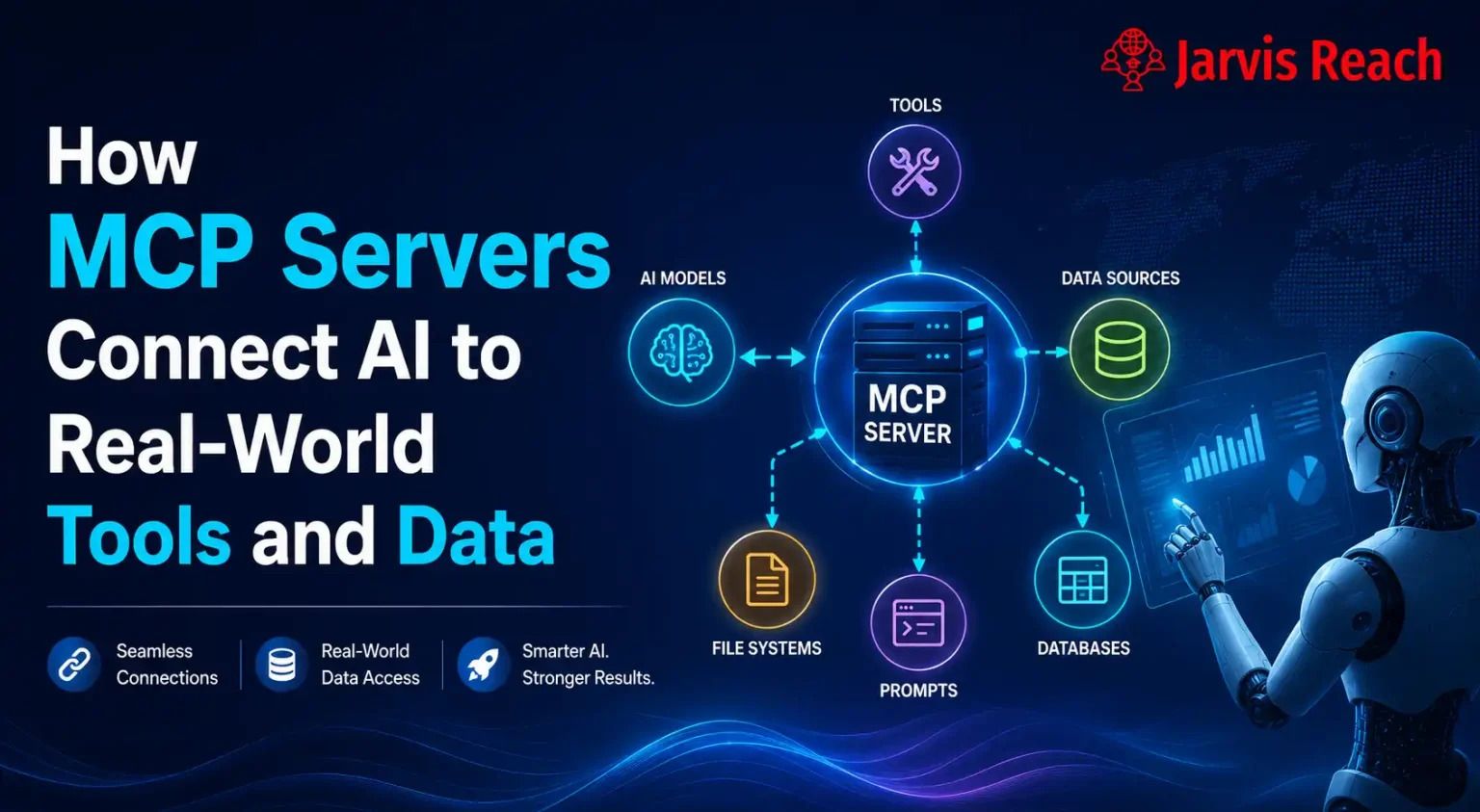
MCP Server: Complete Guide to AI Integration, Enterprise Data, and APIs
As artificial intelligence becomes a core part of modern business operations, organizations need a reliable way to connect AI models with real-world systems. An MCP Server (Model Context Protocol Server) solves this challenge by creating a standardized communication layer between AI applications and external resources such as APIs, databases, file systems, and enterprise platforms.
Whether you're building an AI assistant, deploying intelligent automation, or creating an enterprise AI platform, understanding MCP Server architecture is essential for scalable and secure AI integration.
What Is an MCP Server?
An MCP Server is a service that implements the Model Context Protocol (MCP), enabling AI applications to securely access external tools and information sources. Instead of building custom integrations for every system, developers can use MCP to create a unified framework for communication.
The protocol allows AI models to discover available tools, retrieve data, execute actions, and interact with business systems through a consistent interface.
How an MCP Client Communicates with an MCP Server
Every MCP ecosystem contains two primary components:
MCP Client
The MCP Client is the AI application that sends requests. This could include:
AI chatbots
AI agents
Virtual assistants
Business automation tools
Enterprise AI platforms
MCP Server
The MCP Server processes requests and connects to underlying resources. It retrieves information, executes commands, and returns structured responses to the client.
This client-server architecture simplifies AI integration across complex environments.
Connecting Enterprise Data to AI Systems
One of the biggest advantages of an MCP Server is its ability to connect AI models with enterprise data.
Businesses often store critical information across multiple systems, including:
CRM software
ERP platforms
Customer support tools
Analytics systems
Knowledge bases
Internal documentation
MCP provides a secure bridge between AI applications and these valuable enterprise resources.
SQL Databases and MCP Integration
Many organizations rely on SQL databases to manage operational and customer information.
MCP Servers can securely connect AI applications with:
PostgreSQL
MySQL
Microsoft SQL Server
Oracle Database
SQLite
MariaDB
This enables AI systems to retrieve information, generate reports, analyze trends, and provide intelligent recommendations using real-time database content.
Managing Multiple Data Sources
Modern businesses depend on numerous data sources spread across cloud and on-premise environments.
Examples include:
SaaS applications
Internal business tools
APIs
Data warehouses
Cloud storage services
Document repositories
An MCP Server acts as a central hub, allowing AI applications to access multiple data sources through a single protocol.
API Integration Made Simple
Traditional AI deployments often require separate integrations for every API.
MCP simplifies development by standardizing API communication. Instead of building unique connectors for every service, developers can expose APIs through an MCP Server and make them instantly accessible to AI applications.
Benefits include:
Faster development
Lower maintenance costs
Consistent data access
Better scalability
Prompt Templates for Enterprise AI
Organizations increasingly rely on prompt templates to maintain consistency and improve AI performance.
MCP Servers can manage reusable prompt templates that:
Standardize responses
Improve output quality
Reduce prompt engineering effort
Support workflow automation
Enforce business policies
This makes MCP particularly valuable for large-scale AI deployments.
Stateful vs Stateless MCP Server Architecture
When designing an MCP implementation, organizations must choose between stateful and stateless architectures.
Stateless MCP Servers
A stateless MCP Server treats every request independently.
Advantages include:
Easier scaling
Reduced infrastructure complexity
Improved reliability
Faster deployment
Stateful MCP Servers
A stateful MCP Server maintains session context between requests.
Benefits include:
Context-aware conversations
Personalized interactions
Multi-step workflows
Enhanced user experiences
Both approaches have advantages depending on the specific application requirements.
File Systems and Document Access
Many organizations store valuable business knowledge in file systems rather than structured databases.
MCP Servers can provide AI access to:
PDF documents
Word files
Internal manuals
Knowledge repositories
Shared drives
Technical documentation
This dramatically expands the information available to AI applications.
Authentication and Security Best Practices
Strong authentication mechanisms are essential when exposing enterprise resources to AI systems.
Common authentication methods include:
OAuth 2.0
API keys
Single Sign-On (SSO)
Role-based access control
Identity management systems
These security controls help protect sensitive business information while maintaining efficient AI access.
MCP Server Backends and Infrastructure
MCP Servers can connect to various backends, including:
Databases
APIs
Cloud platforms
Enterprise applications
Document systems
Analytics tools
This flexibility allows organizations to create powerful AI ecosystems without redesigning existing infrastructure.
Why MCP Servers Are Essential for Modern AI Platforms
Every advanced AI platform requires reliable access to business information and external services. MCP Servers provide the foundation for:
Enterprise AI assistants
Autonomous AI agents
Workflow automation
Customer support systems
Knowledge management solutions
Intelligent business applications
As AI adoption accelerates, MCP is quickly becoming the preferred standard for secure and scalable AI integration.
Final Thoughts
An MCP Server is more than just a connectivity tool—it is the foundation of modern AI infrastructure. By enabling secure access to APIs, enterprise data, SQL databases, file systems, and business backends, MCP empowers organizations to build intelligent, scalable, and highly connected AI applications.
For businesses investing in AI transformation, implementing MCP Server architecture can significantly improve integration efficiency, security, and long-term scalability.
Appreciate the creator