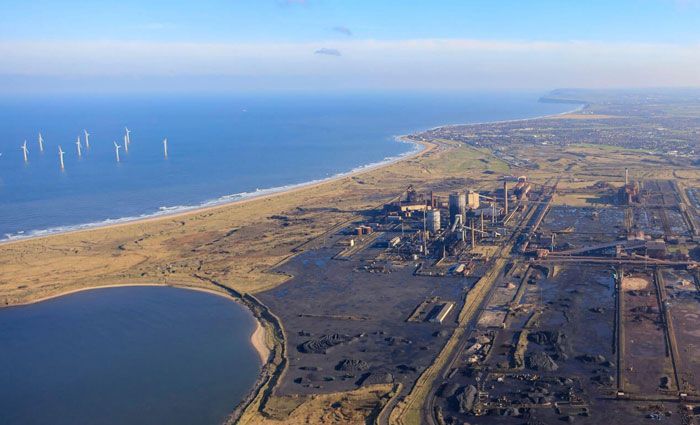
Manston Hydrogen Plant Proposal Explained: What to Know
Planning applications don't usually make for interesting reading. But every now and then a proposal lands that's worth actually understanding not just the headline, but what it is, how it works, and why it matters for the people who live and work nearby.
The Manston Waste-to-Hydrogen Project is one of those.
Hydrogen Transition Energy (HTE) has submitted proposals for a commercial waste-to-hydrogen facility on land in Manston, Kent. It's one of the first of its kind at industrial scale in the UK. And if you live in Thanet, work in the region's industrial sector, or just want to know what's being built and why here's the full picture.
What Is the Manston Hydrogen Plant?
In plain terms: it's a facility that takes non-recyclable waste and converts it into clean hydrogen.
Not recycled waste the stuff that can't go anywhere else. Plastics that are too contaminated or too complex to reprocess. Tyres. Automotive shredder residue. Municipal solid waste with nowhere useful to go. These materials currently end up in landfill or incineration. The Manston plant changes that destination entirely.
Using a process called plasma-assisted gasification operating at temperatures above 3,000°C the facility breaks waste materials down at an atomic level. What comes out isn't ash, smoke, or buried methane. It's fuel cell grade hydrogen meeting ISO 14687 standards, captured carbon dioxide that can be reused industrially, and inert vitrified slag — a stable, glass-like solid that works as construction aggregate.
Three useful outputs from material that currently just costs money to dispose of. That's the core proposition.
Where Is It and Why Manston?
The site is in Manston, Thanet adjacent to land previously used for waste purposes, in a non-residential setting. That location wasn't chosen arbitrarily.
Existing infrastructure connections make the site practical from a logistics standpoint. The non-residential context means the facility can operate industrially without intruding on local communities. And Thanet itself has been identified as a region that needs exactly the kind of clean growth investment this project represents skilled jobs, inward capital, long-term economic infrastructure rather than short-term development.
HTE's registered address is the Kent Innovation Centre at Thanet Reach Business Park in Broadstairs. This isn't a distant developer parachuting in. The Manston project is being built by a company that's already embedded in the region.
What Does "Plasma Gasification" Actually Mean?
It's worth explaining this properly because it's what makes the Manston project different from conventional waste-to-energy approaches.
Traditional incineration burns waste at temperatures typically between 850°C and 1,200°C. It generates heat and electricity, but it also produces emissions, ash residues, and leaves a lot of the potential energy value on the table.
Plasma gasification operates on a completely different level. At above 3,000°C temperatures closer to the surface of the sun than to a conventional boiler waste doesn't burn. It breaks apart at a molecular level. The carbon and hydrogen atoms that make up the waste material get released as synthesis gas. From there, the hydrogen is separated, cleaned, and compressed to fuel cell grade purity.
The inert slag produced in the process is non-toxic, stable, and has genuine commercial applications in construction. Nothing is simply dumped.
Jobs, Skills and the Thanet Economy
The Manston facility and its associated training hub are expected to create up to 130 direct jobs engineering, science, operations, administration, and technical roles spanning entry level through to senior specialist positions.
For a region that has faced real employment challenges over the years, 130 ongoing skilled roles is a serious number. But HTE's commitment goes beyond headcount. The project includes plans to work directly with local schools, colleges, and universities to build a talent pipeline training the next generation of hydrogen and clean energy professionals from within Thanet itself.
There's also a planned visitor and education centre on site offering student visits, STEM resources, and engagement opportunities that most industrial facilities don't bother with. The thinking is straightforward: the hydrogen economy is where a lot of future jobs will sit, and young people in Thanet should have direct access to what that looks like in practice.
Environmental Commitments Built Into the Design
This is worth being specific about because it's easy to make general environmental claims and harder to back them up with actual design decisions.
The Manston facility is engineered to strict emissions standards with advanced gas cleaning and monitoring systems throughout the process. But beyond the operational controls, the development includes:
Sustainable drainage systems to manage surface water responsibly on site. Rainwater harvesting to reduce demand on local water supply. Landscape design and habitat creation planned to deliver biodiversity net gain meaning the site should support more wildlife after development than before it.
These aren't planning obligations tagged on at the end of the design process. They're built into the proposal from the outset, which is a different thing.
Carbon capture is also integrated within the process itself the CO₂ produced during conversion is captured and made available for industrial reuse rather than released to atmosphere. That makes the facility's overall carbon position significantly better than conventional alternatives.
What Happens Next
The proposals are currently moving through the planning process. HTE is committed to ongoing dialogue with local stakeholders throughout — the development is designed to be a community asset, not something imposed on the area.
Once planning permission is granted, construction and commissioning timelines will be confirmed. Updates are posted at hydrogen-te.com as the project progresses.
Manston is also the first of several planned HTE facilities across the UK — including sites in Cwmbran, the Midlands, Belfast, and Perth. What gets proved here shapes what happens next elsewhere.
Conclusion
The Manston Hydrogen Plant proposal isn't complicated once you get past the terminology. Non-recyclable waste the stuff that currently burdens landfill and incinerators gets converted into clean hydrogen, captured CO₂, and reusable aggregate. Up to 130 skilled jobs come to Thanet. A training hub gets built for the next generation. Environmental commitments are designed in rather than bolted on. At Hydrogen Transition Energy, this is exactly the kind of project we believe the UK needs more of practical, specific, and genuinely useful for the communities where it's built.
FAQ
Is this a waste incinerator?
No. Plasma gasification is a fundamentally different process to incineration. Incineration burns waste at moderate temperatures to generate heat and electricity. Plasma gasification operates above 3,000°C, breaking waste down at a molecular level without combustion in the conventional sense. The outputs hydrogen, captured CO₂, inert slag are completely different from incineration residues.
What types of waste will the facility accept?
Non-recyclable materials including plastics, tyres, automotive shredder residue, medical waste, municipal solid waste, refuse-derived fuel, solid recovered fuel, and biomass. The process is deliberately flexible it handles a wide range of feedstocks that have no viable recycling route.
Will there be odour, noise, or visual impact on the local area?
The site is in a non-residential location and is designed with advanced gas cleaning, monitoring, and emissions controls throughout. Landscaped screening and ecological enhancements are part of the site design. These are engineered-in features, not afterthoughts.
How many jobs will it create?
Up to 130 direct roles at the facility and associated training hub, covering engineering, science, operations, administration, and technical disciplines from entry level to senior specialist. HTE is also committed to building a local talent pipeline with Thanet schools, colleges, and universities.
Know More - https://www.bbc.com/news/articles/cvg75zqdj92o
Appreciate the creator