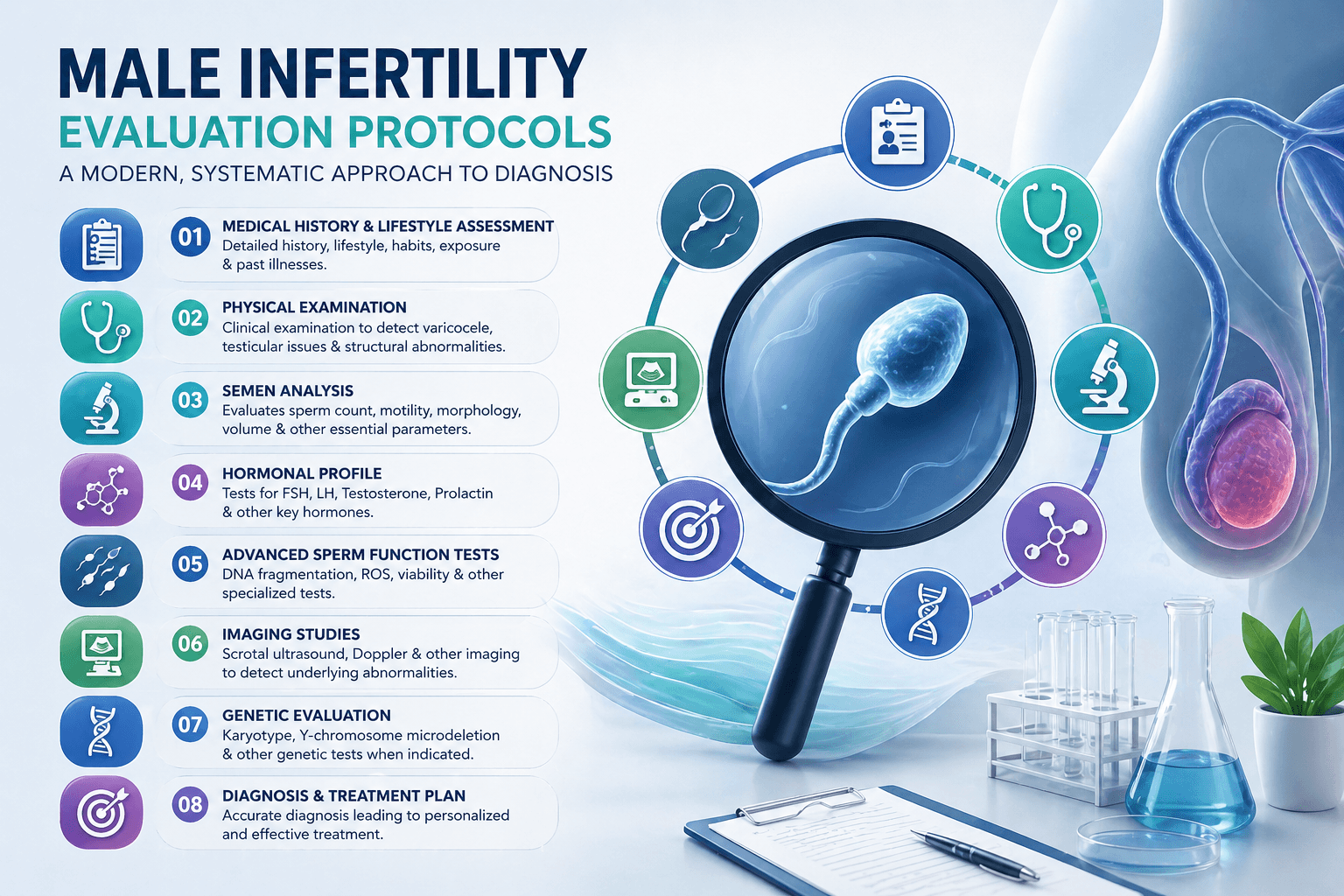
Male Infertility Evaluation Protocols in Modern Fertility Practice
Male infertility is a significant yet often under-discussed aspect of reproductive health. In nearly 40–50% of infertility cases, male factors contribute either solely or in combination with female factors. With advancements in reproductive medicine, modern fertility practice now follows a structured, evidence-based evaluation protocol to accurately diagnose and treat male infertility.
In this blog, Dr. Poonam Goyal, an experienced fertility specialist, explains the step-by-step approach used today to evaluate male infertility effectively.
Understanding Male Infertility
Male infertility refers to a man’s inability to cause pregnancy in a fertile female partner. It is usually related to:
Low sperm count
Poor sperm motility
Abnormal sperm morphology
Hormonal imbalances
Structural or genetic issues
According to Dr. Poonam Goyal, early evaluation is crucial to avoid delays in treatment and improve success rates.
Why a Structured Evaluation Protocol Is Important
Modern fertility care emphasizes systematic evaluation rather than guesswork. A proper protocol helps:
Identify the exact cause of infertility
Avoid unnecessary treatments
Improve treatment outcomes
Save time and cost for patients
At leading fertility setups, including those managing Male fertility in Delhi, standardized protocols are followed for accuracy and efficiency.
Step 1: Detailed Medical History
The first and most critical step is taking a comprehensive medical and lifestyle history.
Key areas assessed:
Duration of infertility
Sexual history and frequency
Past illnesses or surgeries
History of infections (like mumps)
Lifestyle factors (smoking, alcohol, stress)
Occupational exposure to heat or toxins
As emphasized by Dr. Poonam Goyal, many cases of male infertility can be linked to modifiable lifestyle factors.
Step 2: Physical Examination
A focused physical examination is conducted to identify any visible or structural abnormalities.
It includes:
Examination of testes size and consistency
Detection of varicocele (enlarged veins)
Checking for absence of vas deferens
Signs of hormonal imbalance
This step provides important clinical clues for further investigation.
Step 3: Semen Analysis – The Cornerstone Test
Semen analysis is the primary diagnostic test in male infertility evaluation.
Parameters assessed:
Sperm count (concentration)
Motility (movement)
Morphology (shape)
Volume of semen
Presence of infection
Important Note:
At least 2–3 semen samples are recommended for accurate assessment.
According to Dr. Poonam Goyal, semen analysis remains the most cost-effective and informative test in evaluating Male fertility in Delhi.
Step 4: Advanced Sperm Function Tests
In cases where routine semen analysis appears normal but infertility persists, advanced tests are recommended.
These may include:
DNA fragmentation index (DFI)
Reactive oxygen species (ROS) testing
Sperm viability tests
These tests help detect functional defects in sperm, which are not visible in basic analysis.
Step 5: Hormonal Evaluation
Hormonal imbalance can significantly affect sperm production.
Key hormones tested:
Testosterone
FSH (Follicle Stimulating Hormone)
LH (Luteinizing Hormone)
Prolactin
Dr. Poonam Goyal highlights that hormonal testing is especially important in cases of low sperm count or sexual dysfunction.
Step 6: Imaging Studies
Imaging techniques are used when structural abnormalities are suspected.
Common imaging tests:
Scrotal ultrasound
Doppler ultrasound (for varicocele)
Transrectal ultrasound (TRUS)
These help identify issues such as:
Blockages
Varicocele
Ejaculatory duct obstruction
Step 7: Genetic Testing
Genetic evaluation is recommended in severe cases of male infertility.
Indications include:
Azoospermia (no sperm)
Severe oligospermia (very low sperm count)
Recurrent IVF failure
Common tests:
Karyotyping
Y-chromosome microdeletion analysis
As per Dr. Poonam Goyal, genetic testing ensures proper counseling and prevents transmission of genetic disorders.
Step 8: Specialized Diagnostic Procedures
In selected cases, additional procedures may be required.
These include:
Testicular biopsy
Sperm retrieval techniques (TESA, PESA)
Post-ejaculatory urine analysis
These are typically done in advanced fertility centers or a Best iui centre in Delhi with comprehensive facilities.
Role of Lifestyle Assessment in Modern Protocols
Modern fertility practice does not focus only on medical tests. Lifestyle evaluation plays a major role.
Key factors affecting male fertility:
Smoking
Alcohol consumption
Obesity
Stress
Poor diet
Dr. Poonam Goyal strongly advises lifestyle modification as part of treatment, especially in urban settings where Male fertility in Delhi is increasingly impacted by stress and sedentary habits.
Integration with Female Partner Evaluation
Male infertility evaluation is not done in isolation. It is always integrated with the partner’s assessment.
This combined approach improves outcomes in cases involving both Male fertility in Delhi and Female fertility in Delhi.
Modern Approach: Personalized and Evidence-Based
Today’s fertility protocols are:
Patient-specific
Data-driven
Minimally invasive
Focused on root cause treatment
According to Dr. Poonam Goyal, “A precise diagnosis is the foundation of successful fertility treatment.”
Final Thoughts
Male infertility is a treatable condition in many cases, provided it is diagnosed accurately using a structured evaluation protocol.
Modern fertility practice has moved beyond basic testing to include advanced diagnostics, genetic analysis, and lifestyle assessment, ensuring better outcomes for couples.
If you are facing difficulty in conceiving, early evaluation by an experienced specialist like Dr. Poonam Goyal can make a significant difference.
FAQs (Answered by Dr. Poonam Goyal)
1. When should a man get evaluated for infertility?
If a couple is unable to conceive after 12 months of regular unprotected intercourse, male evaluation should be done.
2. Is semen analysis enough to diagnose male infertility?
Semen analysis is the first step, but additional tests may be required depending on results.
3. Can male infertility be reversed?
In many cases, yes. Treatment depends on the underlying cause and may include medication, lifestyle changes, or assisted reproductive techniques.
4. Does stress affect male fertility?
Yes, stress can impact hormone levels and sperm quality. Managing stress is an important part of fertility treatment.
Appreciate the creator