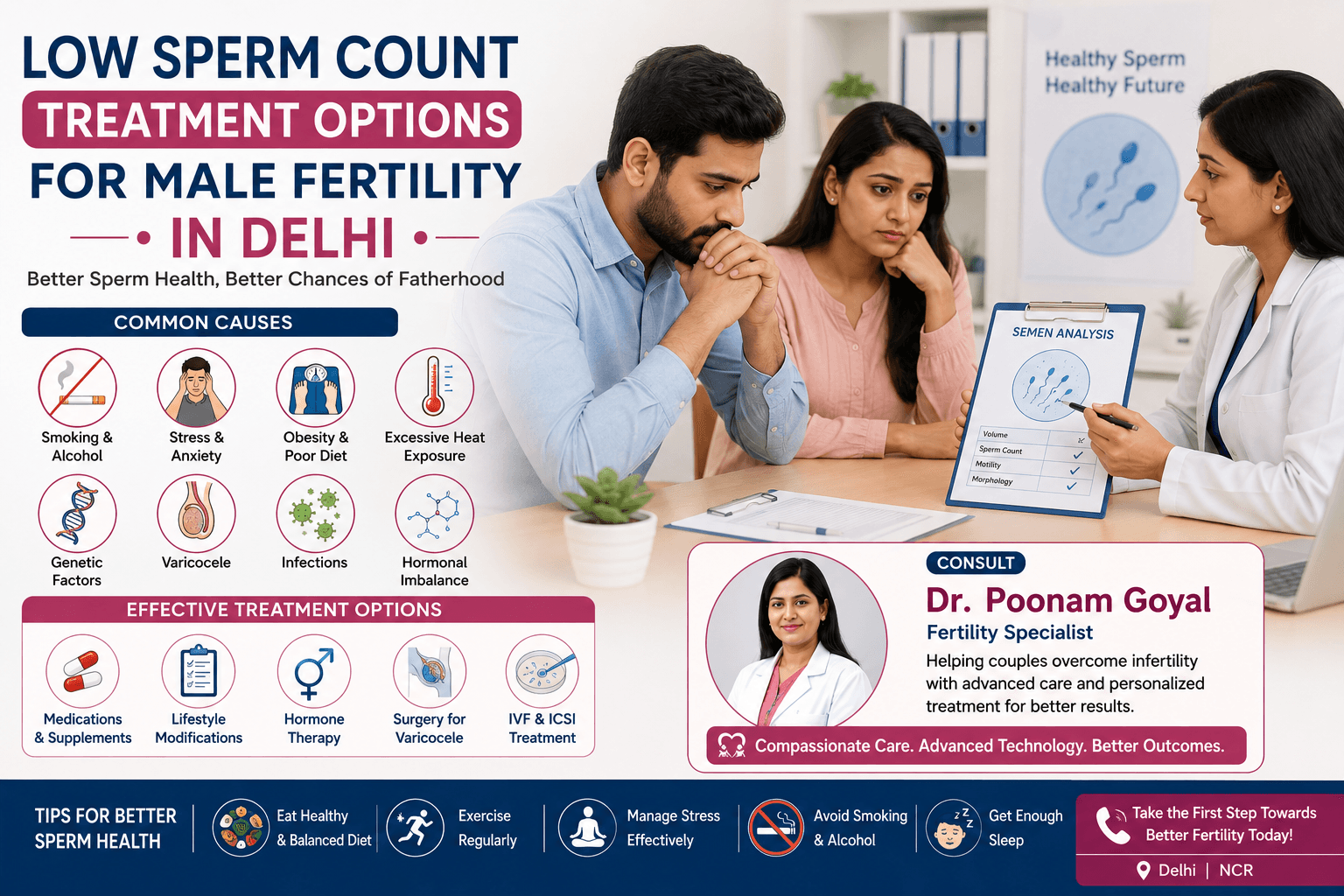
Low Sperm Count Treatment Options for Male Fertility in Delhi
Infertility is becoming increasingly common among modern couples, and male fertility issues are one of the major reasons behind delayed pregnancy. Among these problems, low sperm count is one of the most frequently diagnosed conditions affecting male reproductive health. Many men hesitate to discuss fertility concerns openly, which often delays proper diagnosis and treatment.
However, medical science has advanced significantly, and today several effective treatment options are available for improving male fertility. With the help of experienced fertility specialists and modern reproductive treatments, many couples are successfully achieving parenthood.
Couples searching for reliable solutions for Male fertility in Delhi are now benefiting from advanced fertility care, lifestyle guidance, and personalized treatment plans offered by fertility experts like Dr. Poonam Goyal.
Understanding Low Sperm Count
Low sperm count, also called oligospermia, refers to a condition where semen contains fewer sperm than normal. Healthy sperm count plays an important role in natural conception because sperm must successfully reach and fertilize the egg.
When sperm count becomes low, the chances of pregnancy may reduce significantly. In some cases, men may not even realize they have fertility issues until they undergo medical evaluation.
Low sperm count does not always mean pregnancy is impossible. Many men improve fertility naturally or through medical treatment with proper guidance.
Common Causes of Low Sperm Count
Several medical, environmental, and lifestyle factors can contribute to male fertility problems.
Lifestyle Factors
Modern lifestyle habits often affect reproductive health negatively. Common causes include:
Smoking
Excessive alcohol consumption
Stress and anxiety
Poor diet
Lack of sleep
Obesity
Physical inactivity
Long-term unhealthy habits may reduce sperm production and sperm quality over time.
Hormonal Imbalance
Hormones control sperm production inside the body. Low testosterone or other hormonal disorders can affect male fertility significantly.
Medical Conditions
Certain health conditions may also reduce sperm count, including:
Diabetes
Infections
Varicocele
Genetic disorders
Testicular injury
Thyroid disorders
Environmental Exposure
Exposure to excessive heat, pollution, chemicals, or radiation may impact sperm production and reproductive health.
Signs That May Indicate Low Sperm Count
Many men do not experience noticeable symptoms initially. However, some signs may indicate fertility problems.
Common Symptoms Include
Difficulty conceiving naturally
Reduced sexual desire
Erectile dysfunction
Pain or swelling in the testicular area
Hormonal imbalance symptoms
Low energy levels
If pregnancy is not happening after regular unprotected intercourse for one year, couples should consider fertility evaluation.
Importance of Early Fertility Diagnosis
Early diagnosis helps fertility specialists identify the root cause of infertility and recommend suitable treatment options before the condition worsens.
Doctors generally perform several tests such as:
Semen analysis
Hormone testing
Ultrasound scans
Genetic testing
Physical examination
Accurate diagnosis plays an important role in successful fertility treatment.
Lifestyle Changes to Improve Male Fertility
In many cases, simple lifestyle improvements can help increase sperm count naturally.
Healthy Diet
A balanced diet rich in vitamins, antioxidants, protein, zinc, and folic acid may improve sperm health.
Foods beneficial for male fertility include:
Fresh fruits and vegetables
Nuts and seeds
Whole grains
Fish rich in omega-3 fatty acids
Protein-rich foods
Regular Exercise
Moderate physical activity helps maintain healthy hormone levels and improves blood circulation. However, excessive gym training or steroid use should be avoided.
Stress Management
Mental stress may negatively affect hormonal balance and reproductive health. Meditation, proper sleep, and relaxation techniques can help improve fertility naturally.
Avoid Smoking and Alcohol
Reducing or quitting smoking and alcohol consumption can positively impact sperm quality and fertility outcomes.
Medical Treatment Options for Low Sperm Count
When lifestyle changes alone are not enough, doctors may recommend medical treatments depending on the underlying cause.
Fertility Medications
Certain medicines may help improve hormone levels and stimulate sperm production naturally.
Doctors prescribe medications only after proper medical evaluation because fertility problems vary from person to person.
Hormonal Therapy
If low testosterone or hormonal imbalance is affecting sperm production, hormonal treatment may improve fertility.
Treatment for Infections
Infections affecting the reproductive system can reduce sperm quality. Antibiotic treatment may help in such cases.
Surgery for Varicocele
Varicocele is a condition involving enlarged veins inside the scrotum. Surgical correction may improve sperm production and quality in some men.
Advanced Fertility Treatments for Male Infertility
When natural treatments and medications do not improve fertility sufficiently, advanced reproductive techniques may be recommended.
IUI Treatment
Intrauterine Insemination (IUI) helps place healthy sperm directly inside the uterus to increase pregnancy chances.
IVF Treatment
In Vitro Fertilization (IVF) is recommended when fertility challenges become more complex.
ICSI Treatment
ICSI is considered one of the most effective treatments for severe male infertility. In this procedure, a healthy sperm is directly injected into the egg during IVF treatment.
This technique is especially beneficial for men with:
Very low sperm count
Poor sperm motility
Weak sperm quality
Previous failed fertilization attempts
Choosing the Right Fertility Specialist
Selecting an experienced fertility specialist is essential for successful treatment. Couples should choose doctors who focus on both medical expertise and emotional support during fertility care.
Specialists like Dr. Poonam Goyal provide personalized fertility treatment plans according to each patient’s reproductive condition and health needs.
An experienced fertility expert helps couples understand:
The root cause of infertility
Suitable treatment options
Lifestyle improvements
Realistic treatment expectations
Importance of the Best Gynaecologist in Delhi in Fertility Care
Although male infertility is a major factor, fertility evaluation should involve both partners. Consulting the Best Gynaecologist in Delhi helps identify female reproductive concerns that may also affect pregnancy chances.
Comprehensive fertility care for couples often improves treatment success rates because infertility can involve multiple medical factors together.
Emotional Impact of Male Infertility
Male infertility often affects emotional confidence and mental well-being. Many men feel embarrassed, anxious, or stressed after learning about fertility problems.
However, infertility is a medical condition and should never be considered a personal weakness. Open communication between partners and professional counseling support can help couples manage emotional challenges more effectively.
Positive mental health also supports better overall treatment experiences.
Why Couples Prefer Male Fertility Treatment in Delhi
Delhi has become a preferred destination for advanced fertility treatment because of experienced specialists, modern reproductive technology, and advanced fertility laboratories.
Couples searching for reliable solutions for Male fertility in Delhi often choose the city because of:
Advanced fertility care
Experienced fertility experts
Modern IVF and ICSI technology
Comprehensive reproductive diagnosis
Personalized treatment plans
Final Thoughts
Low sperm count can feel emotionally difficult for couples planning parenthood, but effective treatment options are now available for improving male fertility. Early diagnosis, healthy lifestyle changes, medical treatment, and advanced fertility procedures can significantly improve pregnancy chances.
Seeking guidance from experienced fertility specialists like Dr. Poonam Goyal can help couples understand their fertility condition better and choose the right treatment path with confidence.
With proper medical care, emotional support, and modern reproductive treatment, many couples successfully overcome infertility challenges and achieve their dream of becoming parents.
Frequently Asked Questions
What is considered a low sperm count?
A sperm count lower than the normal healthy range may reduce the chances of natural pregnancy and is considered low sperm count.
Can low sperm count be treated naturally?
Yes, lifestyle improvements such as healthy eating, exercise, stress management, and avoiding smoking or alcohol may help improve sperm health naturally.
Which treatment is best for severe male infertility?
Advanced fertility procedures like IVF and ICSI are commonly recommended for severe male infertility cases.
When should couples seek fertility help?
Couples should consult a fertility specialist if pregnancy does not happen after one year of regular unprotected intercourse.
Why is Male fertility in Delhi becoming a common concern?
Stress, unhealthy lifestyle habits, pollution, delayed parenthood, and hormonal imbalance are increasing fertility issues among men.
Why should couples consult the Best Gynaecologist in Delhi during fertility treatment?
A gynecologist helps identify female reproductive issues while fertility specialists evaluate male infertility, improving overall treatment success for couples.
Appreciate the creator