Legal Precautions Doctors Should Follow During Emergency Cases
Introduction
Emergency cases are one of the most challenging parts of medical practice. Doctors often need to make quick decisions to save a patient’s life. During emergencies, stress levels are high for doctors, patients, and family members. In such situations, even small mistakes in communication, documentation, or treatment handling can create medico-legal problems later.
Today, doctors are not only expected to provide fast treatment but also follow proper legal and ethical procedures. Many complaints against doctors happen during emergency situations because patients or family members feel confused, uninformed, or dissatisfied.
According to Dr Vimal Kant Goyal, doctors should always stay medically and legally prepared while handling emergency cases. Good communication, proper records, and professional behavior can help doctors stay safe during difficult situations.
If you are looking for a trusted Medico legal guide in Delhi, understanding legal precautions during emergency care is very important for every healthcare professional.
This blog explains simple and practical legal safety tips doctors should follow during emergency situations.
Why Emergency Cases Create Legal Risks
Emergency cases are different from normal consultations. Doctors often work under pressure and have very little time to make decisions. Because of this, chances of misunderstanding and disputes become higher.
Some common reasons behind legal problems during emergencies include:
Delay in treatment
Poor communication
Lack of proper consent
Incomplete medical records
Misunderstanding with family members
Patient death or complications
Staff mistakes during emergency care
Even when doctors try their best, legal complaints may still happen if proper precautions are not followed.
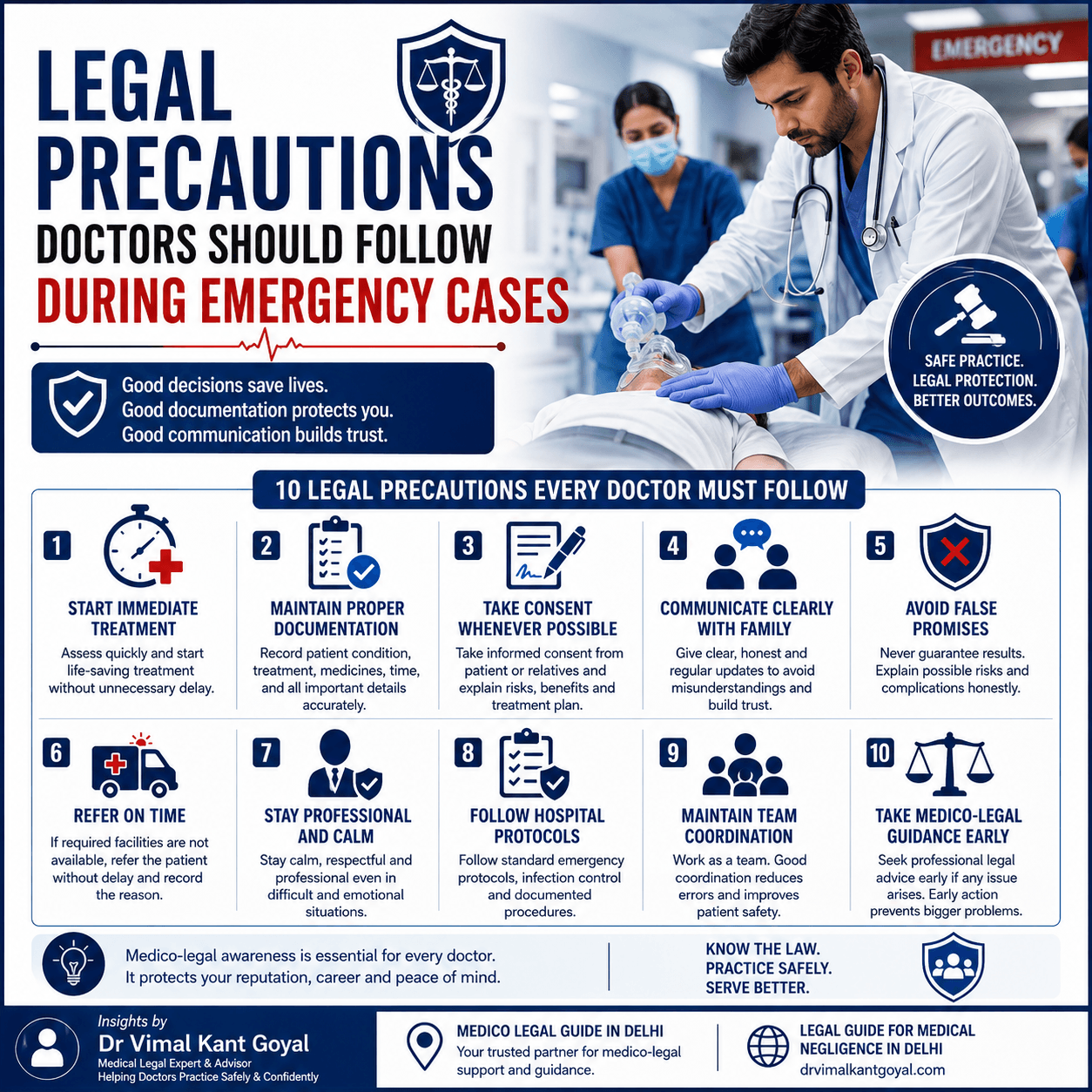
Legal Precautions Doctors Should Follow During Emergency Cases
1. Start Immediate Necessary Treatment
In emergency situations, saving the patient’s life should always be the first priority.
Doctors should:
Quickly assess the patient
Start emergency treatment without unnecessary delay
Follow standard medical protocols
Delaying emergency care can create serious legal complications.
According to Dr Vimal Kant Goyal, doctors should act confidently and professionally during emergencies while maintaining proper records.
2. Maintain Proper Documentation
Documentation is one of the most important legal protections for doctors.
Emergency records should include:
Patient condition on arrival
Vital signs
Treatment given
Medicines administered
Time of important events
Referral details if needed
Good records help doctors explain their decisions later if any complaint happens.
Incomplete documentation often creates medico-legal trouble.
3. Take Consent Whenever Possible
In critical emergencies, doctors may start life-saving treatment immediately. However, whenever possible, informed consent should be taken from:
Patient
Family member
Guardian
Consent should include:
Treatment plan
Risks involved
Possible complications
Written consent provides legal safety for doctors and hospitals.
4. Communicate Clearly with Family Members
Poor communication is one of the biggest reasons for disputes during emergency care.
Doctors should:
Explain the patient’s condition clearly
Discuss treatment steps honestly
Inform families about risks and complications
Give regular updates
Family members become calmer when doctors communicate respectfully and honestly.
5. Avoid False Promises
Doctors should never guarantee:
Full recovery
100% success
Risk-free treatment
Every emergency case has uncertainty and possible complications.
Honest communication protects trust and reduces unrealistic expectations.
6. Refer the Patient on Time
If proper facilities or specialists are not available, doctors should refer the patient without delay.
Referral records should clearly mention:
Reason for referral
Patient condition
Treatment already provided
Delayed referral can create serious legal problems.
7. Stay Professional During Stressful Situations
Emergency cases can become emotional and stressful.
Doctors should avoid:
Arguments
Angry behavior
Emotional reactions
Rude communication
Professional behavior helps control difficult situations better.
8. Follow Hospital Protocols
Doctors and staff should follow proper emergency procedures related to:
Patient handling
ICU protocols
Emergency medicines
Infection control
Emergency documentation
Following standard protocols improves patient safety and legal protection.
9. Maintain Team Coordination
Good teamwork during emergencies is very important.
Doctors, nurses, and hospital staff should:
Communicate properly
Work together calmly
Maintain proper records
Follow instructions carefully
Staff mistakes can also create legal risks for hospitals.
10. Take Medico-Legal Guidance Early
If any serious complaint or legal notice happens after an emergency case, doctors should take professional advice quickly.
Many healthcare professionals seek a trusted Legal guide for medical negligence in Delhi to understand:
Legal procedures
Complaint handling
Documentation review
Professional safety
Early legal guidance can help doctors manage situations properly and confidently.
Importance of Medico-Legal Awareness for Doctors
Today, medico-legal awareness is becoming necessary for every doctor.
Doctors should understand:
Patient rights
Consent rules
Documentation importance
Communication ethics
Medical negligence basics
According to Dr Vimal Kant Goyal, legal awareness helps doctors practice medicine more safely and professionally.
Simple precautions can protect:
Reputation
Career
Patient trust
Mental peace
Tips to Reduce Legal Problems During Emergency Cases
Here are some simple tips doctors should follow regularly:
Keep emergency records updated
Speak politely with patients and families
Maintain proper consent forms
Avoid rushed communication
Follow hospital protocols
Train emergency staff regularly
Stay calm during pressure situations
Take legal advice early if needed
Small precautions can prevent bigger legal disputes later.
Conclusion
Emergency cases are stressful and challenging for every doctor. Along with quick medical decisions, doctors also need to follow proper legal precautions to stay professionally safe.
Doctors can reduce medico-legal risks by:
Maintaining proper documentation
Communicating clearly
Taking consent properly
Referring patients on time
Staying calm and professional
Following standard medical protocols
Good medico-legal awareness helps doctors handle emergency situations more confidently and safely.
If you are searching for a reliable Medico legal guide in Delhi or need a trusted Legal guide for medical negligence in Delhi, understanding these legal precautions can help doctors protect both patients and professional reputation.
FAQs
1. Why is documentation important during emergency cases?
Documentation works as proof of treatment and medical decisions during complaints or investigations.
2. Can doctors treat emergency patients without consent?
In life-threatening emergencies, doctors can start immediate treatment. However, consent should be taken whenever possible.
3. Why is communication important during emergencies?
Clear communication reduces confusion, fear, and misunderstandings among family members.
4. Should doctors guarantee recovery during emergencies?
No. Doctors should avoid giving false promises or guaranteed outcomes.
5. When should doctors refer emergency patients?
Doctors should refer patients immediately if proper facilities or specialists are unavailable.
Appreciate the creator