Legal Liability of Hospitals in Medical Negligence Cases
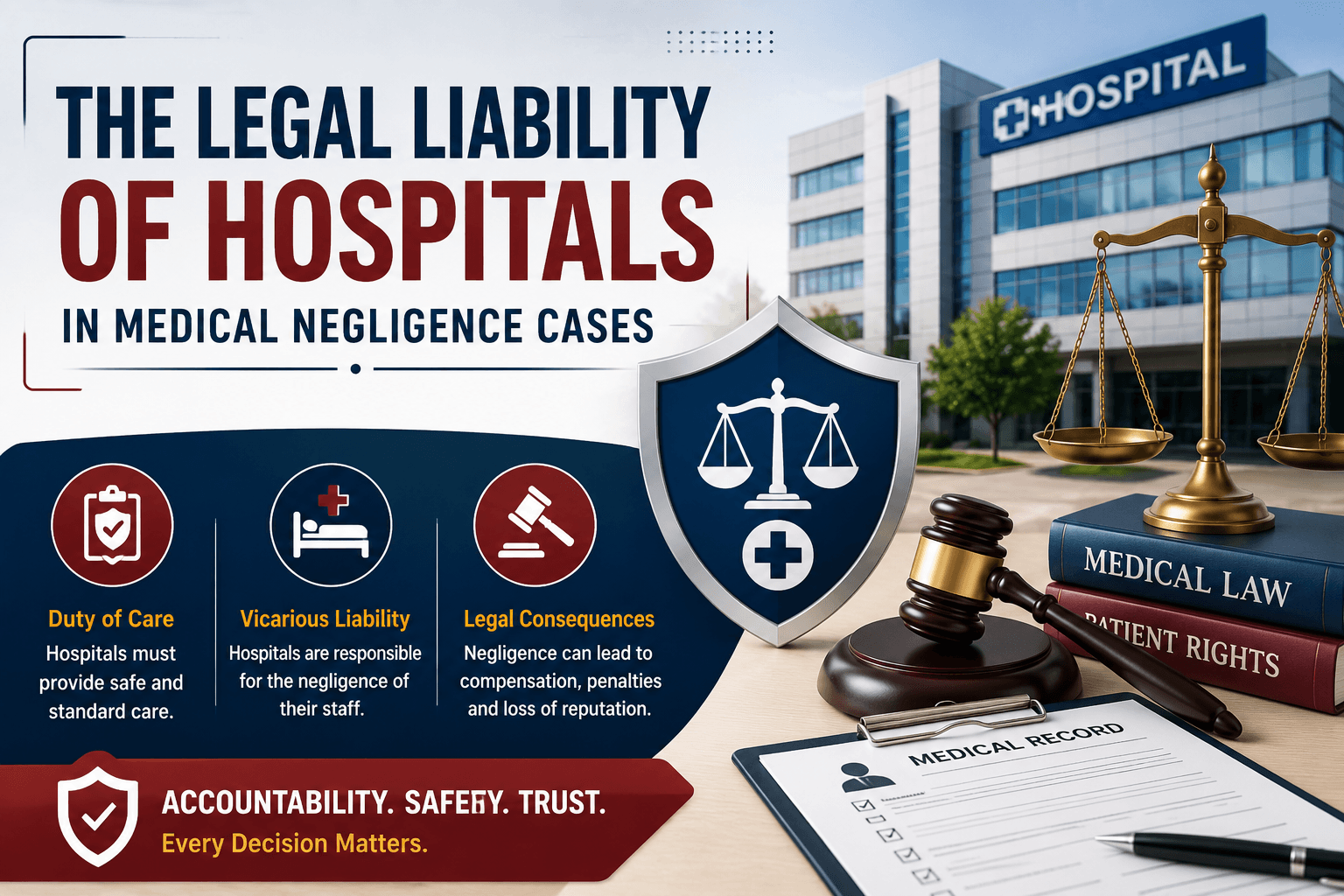
A patient's family walks into the administrator's office, angry and confused. Their relative was treated by three different doctors over two days, a nurse changed a dressing without a note, and now there's a complication nobody can clearly explain. The family isn't asking which individual made a mistake. They're asking why the hospital, as a whole, didn't catch it. This is where the legal liability of hospitals in medical negligence cases stops being an abstract legal phrase and becomes a real question hospital administrators have to answer.
Start With the Real Problem
Hospitals often assume that if each doctor acted reasonably, the hospital itself has little to worry about. That assumption doesn't always hold up once a complaint moves beyond one doctor's decision and into how the hospital as a system functioned. A hospital quality guide in Delhi (https://drvimalkantgoyal.com/hospital-quality-guide-in-delhi.php) built only around individual clinical performance misses half the picture.
Why Liability Can Extend Beyond the Treating Doctor
A hospital can be drawn into a negligence claim not just because of what one doctor did, but because of how the hospital supported, supervised, or failed to support that care. Staffing levels, equipment availability, coordination between departments, and how quickly concerns were escalated can all become relevant once a case is examined closely.
What Happens When Responsibility Is Unclear
When care involves multiple doctors, nurses, and departments, it can become genuinely difficult to establish who knew what and when. Depending on the circumstances, this uncertainty itself can work against the hospital, simply because there's no clear account showing that the system was tracking the patient's condition as a whole.
How Hospital Liability Actually Works
Liability in these cases usually isn't about a single dramatic error. It tends to build from smaller failures across the patient's journey.
Direct and Vicarious Responsibility
A hospital may face direct responsibility for decisions like staffing, protocols, and equipment maintenance, and separately may be held responsible for the actions of staff acting within their employment. This is why a hospital's own systems — not just its doctors' individual skill — often come under scrutiny.
The Role of Standard Clinical Protocols
When care follows recognised, standard clinical protocols, it becomes easier to show that decisions were reasonable given the situation. When protocols are unclear, inconsistently applied, or simply not followed, it becomes harder to demonstrate that the hospital's processes supported safe care.
Common Situations Where Liability Questions Arise
Certain patterns show up repeatedly in hospital negligence discussions, more often than dramatic one-off errors.
Handovers, Delays, and Communication Gaps
A shift change where critical information isn't passed on. A delayed response to a deteriorating patient. A referral that never reached the right specialist in time. Each of these can seem minor individually, but together they can suggest a system that didn't communicate well internally.
Missing or Inconsistent Records Across Departments
If a patient's investigation reports, treatment notes, and nursing observations aren't stored and cross-referenced properly, it becomes difficult to reconstruct their care later. This is exactly the gap a solid medico legal guide for hospitals in Delhi (https://drvimalkantgoyal.com/medico-legal-guide.php) is meant to address — not by adding paperwork, but by making the existing records connect properly.
What Hospitals Can Do to Reduce Legal Risk
Reducing risk is less about avoiding every possible complication and more about being able to show that care was reasonable and well-coordinated.
Building Accountability Into Daily Operations
Clear protocols for handovers, escalation of deteriorating patients, and inter-department communication can reduce avoidable risk considerably. Regular internal audits of how these protocols are actually followed — not just whether they exist on paper — tend to reveal the gaps before a complaint does.
Training Staff Beyond Just Clinical Skills
Doctors and nurses often receive strong clinical training but limited guidance on documentation, consent conversations, and escalation practices. A hospital that treats these as core skills, not administrative extras, usually finds its records tell a clearer story when questions arise.
The Role of Documentation and Consent in Liability Cases
Individual documentation habits matter, but at the hospital level, consistency across every department matters just as much.
Why Consent Documentation Reflects on the Hospital, Not Just the Doctor
When a consent form exists but doesn't reflect what was actually explained to the patient, the gap doesn't stay with one doctor — it becomes a hospital-wide weakness if it happens repeatedly across departments. Appropriate documentation can support the hospital's account of events, depending on the circumstances, but only if it's genuinely maintained as a routine practice rather than an afterthought.
Connecting Documentation to Patient Safety, Not Just Legal Defence
Good documentation exists first to help clinicians make safer decisions for the next shift, the next doctor, the next department. Its usefulness in a legal dispute is a secondary benefit of a system built around patient safety and healthcare quality, not the other way around.
What Hospitals Should Do Before a Dispute Becomes a Legal Case
Most disputes don't start as legal cases. They start as unanswered questions from a worried family.
A Practical Checklist for Hospital Administrators
Review how handovers and escalation actually happen on the floor, not just how they're written in policy. Check whether consent conversations are documented consistently across departments. Look at discharge summaries and follow-up instructions for completeness. Confirm that investigation reports are filed and accessible before they're needed urgently, and that record-review systems flag gaps early.
When to Bring In Medico-Legal Advice
Waiting until a formal complaint arrives is often too late to fix underlying gaps. Hospitals dealing with an unusually difficult complication, a pattern of similar complaints, or uncertainty about how a case will be viewed should consider medico-legal advice early, while records and staff recollections are still fresh. The legal liability of hospitals in medical negligence cases isn't something that gets resolved after the fact — it's shaped, day by day, by how consistently a hospital documents, communicates, and reviews its own care.
Appreciate the creator