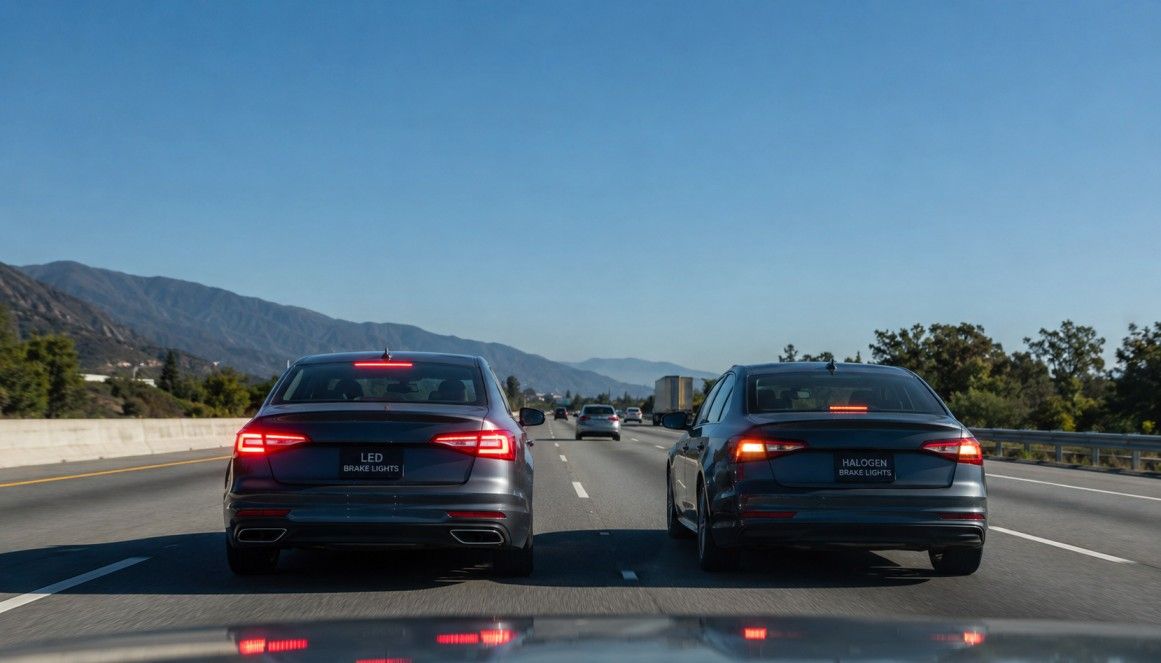
LED Brake Lights vs Halogen: The Split Second That Can Save Lives
Every second counts when you're behind the wheel. Drivers often think about safe following distances, good tires, and reliable brakes, but one important safety feature rarely gets the attention it deserves. Your brake lights play a critical role in helping other drivers react quickly when your vehicle slows down.
If you have ever wondered about the difference between LED Brake Lights vs Halogen, response time is one of the most important factors to consider. While both types of brake lights are designed to warn drivers behind you, they do not reach full brightness at the same speed. That small difference in timing can give someone behind you extra moments to react, which may help reduce the risk of an accident.
Let's take a closer look at how these two lighting technologies compare and why response time matters more than many people realize.
How Brake Lights Alert Other Drivers
The moment you press the brake pedal, an electrical signal tells the rear brake lights to turn on. Their job is simple. They let everyone behind you know that your vehicle is slowing down or coming to a stop.
Although the purpose is the same for every vehicle, the way the light is produced depends on the type of bulb being used. This difference has a direct impact on how quickly the warning becomes visible.
Halogen bulbs produce light by heating a thin metal filament until it glows. This process happens very quickly, but it is not immediate.
LED brake lights work differently. They create light through electronic components instead of heating a filament. Because there is no warm up period, they reach full brightness almost instantly.
Comparing Response Time
One of the biggest advantages of LED technology is how quickly it lights up.
A typical halogen brake light usually takes around two tenths of a second to reach its brightest point. While this delay is extremely short, it still exists because the filament needs a brief moment to heat.
LED brake lights react almost immediately. In many cases they become fully illuminated within just a few milliseconds after the brake pedal is pressed.
At first glance, the difference may not seem important. However, when vehicles are traveling at highway speeds, even a fraction of a second can make a meaningful difference.
Why Those Extra Moments Matter
Picture yourself driving on a busy highway. Traffic suddenly slows and the vehicle in front of you brakes unexpectedly. The sooner you see its brake lights, the sooner you can begin reacting.
A vehicle traveling at highway speed covers a surprising amount of distance in just a fraction of a second. If LED brake lights become visible before halogen lights, the driver behind receives an earlier warning. That extra reaction time can provide several additional feet to slow down before reaching the vehicle ahead.
While no brake light can prevent every accident, earlier visibility improves the chances that following drivers will respond in time.
Better Visibility During Everyday Driving
Speed is only part of the story. Brake lights also need to be easy to notice in a variety of driving conditions.
LED brake lights are known for producing a bright, clear red light that stands out during daylight, rain, or cloudy weather. Their illumination is sharp and consistent, making it easier for other drivers to recognize braking quickly.
Halogen bulbs still perform well, but their light tends to appear softer. As the bulbs age, they can gradually lose brightness, making them slightly less noticeable than newer bulbs.
The combination of faster activation and stronger illumination gives LED brake lights an advantage when visibility is important.
Energy Efficiency Makes a Difference
Modern vehicles rely on many electrical systems working together. Because of this, efficient lighting has become increasingly valuable.
Halogen bulbs use more electricity because much of their energy is converted into heat before producing light.
LED brake lights require much less power to operate. They generate very little heat while producing bright illumination, making them a more efficient option overall.
Although the energy savings from brake lights alone may seem small, every improvement contributes to a more efficient electrical system.
Longer Lifespan Means Less Maintenance
Nobody enjoys replacing burned out bulbs, especially when they fail unexpectedly.
Halogen brake lights generally need replacement much sooner because the filament slowly weakens with repeated use. Eventually it burns out and the bulb stops working.
LED brake lights are built differently. Since they do not rely on a fragile filament, they often remain functional for many years. In many vehicles, they can last for tens of thousands of hours before replacement becomes necessary.
For drivers who want dependable lighting with less maintenance, this is a major benefit.
Built for Tough Driving Conditions
Vehicles experience constant vibration from rough roads, potholes, and everyday driving. Over time, these conditions can affect traditional bulbs.
Halogen filaments are delicate and can become damaged after years of repeated vibration.
LED brake lights are much more durable because they contain solid electronic components instead of thin metal filaments. This makes them better suited for long term use, especially in vehicles that travel frequently or operate on uneven roads.
Is Upgrading Worth It?
Many drivers with older vehicles consider replacing their halogen bulbs with LED alternatives.
In many cases, an upgrade is possible, although compatibility depends on the vehicle. Some cars may require additional components to ensure the lighting system works properly without triggering warning messages or unusual flashing.
If you are thinking about upgrading, choosing high quality LED products that meet local vehicle regulations is always a smart decision.
Which Option Should You Choose?
When comparing LED Brake Lights vs Halogen, both technologies successfully perform the essential task of alerting other drivers. However, LED brake lights offer several clear advantages.
They illuminate more quickly, remain brighter, consume less electricity, last much longer, and are generally more durable than traditional halogen bulbs.
Halogen lights continue to be a practical choice because they are affordable and widely available. For drivers looking for the highest level of performance and safety, though, LED technology offers benefits that go beyond appearance.
Final Thoughts
Brake lights may seem like a small part of your vehicle, but they have a significant impact on road safety. Every time you slow down, they provide an important warning to the drivers behind you. The sooner that warning appears, the more time others have to react.
The comparison between LED Brake Lights vs Halogen clearly shows why response time matters. LEDs provide almost instant illumination, helping improve visibility and giving following drivers valuable extra reaction time. Combined with their long lifespan, energy efficiency, and reliable performance, they have become the preferred choice for many modern vehicles.
Whether you are buying a new car or planning an upgrade, choosing LED brake lights is a practical investment in both safety and long term reliability. Sometimes the smallest improvements on a vehicle can make the biggest difference when it matters most.
Appreciate the creator