
Knowledge Representation in Ai, Ai Courses & Career Opportunities
Artificial intelligence (AI) has become a major force in the modern world. It is revolutionizing our lives and reshaping the way we work and interact with each other. AI technology is being used in a wide range of applications, from healthcare to transportation to manufacturing. It is even being used to create autonomous systems that can learn and adapt to changes in their environment.
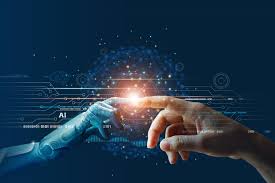
AI is also revolutionizing how we communicate. AI-powered chatbots can communicate with customers and answer their questions 24/7, while AI-powered voice assistants can understand natural language and respond to commands. AI is also being used to analyze large volumes of data and uncover patterns and trends that can be used to inform decisions.
AI is also transforming the way we interact with the physical world. Autonomous vehicles, robots, and drones are being used to automate tasks and make our lives more efficient. AI-powered machines are able to learn from their environment and adjust their behavior accordingly. This means that machines can now do more than just follow instructions; they can actually learn and adapt to their surroundings.
In the future, AI will continue to revolutionize the modern world. AI technology will continue to become more sophisticated, and its applications will become even more widespread.
Knowledge representation in AI
Knowledge representation in AI is the process of using computers to capture and store knowledge in a form that can be used to solve problems and make decisions. It is the process of encoding information into a form that can be used by AI systems, such as computers and robots. Knowledge representation is a key component of AI, as it enables AI systems to understand and reason about the world around them.
Knowledge representation in AI can take many forms, such as frames, semantic networks, rules, and predicate logic. Frames are used to represent knowledge in a hierarchical fashion, with the highest level being a general statement and the lowest level being more specific. Semantic networks are used to represent knowledge as a graph of related concepts, which can be used to infer new information. Rules are used to represent knowledge as a set of logical statements that can be used to make decisions or solve problems. Predicate logic is used to represent knowledge in a more formal way, allowing for complex reasoning and inference.
All of these forms of knowledge representation in AI are used to enable AI systems to reason and make decisions. By encoding knowledge in a form that AI systems can understand, they can make more informed decisions and solve more complex problems than ever before. Knowledge representation is essential to the development of intelligent systems and will continue to be an important area of research in the field of AI.
Importance of artificial intelligence courses
The importance of artificial intelligence (AI) courses is undeniable in today's increasingly digital world. AI has the potential to revolutionize how we live and work, and it is becoming increasingly important to understand the technology, its implications, and its potential applications. AI courses can provide a comprehensive understanding of the topic, from basic concepts to advanced applications. By taking an AI course, students can learn about the fundamentals of AI, its various components, and its potential uses.
In addition to providing a comprehensive understanding of AI, AI courses can also help students develop the necessary skills to apply the technology in real-world settings. With AI courses, students can learn about the different algorithms used for AI and how to apply them to a variety of problems. Students can also learn about the ethical implications of AI and its potential applications in various industries.
Finally, AI courses can help students develop the skills necessary to work with AI and its associated technologies. Students can learn about the different programming languages and frameworks used to develop AI systems. They can also learn how to integrate AI into existing systems and how to create AI-based products and services. With the right skills and knowledge, students can use AI to create innovative solutions and products that can benefit businesses.
Career opportunities for artificial intelligence experts
The demand for artificial intelligence (AI) experts is increasing rapidly, and with good reason. AI has the potential to revolutionize the way we live and work. As such, there are numerous opportunities for AI experts to develop a successful career in this field.
AI experts are responsible for designing and developing intelligent systems that can automate tasks, solve complex problems, and make decisions. They must be proficient in the latest technologies, algorithms, and software development. AI experts must also have a good understanding of mathematics, machine learning, and statistics.
Career opportunities for AI experts include positions as software engineers, data scientists, computer vision engineers, and research scientists. These professionals are in high demand across a variety of industries, such as healthcare, finance, automotive, and telecommunications. As AI technology continues to grow, the demand for these experts will only increase.
AI experts are also in high demand for research and development positions. They are responsible for developing new algorithms, models, and technologies to improve the performance and accuracy of AI systems.
Overall, the career opportunities for AI experts are vast and varied. With the right qualifications and experience, AI experts can expect to find rewarding and exciting positions in a variety of industries.
Appreciate the creator