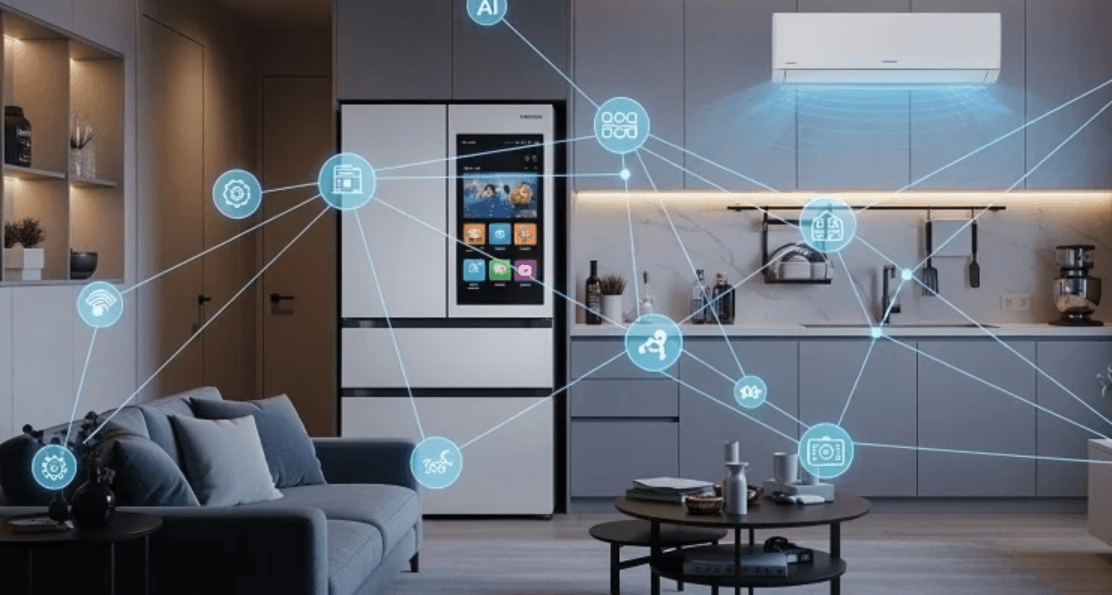
Is AI in Smart Homes Quietly Redefining the Way Humans Live?
For years, the idea of a “smart home” sounded futuristic — a house where lights respond to voice commands, doors unlock automatically, and devices communicate without human effort. But what once felt like a luxury feature has rapidly evolved into something much bigger. Today, AI in smart homes is no longer just about convenience. It is about creating intelligent living environments that can learn, predict, adapt, and make decisions in real time.
The shift happening right now is subtle but massive.
Homes are slowly transforming from passive spaces into active digital ecosystems. They are beginning to understand routines, anticipate needs, improve energy efficiency, strengthen security, and personalize everyday experiences. The modern home is no longer simply connected — it is becoming intelligent.
But this transformation raises an important question:
Are smart homes truly making life smarter, or are we entering an era where artificial intelligence quietly shapes our daily behavior without us even noticing?
The Evolution of Smart Homes: From Automation to Intelligence
The first generation of smart homes focused mainly on automation. Devices followed commands but lacked awareness.
You could:
Turn lights on through a mobile app
Control the thermostat remotely
Schedule appliances to operate at fixed times
Use voice assistants for simple tasks
These features were innovative at the time, but they relied heavily on manual input.
Artificial intelligence changed that completely.
Modern AI-powered smart homes are designed to observe patterns and continuously improve decision-making based on human behavior. Instead of waiting for commands, systems now analyze routines and predict what users may need next.
For example:
AI thermostats learn preferred room temperatures throughout the day
Smart lighting adjusts automatically based on occupancy and mood
Security systems recognize familiar faces and detect suspicious activity
Voice assistants remember user preferences and contextual behavior
This evolution from automation to predictive intelligence is what truly defines the rise of AI in smart homes.
Why AI in Smart Homes Is Growing So Rapidly
The rapid adoption of AI-powered home technology is not happening by accident. Several factors are driving this shift simultaneously.
1. Convenience Has Become a Consumer Expectation
People increasingly expect technology to simplify everyday life.
Consumers no longer want to manually manage dozens of devices separately. They want ecosystems where everything works together intelligently. AI enables devices to communicate, coordinate, and automate tasks with minimal human intervention.
This creates smoother daily experiences:
Lights that automatically dim at bedtime
Coffee machines that activate based on morning routines
Air conditioning systems that opaitimize temperature based on weather forecasts
Smart refrigerators that track grocery usage patterns
Convenience is no longer optional — it is becoming standard.
2. Rising Energy Costs Are Driving Smarter Consumption
Energy efficiency has become one of the biggest reasons homeowners invest in AI-driven systems.
Traditional homes waste enormous amounts of electricity due to inefficient heating, cooling, and lighting usage. AI solves this by continuously monitoring environmental conditions and occupancy behavior.
For instance:
AI thermostats reduce unnecessary heating or cooling
Smart lighting systems turn off automatically in empty rooms
Appliances optimize power usage during low-demand hours
AI energy systems identify inefficient consumption patterns
The result is lower utility costs and more sustainable living.
As energy concerns grow globally, AI-powered optimization is becoming increasingly valuable.
3. Security Is Becoming More Intelligent
Home security has undergone one of the biggest transformations through artificial intelligence.
Older security systems relied mainly on alarms and basic surveillance. Modern AI-driven security systems actively interpret situations in real time.
Today’s systems can:
Detect unusual movement patterns
Differentiate between humans, animals, and objects
Recognize authorized individuals through facial recognition
Send predictive alerts before incidents escalate
Instead of simply recording footage, AI security systems analyze behavior continuously.
This shift changes security from reactive protection to proactive prevention.
The Most Fascinating Part of AI in Smart Homes: Predictive Living
Perhaps the most remarkable aspect of AI-powered homes is predictive behavior.
The goal is no longer just automation — it is anticipation.
Imagine arriving home after a stressful workday. Your smart home detects your arrival time, adjusts room lighting to a calming tone, lowers ambient noise, and sets your preferred room temperature automatically.
No commands.
No adjustments.
No interaction required.
This is where smart homes become deeply personalized environments.
AI systems are increasingly capable of:
Understanding sleep patterns
Detecting emotional cues through voice analysis
Monitoring environmental comfort levels
Learning long-term behavioral routines
Over time, homes begin adapting to human preferences almost invisibly.
This creates an experience where technology feels less mechanical and more natural.
AI Voice Assistants: The Brain of Modern Smart Homes
Voice assistants have become central to the growth of AI in smart homes.
Systems like Alexa, Google Assistant, and Siri introduced millions of users to voice-controlled environments. However, modern voice assistants are evolving far beyond simple commands.
Today’s AI assistants are becoming:
More conversational
More context-aware
Better at understanding intent
Capable of managing multiple connected devices simultaneously
Instead of saying:
“Turn off the kitchen light.”
Users are beginning to say:
“I’m going to bed.”
The AI system then understands the context and performs multiple actions:
Turning off lights
Locking doors
Adjusting thermostats
Activating security systems
This shift from command-based interaction to contextual intelligence is redefining human-device communication.
The Role of IoT in AI-Powered Homes
Artificial intelligence alone cannot create intelligent homes. The foundation behind this ecosystem is the Internet of Things (IoT).
IoT enables devices to collect and exchange real-time data continuously.
Smart homes now contain:
Connected sensors
Cameras
Thermostats
Appliances
Wearable integrations
Energy systems
AI processes the massive amount of data generated by these devices to make intelligent decisions.
For example:
A smart home may detect:
Outdoor weather conditions
Indoor humidity levels
Occupancy patterns
Air quality data
User schedules
AI combines this information to optimize the living environment automatically.
Without IoT connectivity, AI in smart homes would lack the real-time awareness required for intelligent decision-making.
Healthcare and Elderly Care Are Becoming Major AI Smart Home Applications
One of the most meaningful applications of AI in smart homes is emerging in healthcare and assisted living.
As populations age globally, AI-powered homes are being designed to support elderly individuals living independently.
These systems can:
Detect falls or unusual inactivity
Monitor medication schedules
Track sleep and health patterns
Alert caregivers during emergencies
Provide voice-assisted daily support
AI smart homes may soon play a critical role in reducing healthcare strain while improving quality of life for aging populations.
This application moves smart homes beyond convenience into genuinely life-improving technology.
Are Smart Homes Becoming Too Intelligent?
Despite the advantages, the rise of AI-powered homes also introduces important concerns.
The biggest issue is privacy.
Smart homes continuously collect data about:
Voice interactions
Daily routines
Location behavior
Personal preferences
Device usage patterns
This creates legitimate concerns about:
Data ownership
Cybersecurity risks
Surveillance
Unauthorized access
Behavioral profiling
Consumers are increasingly questioning how much personal information should be shared in exchange for convenience.
The future success of AI in smart homes will depend heavily on how companies address trust, transparency, and data security.
Without responsible AI governance, adoption could face resistance despite technological progress.
The Future of AI in Smart Homes
The next generation of AI-powered homes will likely become even more adaptive and autonomous.
Future innovations may include:
Emotion-aware environments
AI-driven health diagnostics
Fully autonomous household management
Predictive maintenance systems
Personalized wellness optimization
Smart kitchens capable of nutrition planning
Homes may eventually function as intelligent digital companions rather than simply connected spaces.
The concept of “living spaces” itself could change dramatically.
Instead of static environments, homes may become responsive ecosystems that evolve continuously based on human behavior.
Why Businesses Are Investing Heavily in Smart Home AI
The business opportunity behind AI in smart homes is enormous.
Technology companies, appliance manufacturers, real estate developers, and AI startups are all investing aggressively in this market because the demand for intelligent living experiences is accelerating globally.
The industry is expanding across:
Smart appliances
Voice AI platforms
Predictive security systems
Energy management solutions
AI-powered home automation ecosystems
As AI models improve and hardware becomes more affordable, smart home adoption is expected to increase significantly over the next decade.
The companies that succeed will be those capable of creating seamless, secure, and highly personalized ecosystems.
Final Thoughts
The rise of AI in smart homes represents more than technological innovation. It reflects a deeper transformation in how humans interact with their living environments.
Homes are evolving from physical spaces into intelligent systems capable of learning, adapting, and assisting in everyday life.
What makes this transformation fascinating is that it is happening quietly.
Every automated light adjustment, personalized recommendation, predictive alert, and voice interaction gradually reshapes how people experience comfort, convenience, and control.
The real future of smart homes may not be about technology becoming more visible.
It may be about technology becoming almost invisible — seamlessly integrated into daily life in ways people no longer consciously notice.
Appreciate the creator