Industrial Equipment Rental: A Smarter Way to Manage Project Costs
ost projects, the math favors rental — and once you understand why, it becomes a difficult argument to make the other way.
Heavy equipment sits idle far more often than it works. Studies across the construction industry consistently show that owned equipment is actively in use less than 50 percent of the time. The rest of the time, it is depreciating, consuming storage space, requiring maintenance, and generating insurance costs. Renting eliminates all of that overhead and replaces it with a simple, predictable per-project expense.
The Financial Logic Behind Renting Heavy Equipment
Capital Preservation
Buying a single piece of heavy equipment — a compact excavator, a large compactor, a telehandler — can run anywhere from $50,000 to several hundred thousand dollars. That capital, once spent on equipment, is no longer available for materials, labor, business development, or opportunity investments. Rental preserves working capital and keeps financial flexibility intact.
Eliminating Depreciation Risk
Heavy equipment depreciates from the moment it is purchased. Technology changes, emission standards tighten, and market conditions shift. Equipment purchased today may be worth significantly less in five years regardless of how well it has been maintained. When you rent, depreciation is the rental company's risk, not yours.
Predictable Per-Project Expenses
Rental costs appear as a direct project expense. They are straightforward to budget, easy to track, and simple to recover through project billing. Ownership costs — spread across depreciation schedules, maintenance logs, and insurance premiums — are considerably harder to allocate accurately to individual projects.
For contractors and facility managers who want the capabilities of heavy machinery without ownership burden, industrial equipment rental provides a flexible, financially sensible alternative that scales with the work rather than sitting on the balance sheet between projects.
Types of Equipment Commonly Available for Rent
Earthmoving and Site Preparation
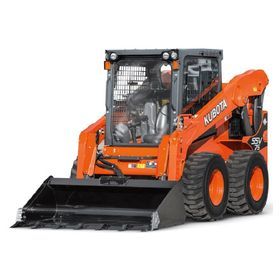
Excavators, bulldozers, motor graders, and skid steers form the backbone of most site preparation work. These machines are available in a wide range of sizes — from compact units suited to residential or tight commercial sites to full-size machines capable of moving thousands of yards of material per day. Renting allows you to match the machine size precisely to the project rather than forcing every job to work with whatever equipment you happen to own.
Compaction Equipment
Soil, asphalt, and aggregate compaction is a critical step in road construction, building foundations, utility trench backfill, and paving projects. Inadequate compaction leads to settlement, cracking, and structural failure over time. Compaction equipment — plate compactors, rammers, vibratory rollers, and pneumatic rollers — is available for rent in configurations suited to every application.
Material Handling and Lifting
Forklifts, telehandlers, boom lifts, and scissor lifts are frequently needed on construction sites and industrial facilities for short durations. Owning this type of equipment for occasional use is rarely cost-effective. Rental provides access to the exact lift capacity and reach needed for each specific task without the overhead of maintaining a diverse fleet.
Compaction Equipment: A Closer Look
Why Compaction Cannot Be Shortcut
Compaction is one of those construction steps that cannot be rushed or skipped without consequences. Under-compacted subgrade beneath a road or parking lot surface will shift and crack under load. Under-compacted trench backfill settles and creates depressions and pavement failures. The short-term inconvenience of proper compaction is trivial compared to the long-term cost of repairing work that was done incorrectly.
Matching Compactor Type to Material
Different materials require different compaction approaches. Cohesive soils like clay compact best with sheepsfoot or padfoot rollers that knead the material. Granular soils and aggregate compact well with smooth drum vibratory rollers. Asphalt requires a smooth drum roller, often in combination with a pneumatic roller for finish work. Selecting the right compactor type is as important as selecting the right size.
Contractors who need compactors for rent should specify the material type, compaction depth, and working area dimensions to the rental provider — this information determines both the compactor type and the size of machine needed for efficient production.
Industrial equipment rental is not a fallback for companies that cannot afford to buy — it is a deliberate operational strategy that keeps overhead lean, cash flow healthy, and project costs predictable. For businesses that value financial flexibility and operational efficiency, rental consistently delivers better outcomes than a fleet of owned equipment that spends more time sitting than working. The right machine, for the right duration, at a known cost — that is the value proposition that makes rental the choice of smart operators across every sector of construction and industry.
Appreciate the creator