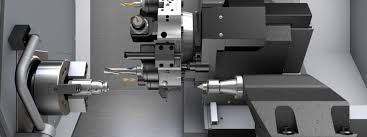
Improving Patient Care with Custom Medical CNC Machining Solutions
In modern healthcare, precision, reliability, and speed are critical factors that directly impact patient outcomes. One of the key technologies enabling this transformation is custom medical CNC machining. By allowing manufacturers to produce highly accurate and tailored medical components, CNC machining is helping healthcare providers deliver safer and more effective treatments. From surgical tools to implants, this advanced manufacturing approach is reshaping how patient care is delivered.
Enhancing Precision in Medical Device Manufacturing
Medical devices must meet extremely tight tolerances to ensure safety and effectiveness. Custom medical CNC machining allows manufacturers to produce components with exceptional accuracy, reducing the risk of errors in critical medical applications.
This precision is especially important in surgical environments, where even the smallest deviation can affect patient outcomes. CNC technology ensures consistency across every produced part, which is essential for mass production of medical equipment.
Key benefits include:
Extremely tight tolerance control for medical components
Reduced risk of manufacturing defects
Consistent quality across large production batches
Improved compatibility between medical device parts
The ability to maintain high precision also supports innovation in complex medical devices. Engineers can design intricate geometries that traditional manufacturing methods cannot achieve, improving functionality and performance in patient care solutions.
Supporting Customization for Patient-Specific Solutions
Every patient is unique, and modern healthcare increasingly relies on personalized treatment solutions. Custom medical CNC machining makes it possible to create patient-specific implants, prosthetics, and surgical tools tailored to individual anatomical needs.
This level of customization improves comfort, recovery time, and treatment success rates. Surgeons can also rely on tools specifically designed for particular procedures, enhancing surgical precision and efficiency.
Key benefits include:
Production of patient-specific implants and prosthetics
Better fit and comfort for medical devices
Enhanced surgical tool customization
Improved treatment outcomes through personalization
By supporting tailored healthcare solutions, CNC machining bridges the gap between generic medical devices and personalized medicine. This advancement plays a significant role in improving overall patient satisfaction and recovery experiences.
Increasing Efficiency in Medical Production Processes
Time is a crucial factor in healthcare manufacturing, especially when producing life-saving devices. Custom medical CNC machining significantly reduces production time while maintaining high-quality standards, allowing medical companies to respond quickly to demand.
Automated CNC systems minimize manual intervention, reducing human error and accelerating production cycles. This efficiency is particularly valuable during emergencies or high-demand situations, such as medical supply shortages.
Key benefits include:
Faster production of medical components
Reduced dependency on manual labor
Streamlined manufacturing workflows
Improved response time during medical emergencies
With improved efficiency, healthcare providers can ensure that essential medical tools and devices are always available when needed. This helps reduce delays in treatment and improves the overall healthcare delivery system.
Improving Material Performance and Safety Standards
Medical components must be made from biocompatible and durable materials to ensure patient safety. Custom medical CNC machining allows precise shaping of materials such as titanium, stainless steel, and medical-grade polymers without compromising their structural integrity.
The controlled machining process ensures that materials maintain their strength, corrosion resistance, and hygiene standards. This is especially important for implants and surgical instruments that remain in or interact with the human body.
Key benefits include:
Compatibility with medical-grade materials
Enhanced durability and longevity of components
Reduced risk of contamination or material failure
Compliance with strict healthcare safety standards
By maintaining strict material control, CNC machining helps ensure that medical devices are safe for long-term use. This contributes significantly to reducing complications and improving patient trust in medical treatments.
Driving Innovation in Advanced Medical Technology
The healthcare industry is constantly evolving, and innovation is essential for improving patient care. Custom medical CNC machining plays a vital role in enabling the development of advanced medical technologies, including minimally invasive surgical tools and next-generation implants.
This technology allows engineers to experiment with complex designs that improve functionality and reduce patient recovery time. As a result, new medical breakthroughs can be introduced more quickly and efficiently.
Key benefits include:
Support for advanced and complex medical designs
Development of minimally invasive surgical tools
Faster prototyping of medical innovations
Improved integration of technology in healthcare systems
By enabling continuous innovation, CNC machining ensures that healthcare providers can adopt the latest technologies to improve diagnosis, treatment, and recovery processes. This directly contributes to better patient care outcomes worldwide.
Conclusion
Custom medical CNC machining is transforming the healthcare industry by improving precision, efficiency, customization, material safety, and innovation. These advancements directly contribute to better patient care by ensuring that medical devices and tools are more reliable, accurate, and tailored to individual needs. As technology continues to evolve, CNC machining will remain a key driver in the development of next-generation medical solutions, ultimately leading to improved treatment outcomes and enhanced quality of life for patients.
Appreciate the creator