Important Medical Laws Every Delhi Doctor Must Follow
Introduction
Being a doctor is a big responsibility. Doctors not only treat patients but also need to follow important medical laws and rules. These laws help keep patients safe and protect doctors from legal problems.
Today, people in Delhi know more about their rights. Because of this, doctors must be more careful about communication, records, consent, and hospital rules. Even small mistakes can create complaints or legal trouble.
Medical laws are not made to trouble doctors. They help improve patient care and make healthcare safer and more professional.
If you are looking for a trusted Hospital Quality Guide in Delhi, understanding important medical laws is very important for doctors, clinics, and hospitals.
This blog explains some important medical laws every doctor in Delhi should know in very simple and easy language.
Why Medical Laws Are Important
Medical laws help doctors:
Treat patients safely
Protect patient rights
Avoid legal problems
Improve healthcare quality
Build patient trust
Doctors who follow rules carefully usually face fewer complaints and disputes.
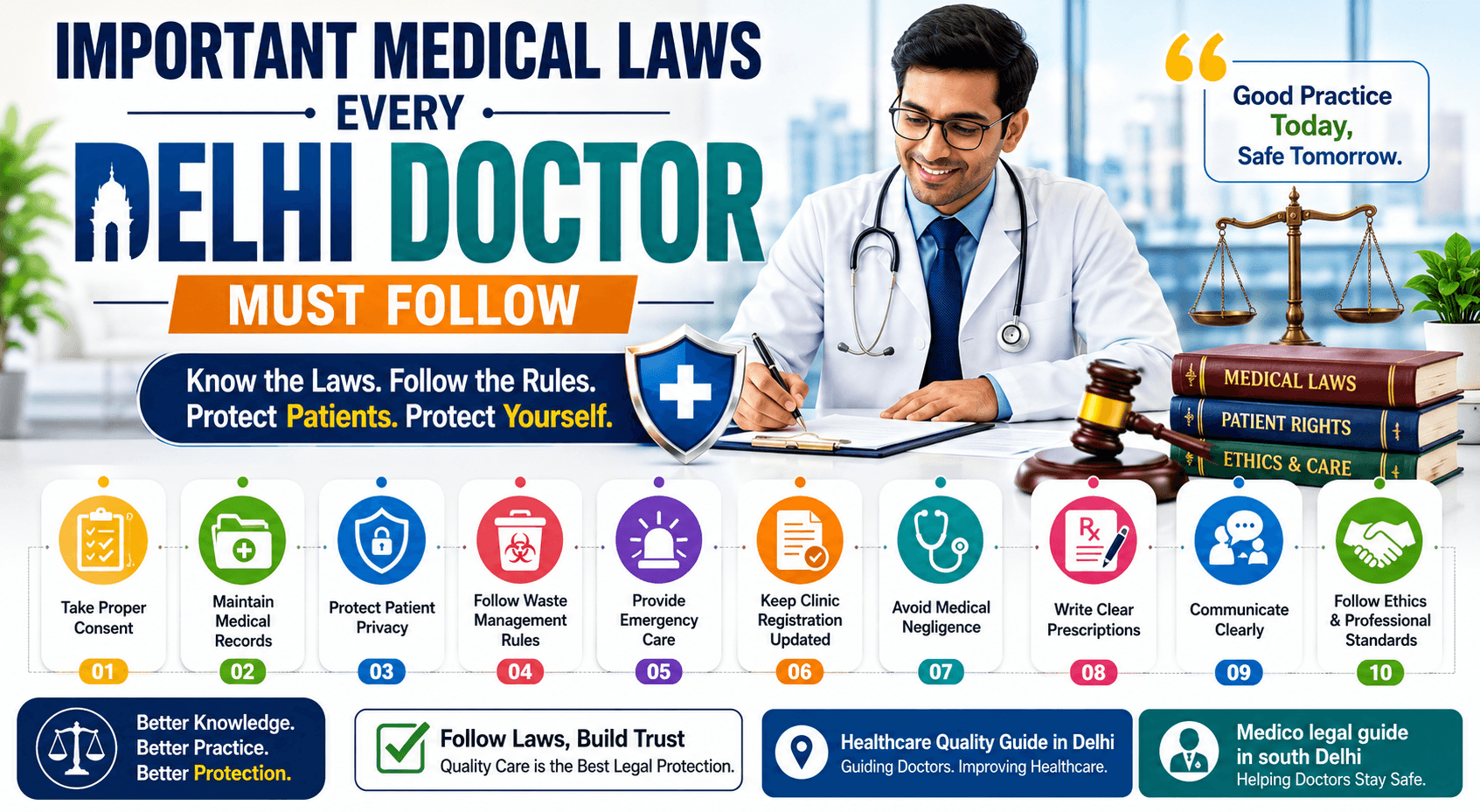
Important Medical Laws Doctors Should Follow
1. Take Proper Consent
Consent means taking permission from the patient before treatment or surgery.
Doctors should explain:
The health problem
Treatment plan
Risks involved
Possible side effects
After explaining everything clearly, written consent should be taken.
Consent protects both doctors and patients.
2. Maintain Proper Medical Records
Every doctor should keep complete patient records.
These include:
Prescriptions
Test reports
Treatment details
Consent forms
Patient history
Good records help doctors during:
Complaints
Investigations
Legal cases
Poor documentation can create legal trouble later.
3. Protect Patient Privacy
Doctors should never share patient information without permission.
Private information includes:
Medical reports
Diseases
Personal details
Treatment history
Sharing patient details carelessly on WhatsApp or social media can create legal problems.
4. Follow Biomedical Waste Rules
Hospitals and clinics should safely dispose:
Needles
Syringes
Gloves
Medical waste
Improper waste disposal can spread infections and create government penalties.
Safe waste management improves hospital safety.
5. Provide Emergency Treatment
Doctors should try to provide quick treatment during emergencies.
In emergency situations:
Do not delay treatment
Give first aid quickly
Refer patients properly if needed
Delays during emergencies can create serious legal complaints.
6. Keep Clinic Registration Updated
Clinics and hospitals should have:
Valid registration
Updated licenses
Proper permissions
Running a clinic without proper registration may create penalties and legal problems.
7. Follow Medical Negligence Rules
Patients can complain if they feel treatment was careless.
Common reasons for complaints include:
Wrong treatment
Poor communication
Missing records
Delay in care
Many doctors look for a trusted Healthcare Quality Guide in Delhi to improve patient care and reduce legal risks.
8. Write Clear Prescriptions
Doctors should write:
Clear medicine names
Correct dosage
Proper instructions
Bad handwriting or unclear prescriptions can confuse patients and create mistakes.
9. Avoid False Promises
Doctors should never promise:
Guaranteed recovery
100% success
No treatment risks
Every treatment has some risk and uncertainty.
Honest communication builds trust.
10. Speak Politely with Patients
Good communication is very important.
Doctors should:
Listen carefully
Speak politely
Explain simply
Respect patient feelings
Many complaints happen because patients feel ignored or disrespected.
Why Healthcare Quality Is Important
Good healthcare quality means:
Safe treatment
Clean hospitals
Proper records
Good communication
Professional behavior
Better healthcare quality improves patient trust and reduces legal problems.
If you are searching for a trusted Hospital Quality Guide in Delhi, legal awareness and patient safety should always be a priority.
Common Mistakes Doctors Should Avoid
1. Incomplete Documentation
Missing records can create legal trouble.
Always maintain complete records.
2. Poor Communication
Doctors should never ignore patient questions.
Simple communication improves trust.
3. Missing Consent
Written consent is very important before surgeries and risky procedures.
4. Sharing Patient Information
Doctors should protect patient privacy carefully.
5. Ignoring Hospital Rules
Waste management, fire safety, and registration rules should always be followed.
Simple Tips for Doctors to Stay Safe
Here are some easy safety tips:
Maintain proper records
Speak politely
Take written consent
Keep clinic licenses updated
Follow hospital rules
Respect patient privacy
Stay calm during stressful situations
Learn basic medico-legal rules
Small precautions can prevent bigger problems later.
Importance of Medico-Legal Awareness
Today, every doctor should understand basic medico-legal safety.
Doctors should know:
Patient rights
Consent rules
Documentation importance
Communication ethics
Medical negligence basics
Many healthcare professionals take guidance from a trusted Medico legal guide in south Delhi to improve legal awareness and professional safety.
Legal knowledge helps doctors practice more confidently and safely.
Conclusion
Medical laws are important for every doctor. They help protect patients, improve healthcare quality, and reduce legal problems.
Doctors can stay legally safe by:
Maintaining proper records
Taking written consent
Communicating clearly
Following hospital rules
Respecting patient rights
Improving healthcare quality
Simple precautions and legal awareness can protect doctors’ careers, reputation, and patient trust.
If you are looking for a trusted Healthcare Quality Guide in Delhi or a reliable Medico legal guide in south Delhi, learning these medical laws can help doctors create safer and more professional healthcare practice.
FAQs
1. Why are medical laws important for doctors?
Medical laws help doctors practice safely and avoid legal problems.
2. Why is consent important?
Consent shows that patients understand and agree to treatment.
3. Why should doctors maintain records?
Records work as proof during complaints and investigations.
4. Can poor communication create complaints?
Yes. Many disputes happen because of misunderstanding.
5. Why is patient privacy important?
Sharing patient information without permission can create legal trouble.
6. How can doctors reduce legal risks?
Doctors can reduce risks through good communication, records, consent, and legal awareness.
Appreciate the creator