Hydroponics Systems and Principles of Plant Nutrition
By:- Srijeeta Majumder srijeetamajumder337@gmail.com Before beginning the discussion of the principles of plant nutrient systems in hydroponic systems, we need to define what we mean by 'hydroponic'.
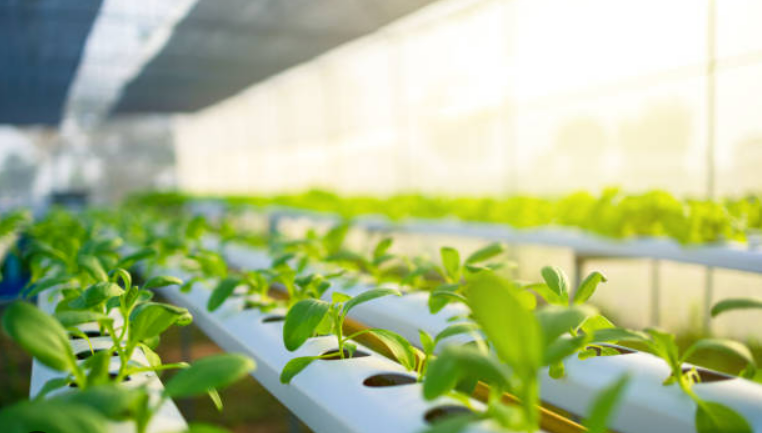
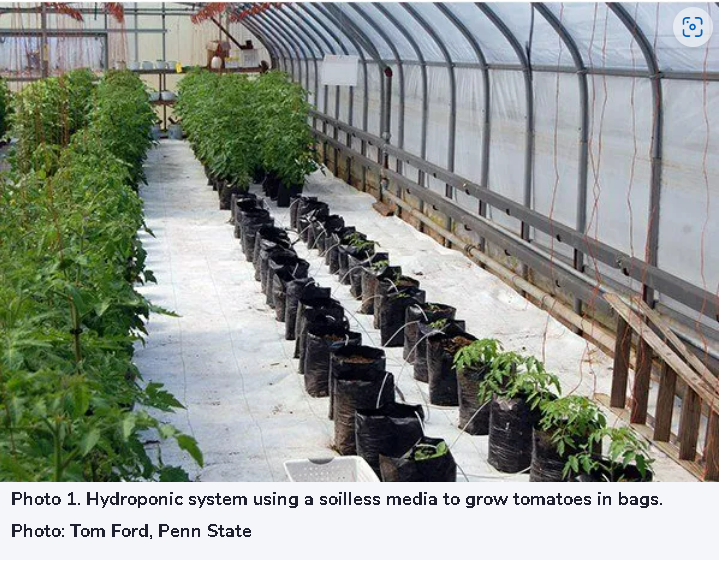
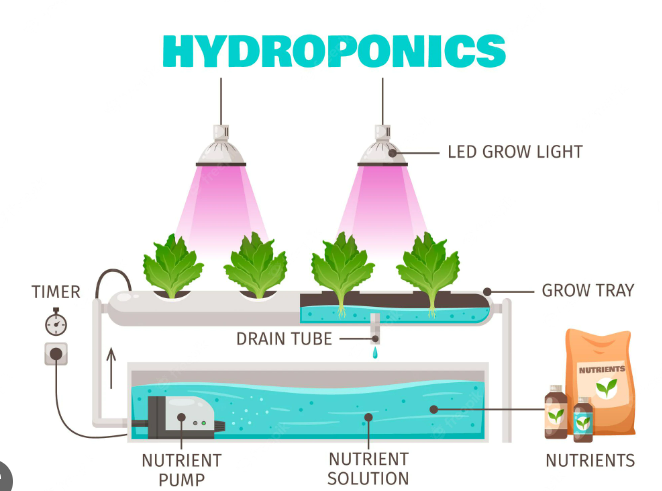
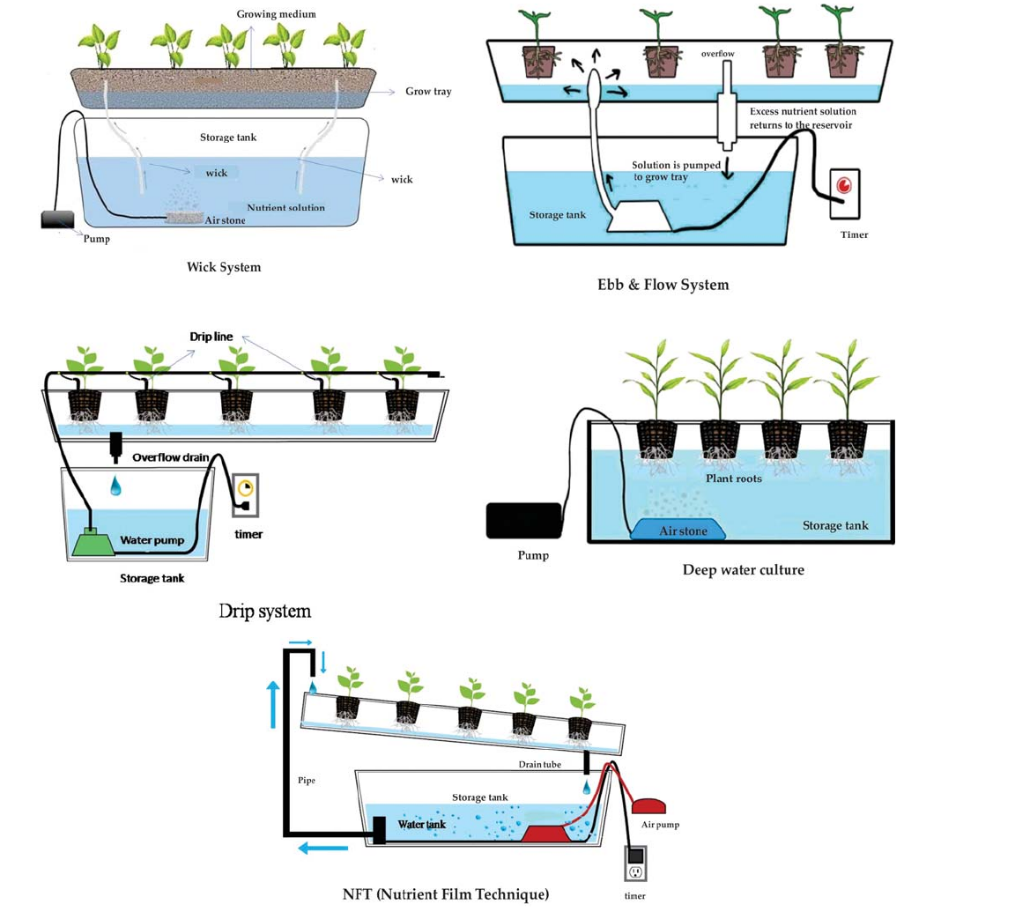
Hydroponic can be defined as growing plants in water containing nutrients. Examples of this type of hydroponic system include NFT (nutrient film technique) systems and deep-water float systems where plant roots are set in nutrient solutions. Another definition of hydroponic is growing plants without soil. With this definition growing plants in soilless media (potting soil) or other types of aggregate media such as sand, gravel, and coconut oil are considered hydroponic systems. Here, we are using hydroponics to mean growing plants without soil.
Essential Nutrients Plants cannot properly function without 17 essential nutrients. These nutrients are needed so that processes critical to plant growth and development can occur. For example, magnesium is a critical component of chlorophyll. Chlorophyll is a pigment used to capture energy from light that is needed in photosynthesis. It also reflects green wavelengths and is the reason most plants are green. Magnesium is the center of the chlorophyll molecule. Table 1 lists the plant roles of essential nutrients.
Essential nutrients can be broadly categorized as macronutrients and micronutrients. Macronutrients and micronutrients are both essential for plant growth and development. Macronutrients include carbon, hydrogen, oxygen, nitrogen, phosphorus, potassium, sulfur, calcium, and magnesium. Micronutrients include iron, manganese, zinc, boron, molybdenum, chlorine, copper, and nickel. The difference between macro- and micronutrients is the amount required by plants. Macronutrients are required in higher amounts than micronutrients. Table 1 shows the approximate plant content of essential nutrients.
Plants get carbon, hydrogen, and oxygen from air and water. The rest of the nutrients are from soil or in the case of hydroponics from nutrient solutions or aggregate media.
pH
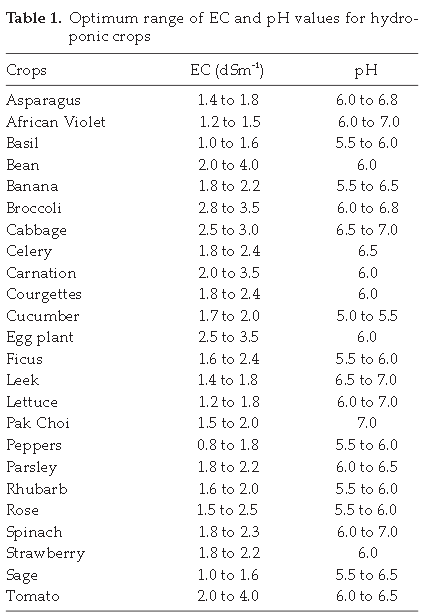
It is impossible to discuss plant nutrition without considering pH. In hydroponics, we are primarily concerned with the pH of the water used to make up nutrient solutions and irrigate plants. pH is a measure of the relative acidity or hydrogen ion concentration and it plays an important role in plant nutrient availability. It is measured using a 0- to 14-point scale where 0 is the most acidic, 7 is neutral, and 14 is the most alkaline. The scale is logarithmic, and each unit represents a 10-fold change. This means that small changes in values are large changes in pH. For example, a value of 7 is 10 times higher than 6 and 100 times higher than 5. In general, the optimal pH range for growing vegetables hydroponically is 5.0 to 7.0.
Nutrition Problems
Hydroponic systems are less forgiving than soil-based systems and nutrient problems can result in plant symptoms quickly. For that reason, the composition of the nutrient solution and regular monitoring of the nutrient solution and plant nutrient status is critical.
Additionally, keep an eye out for plant symptoms of common issues including: Soluble Salts Damage
Cause: Soluble salts damage can be caused by over-fertilization, poor water quality, salts accumulation in aggregate media over time, and/or inadequate leaching. Fertilizers are salts and in hydroponic systems, they are most often fertigated. As water evaporates, soluble salts can accumulate in aggregate media if they are not adequately leached. Irrigation water can also be high in soluble salts contributing to the problem.
Symptoms: Chemical induced drought can occur when soluble salts levels in planting media are excessive. As a result, you will see wilting of plants despite adequate irrigation. Other symptoms include dark green foliage, dead and burned leaf margins, and root death.
Detection: Soluble salts levels can be monitored/measured by tracking the electrical conductivity (EC) of irrigation water, nutrient solutions, and leachate (a nutrient solution that has drained from the planting container).
Cure: Soluble salts can be leached with clear water. First, identify the source of the high soluble salts level and correct.
Nitrogen Deficiency
Cause: Nitrogen deficiency can be caused by under fertilization, nutrient imbalance, or excessive leaching.
Symptoms: Typical first symptoms of nitrogen deficiency are light green foliage and overall stunting of plants. You can also see wilting and dead and/or yellow leaf margins.
Detection: Measuring/monitoring the electrical conductivity (EC) of nutrient solutions can help prevent nitrogen deficiency. Adjust EC levels when they are low or high.
Cure: Identify the source and correct it. This may mean adding more nitrogen to nutrient solutions. It may also mean that an antagonistic nutrient is excessive in the nutrient solution.
Calcium Deficiency
Cause: Calcium deficiency can be caused by under fertilization, nutrient imbalance, or low pH. It is also related to moisture management, high temperature, and low airflow. Calcium is a mobile nutrient and is transported through the plant in water-conducting tissues. Fruit and leaves compete for water. Low relative humidity and high temperatures can result in increased transpiration rates and movement to leaves. In this scenario, calcium deficiency can develop in fruit.
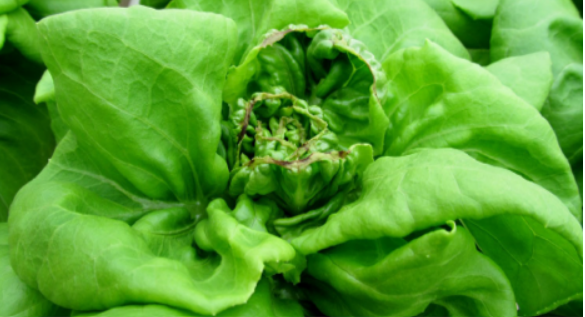
Symptoms: Calcium deficiency symptoms commonly start out as brown leaf margins of new plant growth or on the bottom of the fruit. Great examples of this are tipburn in lettuce and blossom end rot in tomato and pepper. As symptoms progress, you may see brown dead spots on the leaves.
Detection: Monitor media and conduct plant analysis.
Cure: Correct pH to between 5.0 and 7.0 in nutrient solutions. Apply fertilizers, if needed. In greenhouses airflow can be low and introducing horizontal airflow at a rate of 0.3 to 1 m/s at plant level can break the plant boundary layer and increase the transpiration rate to avoid calcium deficiency in lettuce. The key with this is that airflow needs to be uniform for uniform plant growth.
Iron Deficiency
Cause: The most common cause of iron deficiency is high pH in the media and/or irrigation water. It can also be caused by nutrient imbalance.
Symptoms: Iron deficiency shows up in plants as yellowing between leaf veins. Look for this symptom to show up first on new growth.
Detection: Monitor media and conduct plant analysis.
Cure: Correct the pH of the nutrient solution. Apply iron fertilizer, if needed.
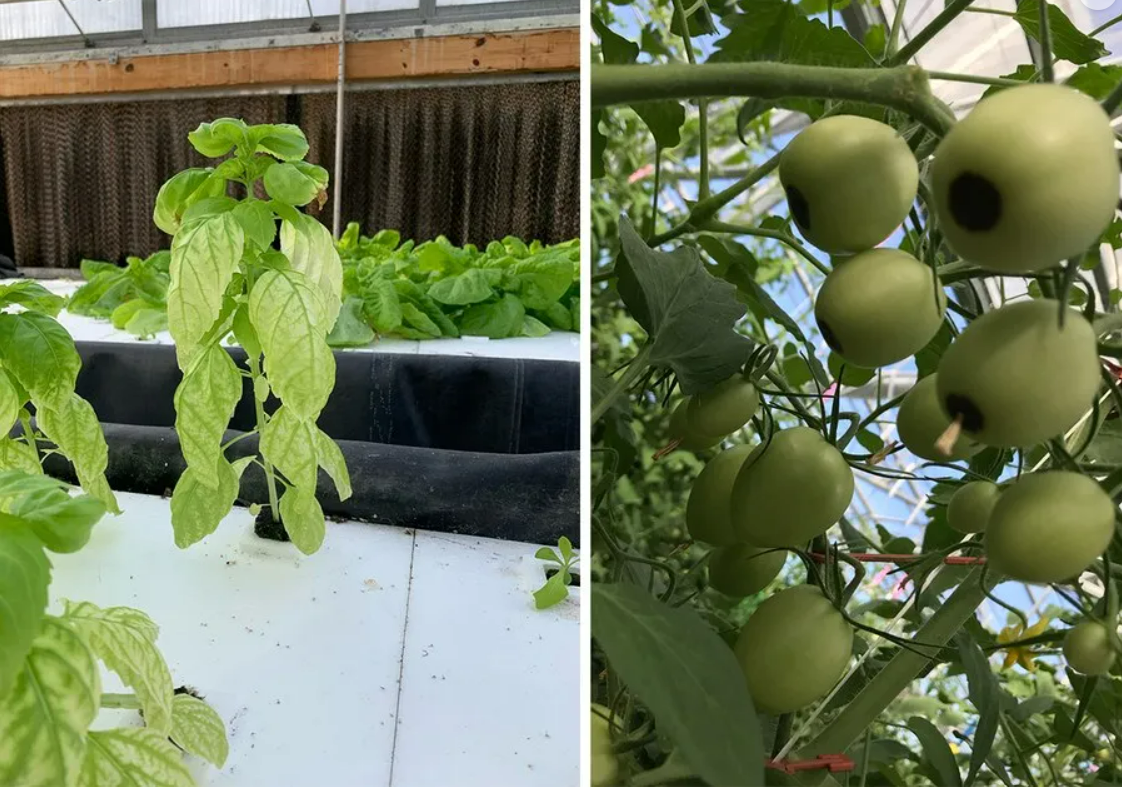
(Left) This hydroponic basil was severely affected by iron deficiency. Once iron was added to the water, the new growth was not affected. (Right) Hydroponic tomatoes showing blossom end rot. Magnesium Deficiency
Cause: Magnesium can be caused by high media pH and/or nutrient imbalance.
Symptoms: Look for yellowing between leaf veins as a symptom of magnesium deficiency. Magnesium deficiency usually shows up first on lower to middle leaves which helps distinguish it from iron deficiency.
Detection: Monitor media and conduct plant analysis.
Cure: Correct the pH of the nutrient solution. Apply iron fertilizer, if needed.
Boron Toxicity
Cause: Boron toxicity is caused by applying too much boron to plants. Of the nutrients commonly applied as fertilizer, boron has the narrowest range between deficiency and toxicity. It is easy to over-apply boron. Check and double-check fertilizer calculations before applying. It can also be in irrigation water. It is important to check levels in a water source before using it and to account for boron in the water when adding boron fertilizer.
Symptoms: Symptoms of boron toxicity are yellow and dead spots on leaf margins. You may also see reduced root growth.
Detection: Monitor media and conduct plant analysis.
Cure: Determine the source of the excess boron and correct it. Procedure
BENEFITS AND LIMITATIONS
OF HYDROPONICS:-
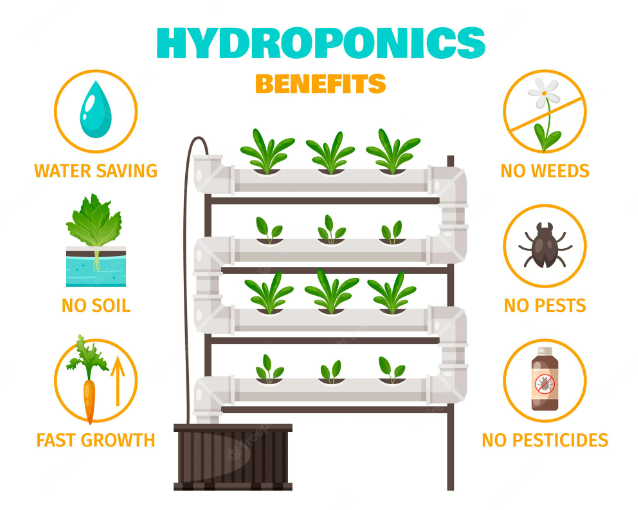
Recently hydroponic technique is becoming
popular because this is clean and relatively easy
method and there is no chance of soil-borne disease,
insect or pest infection to the crops thereby reducing
or eliminating use of pesticides and their resulting
toxicity. Besides, plants require less growing time
as compared to crop grown in field and growth of
plant is faster as there is no mechanical hindrance
to the roots and the entire nutrient are readily
available for plants. This technique is very useful
for the area where environmental stress (cold, heat,
dessert etc) is a major problem (Polycarpou et al.,
2005). Crops in hydroponic system are not
influenced by climate change therefore, can be
cultivated year-round and considered as off season
(Manzocco et al., 2011). Further, commercial
hydroponic systems are automatically operated and
expected to reduce labour and several traditional
agricultural practices can be eliminated, such as
weeding, spraying, watering and tilling (Jovicich
et al., 2003). Hydroponics saves large amount of
water as irrigation and other kind of sprays is not
needed and water logging never occurs. The
problem of pest and disease can be controlled easily
while weed is practically non-existent. Higher
yields can be obtained since the number of plants
per unit is higher compared to conventional
agriculture.
Although soil-less cultivation is an advanta-
geous technique but some limitations are
significant. Technical knowledge and higher initial
cost is fundamental requirement for commercial
scale cultivation (Resh, 2013). Plant in a
hydroponics system is sharing the exact same
nutrient, and water borne diseases can easily spread
from one plant to another (Ikeda et al., 2002). Hot
weather and limited oxygenation may limit
production and can result in loss of crops.
Maintenance of pH, EC and proper concentration
of the nutrient solution is of prime importance.
Finally, light and energy supply is required to run
the system under protected structure.
WATER CONSERVATION IN HYDROPONIC
As water becomes scarce and important as a
resource, the use of hydroponics and other water
saving technologies for crop production is needed
now and is poised to popularize in time.
Hydroponics uses substantially less water as
compared to the soil farming. In soil farming, most
of the water that we supply to the plants gets
leached deep into the soil and is unavailable to the
plants roots, whereas in hydroponics, plant roots
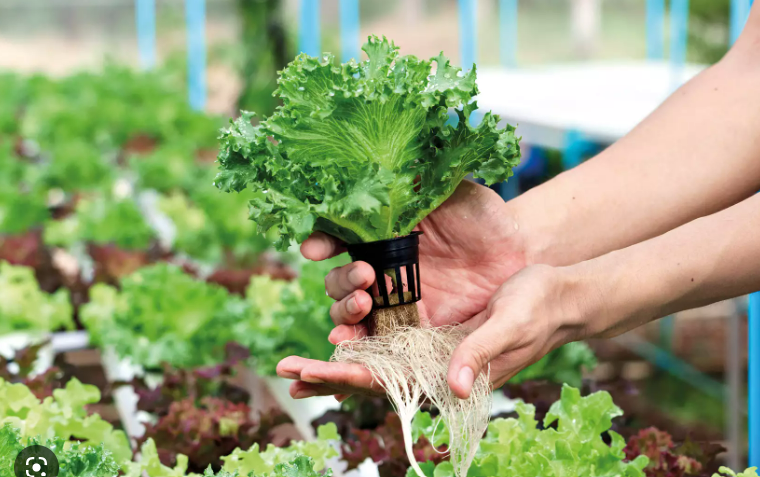
are either submerged in water or a film of nutrients
mixed in water is constantly encompassing the root
zone, keeping it hydrated and nourished. Water is
not wasted in this process, as it gets recovered,
filtered, replenished and recycled. Waste nutrient
solution can be used as an alternate water resource
for crop cultivation under hydroponic system (Choi
et al., 2012). Savings in irrigation water, fertilizer
and increase in vegetable and water productivity
under the hydroponic systems as compared to
conventional agriculture is depicted in Table 3. NFT
based hydroponics can reduce irrigation water
usage by 70% to 90% by recycling the run-off water.
It is possible to effectively grow high value, good-
quality vegetables under controlled hydroponic
conditions using 85 to 90% less water than tradi-
tional soil based production. Water sources from
groundwater or dam/river water commonly contain
factors that can influence plant yield and affect
plant condition, including salinity, dissolved solids
and pathogens. While some of these factors can be
beneficial to crops, others need to be minimized.
GLOBAL HYDROPONIC MARKET
AND COMMERCIAL HYDROPONIC
PRODUCTION The Global Hydroponics Market has been
estimated to cross USD 21203.5 million in 2016. By
crop type, the global hydroponics market includes water that can be brought under hydroponics. Now a
day’s people in various big cities like Delhi,
Chandigarh, Noida, and Bangalore are growing
some leafy greens and small herbs and spices on
their rooftops and balconies for fresh consumption.
The future for hydroponics appears more positive
today than any time over the last 50 years. The
startup costs to implement a hydroponic farm can
vary widely but, they are usually higher than soil-
based on farming costs. Therefore, to foster the
hydroponics industry’s growth, it is important to
implement technologies that reduce dependence on
human labor and lower overall startup costs.
CONCLUSIONS
In recent years hydroponics is seen as a
promising strategy for growing different crops. As
it is possible to grow short duration crop like
vegetables round the year in very limited spaces
with low labour, so hydroponics can play a great
contribution in areas with limitation of soil and
water and for the poorer and landless people. In
India, the hydroponic industry is expected to grow
exponentially in near future. To encourage
commercial hydroponic farm, it is important to
develop low cost hydroponic technologies that
reduce dependence on human labour and lower
overall startup and operational costs. Thank you.
Appreciate the creator