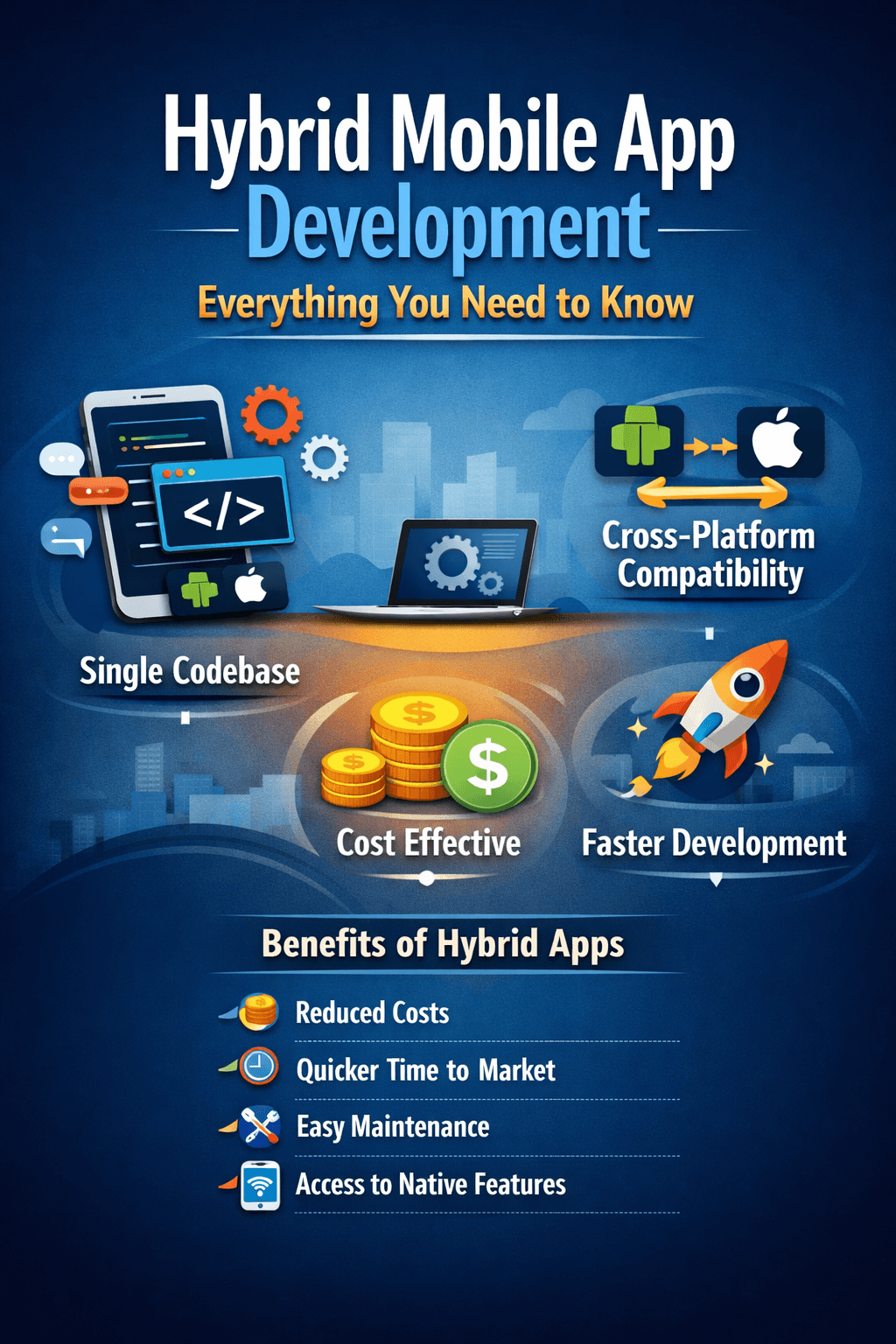
Hybrid Mobile App Development: Everything You Need to Know
In today’s fast-paced digital world, businesses need mobile apps that are cost-effective, scalable, and quick to market. That’s where hybrid mobile app development comes in. Instead of building separate apps for Android and iOS, companies can create a single app that runs across multiple platforms. Many organizations now rely on hybrid mobile app development services to streamline their digital strategy and reduce development costs while maintaining performance and user experience.
Hybrid mobile app development combines the best of web and native applications, enabling businesses to build apps using web technologies like HTML, CSS, and JavaScript while still accessing native device features. This approach has become increasingly popular among startups, SMEs, and even large enterprises looking to accelerate digital transformation.
In this comprehensive guide, we’ll explore everything you need to know about hybrid mobile app development—its benefits, tools, frameworks, challenges, use cases, and how it compares to native development.
What Is Hybrid Mobile App Development?
Hybrid mobile app development refers to the process of building mobile applications using web technologies that are wrapped in a native container. These apps can be installed on devices like native apps but are primarily built using cross-platform technologies.
Unlike purely native apps, which are built specifically for Android (Java/Kotlin) or iOS (Swift/Objective-C), hybrid apps use a single codebase that works on both platforms.
Popular frameworks that support hybrid development include:
Flutter
React Native
Ionic
Apache Cordova
These tools allow developers to write code once and deploy it across multiple platforms, saving time and resources.
How Hybrid Apps Work
Hybrid apps function by embedding a web application inside a native wrapper using a WebView component. The wrapper allows the app to access device-specific features like:
Camera
GPS
Contacts
Push notifications
File system
Modern hybrid frameworks go beyond simple WebViews and offer near-native performance by bridging JavaScript code with native APIs.
Key Benefits of Hybrid Mobile App Development
1. Single Codebase
One of the biggest advantages is maintaining a single codebase for multiple platforms. This significantly reduces development time and cost.
2. Faster Time-to-Market
Businesses can launch their apps simultaneously on Android and iOS. This is particularly beneficial for startups looking to validate their ideas quickly.
3. Cost-Effective Development
Maintaining separate native teams can be expensive. Hybrid development allows companies to hire fewer developers with cross-platform expertise.
4. Easier Maintenance and Updates
Since there’s only one codebase, bug fixes and updates can be rolled out more efficiently.
5. Access to Native Features
Hybrid frameworks allow integration with device hardware and APIs, ensuring rich user experiences.
Hybrid vs Native Mobile App Development
When comparing hybrid and native mobile app development, several key differences stand out. In terms of codebase, hybrid apps use a single codebase that works across multiple platforms, whereas native apps require separate codebases for Android and iOS. This directly impacts development cost, as hybrid development is generally lower in cost due to shared resources, while native development tends to be higher because it involves building and maintaining two distinct applications.
Performance is another important factor. Hybrid apps offer near-native performance, which is sufficient for most business applications, while native apps deliver high performance, especially for graphics-intensive or complex applications. Maintenance is typically easier with hybrid apps since updates and bug fixes are made in one place, whereas native apps require more complex maintenance due to separate code management. Finally, when it comes to access to APIs, hybrid apps provide good access to device features through plugins and bridges, but native apps offer full access to all platform-specific APIs and capabilities.
Native apps may still outperform hybrid apps in graphics-heavy applications like gaming. However, for most business applications, hybrid development offers a balanced solution.
Popular Hybrid App Development Frameworks
Let’s take a closer look at leading hybrid frameworks:
Flutter
Developed by Google, Flutter uses Dart programming language and offers a rich set of pre-built widgets. It provides high performance and visually attractive UI components.
React Native
Backed by Meta, React Native allows developers to use JavaScript and React to build cross-platform apps. It’s widely used for scalable business applications.
Ionic
Ionic uses web technologies and integrates seamlessly with Angular, React, and Vue.
Apache Cordova
Cordova enables developers to wrap HTML/CSS/JS apps into native containers.
Use Cases of Hybrid Mobile Apps
Hybrid apps are suitable for:
E-commerce applications
On-demand service apps
Enterprise mobility solutions
Social networking apps
CRM platforms
For example, businesses offering CRM Software development services often choose hybrid frameworks to create mobile CRM applications that work seamlessly across devices. This ensures sales and support teams can access data anytime, anywhere without compatibility issues.
Industries Benefiting from Hybrid Apps
1. Healthcare
Appointment booking, patient tracking, telemedicine apps.
2. Education
E-learning platforms and virtual classrooms.
3. Retail & E-commerce
Shopping apps with payment integrations.
4. Finance
Mobile banking and digital wallet apps.
5. Logistics
Fleet tracking and inventory management solutions.
Challenges of Hybrid Mobile App Development
While hybrid apps offer numerous benefits, they also come with some challenges:
1. Performance Limitations
Although modern frameworks have improved, highly complex animations or graphics may perform better in native apps.
2. Limited Access to Advanced Native APIs
Some device features may require custom native modules.
3. Dependency on Third-Party Plugins
Hybrid apps often rely on plugins, which may become outdated.
However, experienced hybrid mobile app development services providers know how to overcome these challenges using optimized architecture and proper testing strategies.
Development Process of a Hybrid Mobile App
Here’s a typical development lifecycle:
1. Requirement Analysis
Understanding business goals and target audience.
2. UI/UX Design
Creating wireframes and interactive prototypes.
3. Development
Coding using cross-platform frameworks.
4. API Integration
Connecting backend services and third-party APIs.
5. Testing & QA
Ensuring performance, security, and compatibility.
6. Deployment
Publishing on Google Play Store and Apple App Store.
7. Maintenance & Updates
Continuous improvements and bug fixes.
In the middle phase of development, businesses often integrate enterprise systems such as ERP and CRM Software development services modules to ensure seamless workflow automation across departments.
Cost of Hybrid Mobile App Development
The cost varies depending on:
App complexity
Design requirements
Feature set
Integration needs
Development team location
On average, hybrid app development can cost 30–40% less than native development due to shared codebases.
Performance Optimization Tips
To ensure smooth performance:
Minimize heavy animations
Optimize images and assets
Use efficient state management
Reduce unnecessary plugins
Conduct regular performance testing
Frameworks like Flutter and React Native offer built-in performance optimization tools.
Security Considerations
Security is crucial for mobile applications. Hybrid apps should implement:
End-to-end encryption
Secure API authentication
Data encryption at rest
Regular vulnerability testing
Businesses handling sensitive customer information, especially those providing CRM Software development services, must prioritize compliance with data protection regulations.
Future of Hybrid Mobile App Development
The future looks promising as hybrid frameworks continue to evolve. Advancements in cross-platform development are narrowing the performance gap between hybrid and native apps.
With growing demand for digital solutions, companies increasingly prefer hybrid development for:
Faster innovation
Scalable solutions
Reduced operational costs
Global market reach
AI integration, cloud computing, and progressive web apps (PWAs) are further enhancing hybrid capabilities.
When Should You Choose Hybrid Development?
Hybrid mobile app development is ideal when:
You need quick deploymen
Budget is limited
Targeting multiple platforms
App complexity is moderate
Maintenance efficiency is a priority
However, for high-performance gaming or advanced AR/VR apps, native development might be more suitable.
Conclusion
Hybrid mobile app development has transformed the way businesses approach mobile solutions. By combining the flexibility of web technologies with the power of native functionality, hybrid apps provide a balanced, efficient, and scalable approach to app development.
Whether you're a startup building your first mobile product or an enterprise expanding digital capabilities, hybrid development offers a practical solution. With the right strategy, tools, and expert development team, you can create robust, user-friendly applications that drive engagement and growth.
As technology continues to advance, hybrid mobile apps will play a critical role in shaping the future of mobile innovation offering businesses the agility and efficiency needed to stay competitive in today’s dynamic digital landscape.
Appreciate the creator