How Urban Development Contractors Are Shaping the Future of Australia’s Infrastructure Construction
Population growth and the expansion of precincts are changing the Australian city. Rising demand for sustainable and liveable communities is transforming the way we plan and deliver public assets and community infrastructure. There is a growing group of specialists whose sphere of influence is rapidly expanding. They are the urban development contractors who help shape the form and function of our cities.
No longer involved in just civil construction, these specialists are helping to masterplan new precincts and developments. They are also directly influencing built form through the delivery of civil works, environmental management, transport connections and community-focused design. As sustainability and long-term resilience become key differentiators for urban design, these urban development contractors are playing a pivotal role in guiding new approaches to creating precincts and infrastructure construction.
Shaping precinct design through early collaboration
Precincts today are more complex. As a result of rising demand for integrated transport, housing, retail, open space and community facilities, precinct design involves close coordination between a wide range of infrastructure and built form elements. Collaborating as early as possible is key to ensuring they work together effectively. Urban development contractors who specialise in this space can offer a practical, on-the-ground perspective to master planners and engineers to help make these new precincts functional, safe and adaptable.
Involving contractors early means they can identify key site layout features such as soil conditions, service constraints and future grading requirements that are fundamental to long-term design. The more a contractor is involved up front, the less rework there is. Their insights also enable a more considered approach to blending landscape and natural elements into the urban environment.
Supporting transport connectivity and movement networks
Transport connections are vital to the success of any city that is looking to grow. The complex networks of roads, cycleways, pedestrian links and access routes need to be carefully considered within precincts in order to ensure efficient movement. Contractors are a central piece of the puzzle here. Site-specific knowledge of constraints, traffic patterns and safe staging techniques helps project teams deliver movement networks that work for surrounding communities.
In many of our busier urban environments, project teams are also managing infrastructure delivery within established transport corridors. Delivering infrastructure works while keeping access routes open for traffic, pedestrians, and public transport is a complex task. Contractors have the practical experience to ensure new precincts are not standalone areas, but instead connect seamlessly with the wider city, supporting economic activity and sustainable movement patterns.
Delivering infrastructure within evolving urban environments
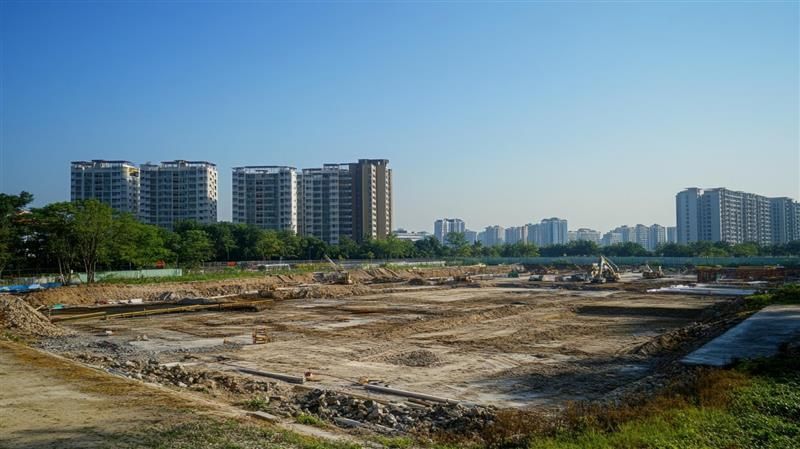
There are many projects taking place within established suburbs and renewal precincts across Australia. In these settings, contractors need to carefully coordinate their work around existing residents, businesses and other public services. Site-specific access requirements, noise control, and stakeholder communications are all carefully managed so projects can keep moving forward.
Managing these factors not only enables the delivery of complex infrastructure with minimal disruption but also supports the transformation of older areas into modern and connected spaces that reflect current and future community needs.
Enabling sustainable housing development
Housing development is a major driver of growth in our cities. Urban development contractors support this growth by providing the groundwork that helps communities take shape. These teams help prepare the land, establish drainage, construct roads and integrate open space elements that have a major impact on the liveability of residential areas. In addition, these elements can strongly influence how neighbourhoods evolve.
Contractors also play a pivotal role in ensuring that new housing precincts are built sustainably. These experts are closely involved in erosion and sediment control, vegetation protection, protection of environmental values, water sensitive design and ongoing environmental monitoring. These measures are critical to the long-term health and resilience of new communities.
Supporting environmental outcomes and long-term urban resilience
Sustainability and resilience are at the core of modern urban development requirements. Contractors are making a contribution to these objectives on the ground, helping to implement several practical measures that support long-term environmental outcomes. Stormwater management, soil stabilisation, vegetation establishment and environmental monitoring are just some of the measures contractors are delivering to reduce long-term risk from flooding, erosion and changing climate pressures.
Contractors are working closely with design teams to ensure environmental strategies are also considered in the construction delivery phase. It is through this type of alignment that urban areas can continue to be safe and functional for many years. Resilient design is not something applied at the end of construction. It is designed from the start and reinforced throughout the life of the asset.
Driving efficiency through modern methods
Project delivery is being reshaped by technology. Digital design tools, modern surveying methods and state-of-the-art machinery are all supporting better accuracy and efficiency. Contractors are also adopting these tools and approaches to help further improve planning, reduce waste and better control costs. Modern digital models allow design teams to assess the landform, utilities and drainage conditions with a high degree of accuracy. This, in turn, can be used to inform cut and fill plans, sequencing of civil works and access design.
As a result, construction times can be more reliable and, with improved quality control, better outcomes are achieved on precincts and infrastructure in terms of long-term performance.
Connecting communities and supporting city shaping
Infrastructure can play a large part in supporting how we live, travel and interact with one another. Contractors are also having a major impact on the liveability of public spaces. Aspects such as pedestrian comfort, the design of access routes and public open space, and the overall feel of a precinct can be strongly influenced by the quality of their design and delivery. Carefully designed and well-delivered public open space and community infrastructure improve social connection, encourage activity and contribute to the character of a city.
Urban development contractors are also having a growing impact on the liveability of Australia’s urban environments by creating places that balance both infrastructure requirements and community expectations. Their understanding of technical capabilities and practical challenges, combined with an appreciation for placemaking, has become a key feature of growing urban areas, where density and interconnection are on the rise.
Building the future of Australian cities
Planning, engineering, design, government agencies and infrastructure contractors all need to collaborate as partners to ensure we are building the future of Australian cities in the right way. Urban development contractors who are specialists in this area play a pivotal role in this space, providing the link between vision and delivery.
From precinct design, through to transport integration, environmental management, housing development and long-term resilience, contractors are increasingly playing an important role in shaping the way infrastructure is built as Australia enters a new phase of growth. Their work supports the delivery of more sustainable, connected and resilient cities that can meet the needs of our current communities and the next generations.
Appreciate the creator