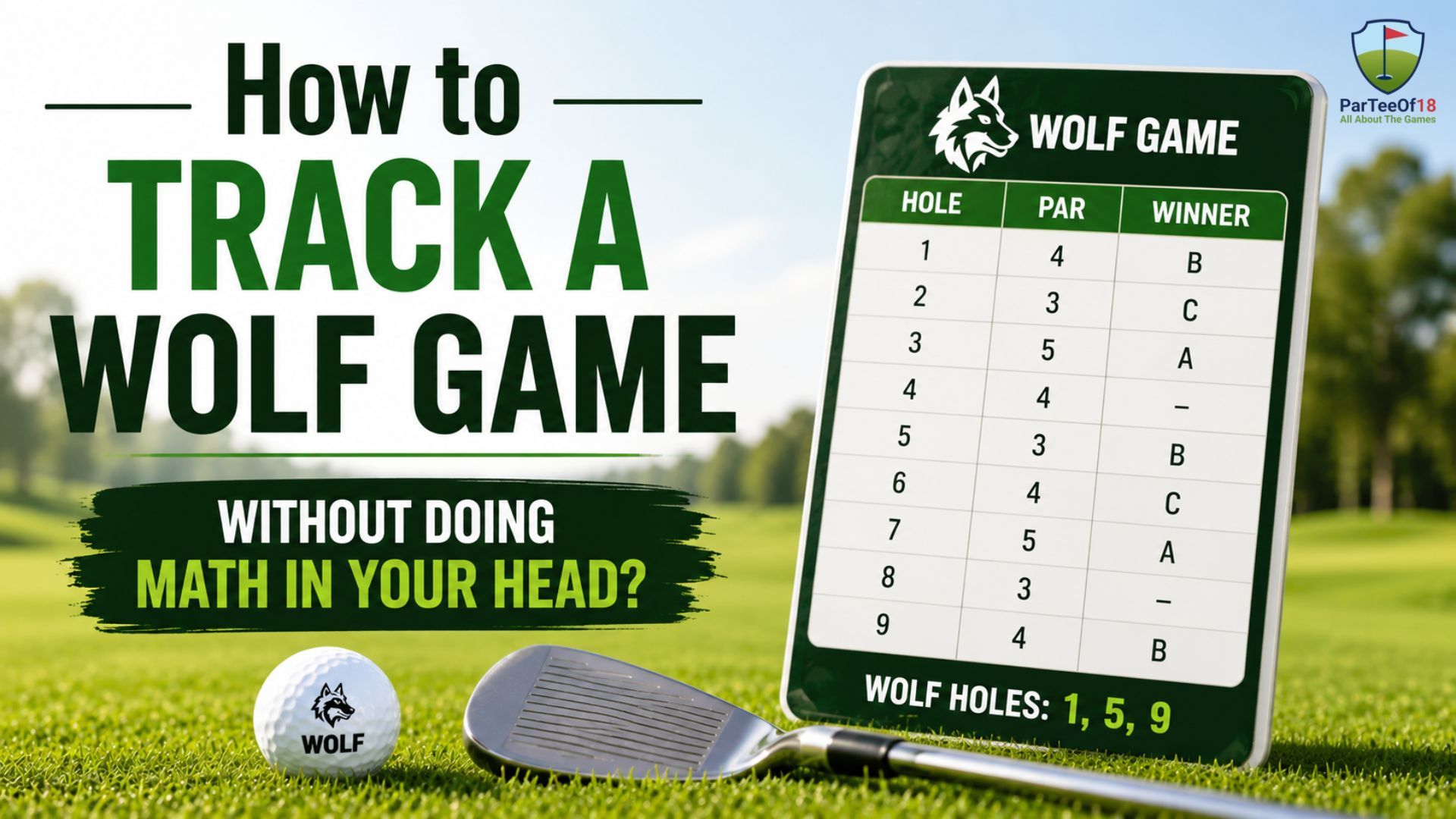
How to Track a Wolf Game Without Doing Math in Your Head?
If you have ever played the Wolf game with your buddies, you know the golf is only half the fun. The other half is arguing over who owes who after the eighteenth hole. I still remember a Saturday morning round where my foursome spent more time doing math on a napkin than actually hitting shots. Somebody's cousin was the self appointed math whiz, and even he got it wrong twice.
Compared to something simple like Match Play (https://parteeof18.com/games/matchplay-game/), where you are just tracking holes won and lost, Wolf throws shifting partnerships and point multipliers into the mix, which is exactly why the scoring trips people up.
Here is the thing. Wolf is a fantastic game. It rewards bold decisions, punishes greed just enough to keep things interesting, and turns a regular round into something with real stakes. But the scoring system, with its points that shift based on partnerships, doubles, and lone wolf bets, can turn your brain to mush by hole twelve. You do not need to be a math teacher to enjoy this game. You just need a smarter way to track it.
This guide walks you through exactly how to keep score in a Wolf game without doing a single calculation in your head. We will cover simple tools, printable sheets, apps, and a few tricks that seasoned golfers swear by. By the end, you will be able to focus on your next tee shot instead of mental arithmetic.
What Is the Wolf Game in Golf?
Wolf is a golf betting game played in groups of four, where one player becomes the Wolf on each hole and decides whether to pick a partner or play alone against the other three. Points get awarded based on who wins the hole and how the teams were formed.
The Basic Setup
Each player takes a turn being the Wolf, usually in a rotating order based on tee shots. The Wolf watches the other three tee off before deciding whether to team up with someone or go it alone as a Lone Wolf, which raises the stakes considerably.
Why the Scoring Gets Tricky?
Points vary depending on team size, whether someone declares Lone Wolf, and sometimes a Blind Wolf variation adds even more layers. With four players rotating roles across eighteen holes, the running tally becomes a moving target fast.
Why Doing Wolf Math in Your Head Is a Bad Idea?
Nobody plays golf to feel like they are back in a high school algebra class. Trying to track shifting point values, partner combinations, and double or nothing bets while also focusing on your short game is a recipe for mistakes and slower play.
It Slows Down the Round
Every time someone pauses to recalculate scores, the group loses rhythm. A five hour round can easily creep toward six hours if players keep stopping between shots to argue about who leads and by how much.
It Creates Arguments
Golf is supposed to be relaxing, not a courtroom drama. When two players remember the point totals differently, tempers flare, and the friendly wager suddenly feels less friendly. A clear tracking system removes the guesswork entirely.
Easy Ways to Track a Wolf Game Without Mental Math
The good news is you have several options that take the pressure off your brain. Some golfers like old school pen and paper, while others prefer letting their phone do the heavy lifting. Pick whichever fits your group's style.
Use a Printable Wolf Scorecard
A printable Wolf scorecard has columns for each player, each hole, and space to note who was the Wolf and whether it was a partnership or a Lone Wolf hole. You just fill in points as you go, and totals are simple addition at the end.
Try a Golf Scoring App
Several golf apps now include Wolf as a built in game format. Apps like 18Birdies let you enter the results after each hole, and the app calculates the running total automatically, including who owes who at the end. This is probably the fastest and most accurate method available today.
Assign a Designated Scorekeeper
Pick one person in the group whose only job is tracking points, either on paper or a phone. This works especially well if that person is not particularly competitive that day, since it keeps the scoring honest and unbiased.
Use a Point Value Chart
Print or screenshot a simple chart showing how many points each scenario is worth, such as partnership win, Lone Wolf win, or Lone Wolf loss. Instead of calculating from memory, players just glance at the chart and write down the number.
Setting Up a Simple Point System Before You Tee Off
A little prep work before the round saves a ton of confusion later. Decide as a group exactly how points will be awarded, and write it down somewhere everyone can reference during the round.
Standard Point Values
A common setup awards one point per player for a partnership win, two points for a successful Lone Wolf, and even more for a Lone Wolf who wins with a birdie or better. Agreeing on these numbers upfront avoids debates mid round.
Adjusting for Your Group
Some groups like to double points on the back nine or add bonus points for closest to the pin. Whatever you choose, write the rules down before hole one so nobody claims they forgot the agreement later.
Real Life Example From the Course
Last summer, my regular foursome tried tracking Wolf entirely by memory for the first six holes. By hole seven, two guys had completely different totals, and we ended up replaying the whole thing from memory using a scorecard photo one of us had taken earlier that morning. After that, we switched to a scoring app, and every round since has been smoother, faster, and honestly a lot more fun. Nobody wants to spend their Saturday morning doing subtraction under pressure.
Tips to Make Wolf Game Tracking Even Easier
Beyond picking the right tool, a few habits can keep your Wolf game running smoothly from the first tee to the eighteenth green.
Update Scores Immediately After Each Hole
Do not wait until the turn or the end of the round to update your tracker. Recording points right after each hole keeps everyone on the same page and prevents memory gaps from creeping into the final tally.
Keep the Point Chart Visible
Whether it is a laminated card in your golf bag or a photo saved on your phone, keep the point values somewhere easy to check. A quick glance beats trying to recall the rules from a conversation three holes ago.
Rotate the Scorekeeper Role
If one person always tracks the score, they might get tired of it by hole fifteen. Rotating the job every few holes, or letting the app handle everything, keeps the responsibility fair and the mood light.
Conclusion
Wolf is one of the most entertaining games you can play on a golf course, but it should never feel like a math exam. Once you set up a printable scorecard, use a golf app, or simply agree on point values before you start, the scoring takes care of itself. Your job is to hit good shots, make smart partnership decisions, and maybe talk a little trash along the way. Leave the calculations to the tools built for it, and you will find that Wolf becomes even more fun when nobody is stuck doing addition on the fourteenth tee box.
Frequently Asked Questions
1. What is the easiest way to score a Wolf golf game?
The easiest way is using a golf scoring app that includes Wolf as a preset game format. You simply tap in who won each hole, and the app calculates and displays the running totals for you automatically.
2. Do I need a special app to play Wolf?
No, a special app is not required. Many groups successfully use a printable scorecard or a simple notes app on their phone, as long as everyone agrees on the point system before the round begins.
3. How many points is a Lone Wolf win worth?
This varies by group, but a common standard is two points per player for a Lone Wolf win, sometimes increasing to three or four points if the Wolf wins the hole with a birdie or better.
4. Can Wolf be played with more than four players?
Wolf is traditionally designed for four players, since it relies on rotating one Wolf against three others. Larger groups usually split into separate foursomes rather than trying to modify the game for more players.
5. Why do people argue so much during Wolf games?
Arguments usually happen when scoring is tracked from memory and different players remember the point totals differently. Using a written scorecard or an app removes this confusion and keeps the round friendly and fair.
Appreciate the creator