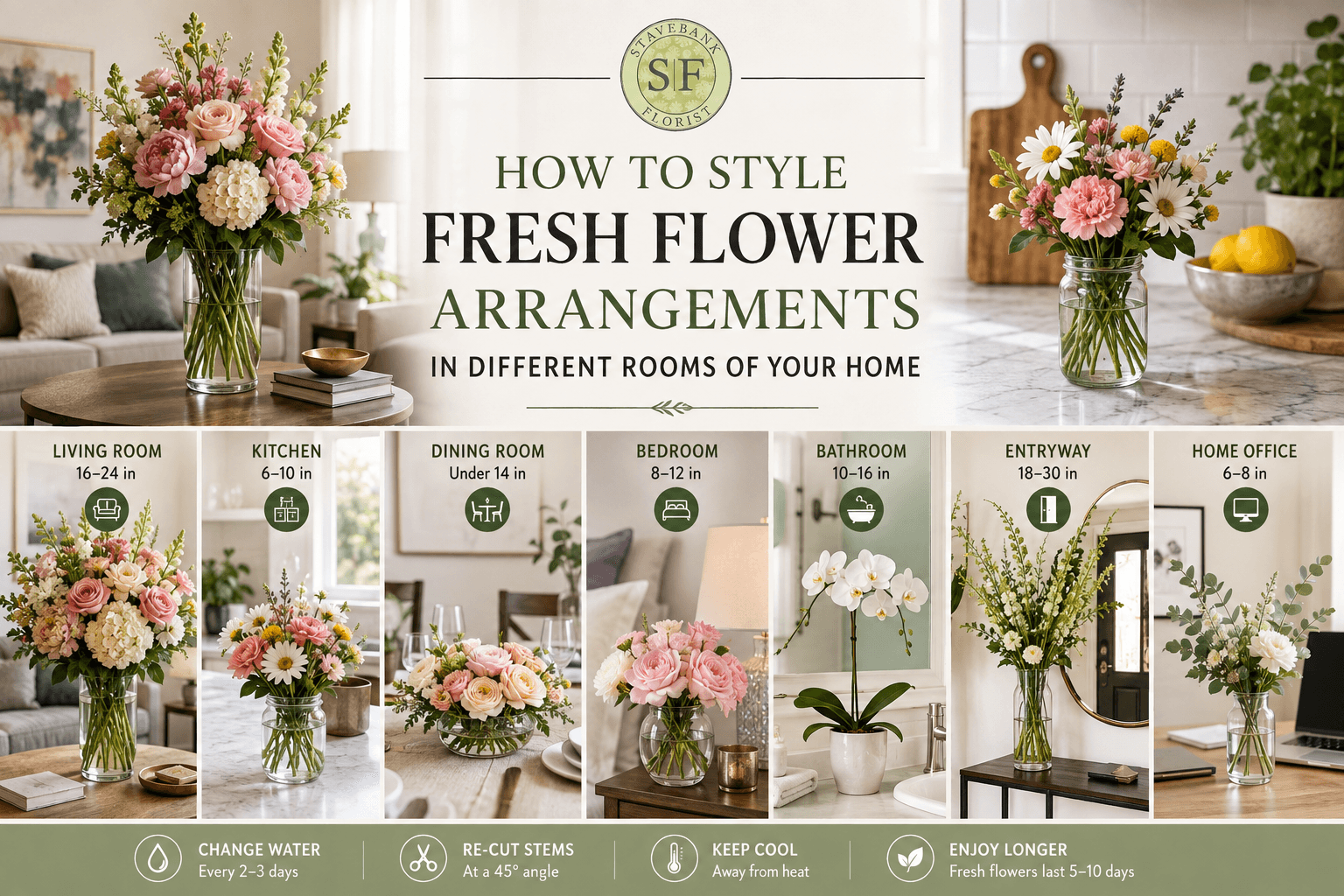
How to Style Fresh Flower Arrangements in Different Rooms of Your Home
Quick Answer: Match the arrangement's height, scent strength, and light needs to each room's function. Living rooms suit tall, bold statement bouquets; kitchens suit small, low arrangements that survive daily activity; bedrooms suit soft, lightly-scented blooms; dining tables need low centerpieces under 14 inches so guests can see each other; bathrooms suit humidity-loving orchids; and entryways suit a single dramatic vase that sets the tone for the whole home.
Living Room: Bold, Tall Statement Arrangements
A living room arrangement should be the room's visual anchor, since it's the space guests see first and spend the most time in. Choose a tall glass or ceramic vase, 16–24 inches, placed on a coffee table, console, or mantel. Bold focal flowers like garden roses, peonies, or hydrangeas work well here because the room has enough visual space to support larger blooms. Coordinate the arrangement's color palette with your sofa or accent pillows for a designed, intentional look rather than a random pop of color.
Kitchen: Small, Low, Everyday Arrangements
Kitchen arrangements should be compact and low enough to clear cabinets and sightlines, since counters get used constantly for food prep. A small mason jar or short bud vase, 6–10 inches, works better than a tall centerpiece. Choose hardy, everyday flowers like carnations, daisies, or mixed seasonal stems that tolerate temperature changes near a stove or window. Herbs like rosemary or lavender sprigs mixed into a small kitchen bouquet double as both décor and a subtle natural fragrance.
Dining Room: Low Centerpieces Under 14 Inches
Dining table arrangements must stay under 14 inches tall so guests can make eye contact and talk across the table. A low, wide arrangement in a shallow bowl or compote vase works better than a tall vase for this reason. Choose flowers without overpowering scent, since strong fragrance competes with food aromas during a meal. Garden roses, ranunculus, and seasonal greenery in a horizontal, spread-out design suit a dining table better than a single tall centerpiece.
Bedroom: Soft, Lightly-Scented Blooms
Bedroom arrangements should use soft color palettes and light or no fragrance, since strong scents can disrupt sleep. Pastel roses, peonies, or ranunculus in blush, ivory, or soft lavender tones create a calming atmosphere. Keep the arrangement small, 8–12 inches, on a nightstand or dresser rather than a large statement piece that competes for visual space in a small room. Avoid heavily-scented flowers like lilies or narcissus in the bedroom, since their fragrance can feel overwhelming in an enclosed space overnight.
Bathroom: Humidity-Loving Orchids
Bathrooms suit flowers that tolerate humidity and low, indirect light, which makes orchids the strongest choice for this room. A single Phalaenopsis orchid stem in a narrow vase brings a spa-like, elevated feel without requiring much maintenance. Avoid delicate flowers like sweet peas or lisianthus in a bathroom, since steam from showers can shorten their vase life significantly compared to a hallway or bedroom placement.
Entryway or Foyer: One Dramatic Statement Vase
An entryway arrangement sets the tone for the entire home, so it should be tall, dramatic, and visible from the front door. A single large vase, 18–30 inches, with branches, tall greenery, or oversized blooms like sunflowers or delphinium creates immediate visual impact. Place it on a console table or pedestal at eye level so it greets guests as they enter, rather than tucking it in a low corner where it goes unnoticed.
Home Office: Small, Non-Distracting Arrangements
A home office arrangement should be small and simple enough to stay in peripheral vision without becoming a distraction during work. A single stem or a small 6–8 inch arrangement in a minimalist vase works better than a large, colorful bouquet. Choose calming greenery like eucalyptus or a few white blooms to support focus rather than competing for attention on a busy desk.
Room-by-Room Quick Reference
Living Room — 16–24 in tall, garden roses/peonies/hydrangeas, moderate scent
Kitchen — 6–10 in low, carnations/daisies/mixed seasonal stems, light scent
Dining Room — under 14 in, garden roses/ranunculus/greenery, low scent
Bedroom — 8–12 in, pastel roses/peonies/ranunculus, minimal scent
Bathroom — 10–16 in, Phalaenopsis orchids, minimal scent
Entryway — 18–30 in tall, sunflowers/delphinium/branches, moderate to strong scent
Home Office — 6–8 in, eucalyptus/white blooms, minimal scent
How to Keep Room Arrangements Fresh Longer
Vase life depends on daily care more than flower type alone. Change the water every 2–3 days, re-cut stems at a 45-degree angle each time, and keep arrangements away from direct heat sources like radiators or stovetops. Ourcomplete fresh flower care guide (https://www.stavebankflorist.com/fresh-flower-care-guide/) covers water temperature, flower food, and room-specific placement tips in more depth.
Frequently Asked Questions
Which room should get the biggest flower arrangement?
The living room or entryway, since both are shared spaces designed to make a visual impression on guests.
What flowers last longest in a bathroom?
Phalaenopsis orchids last longest in bathrooms because they tolerate humidity and low light better than most cut flowers.
Should dining table flowers have a strong scent?
No. Strong-scented flowers compete with food aromas and should be avoided on a dining table.
How often should I replace room arrangements?
Most fresh arrangements last 5–10 days with proper care before flowers should be replaced or refreshed.
Appreciate the creator