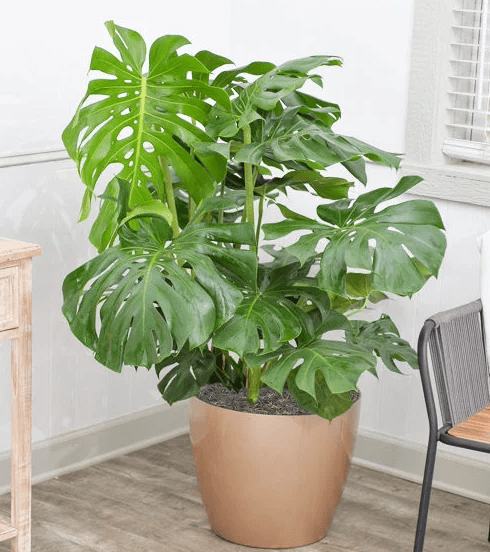
How to Make Your Monstera Deliciosa's Leaves Grow Bigger?
On the internet, every Monstera deliciosa appears to have enormous, gorgeous leaves. However, this isn't always the case in nurseries. Even though they belong to the same species, a Monstera's juvenile and adult forms can differ greatly in appearance. What causes certain Monsteras to have large leaves while others do not? How do you make yours grow enormous leaves like the ones you see on Instagram?
Big leaf Monstera is primarily a matter of maturity. Only fully grown Monsteras can produce enormous leaves in turn helping accent large furnishings in your home. For monsteras to grow enormous leaves, there must be enough availability of water, sunlight, and nutrients. Small leaves on your Monstera Deliciosa are the result of missing any of these elements.
How Large Are Monstera Leaves When Fully Grown?
A fully developed Monstera deliciosa can have enormous leaves, some of which are over two feet wide. Although they can become considerably more prominent in the wild, an indoor Monstera is unlikely to ever grow wider than two feet.
However, younger Monsteras have smaller leaves at first. A seeding's initial sprouts will only be a few inches wide at the most. Over time, as the plant becomes established and you learn exactly what kind of care it requires to thrive, the leaves will become larger.
How Old Must a Monstera Be to Grow Giant Leaves?
A big leaf Monstera does not have to reach a certain age before it begins to produce enormous leaves. Instead, the maturity of the plant as a whole has to do with the production of large leaves. Monsteras typically mature between the ages of two and three.
A mature Monstera is one that has been established in its surroundings and is less likely to go through dilemmas like extreme sensitivity to changing environmental conditions that a younger plant may. A mature Monstera should be putting out new growth at each node and have quite a few leaves, some of which have fenestrations. Aerial roots are another feature of mature Monsteras, which you may also see on younger plants.
When a Monstera is two years old and still looks underdeveloped and is producing small, uninteresting leaves there may be a problem hindering its development.
You Need More Sunlight for Your Monstera
Smaller leaves are most often caused by insufficient sunlight. A Monstera deliciosa has large leaves to help capture more light and improve photosynthetic efficiency. Monsteras don't actually respond to reduced lighting by producing bigger leaves, despite the fact that this may seem like a good idea.
A minimum of six hours a day of direct, bright sunlight are required for monsteras. For Monsteras, windows with a west, east, or south orientation are ideal.
You Need More Water For Your Monstera
If you've researched Monsteras, you might have noticed that one of the first things you should check when a plant isn't doing well is its hydration. Underwatering is a serious issue that can harm a monstera deliciosa that is otherwise healthy and prevent it from developing into a beautiful, dramatic plant.
The Final Word
Your monstera needs to be repotted. A Monstera needs a lot of space for its roots to expand in order to produce the gigantic leaves that make the plant so desirable. A big leaf Monstera won't have the space it needs to continue developing roots that will support its new leaves if its pot isn't the right size.
Appreciate the creator