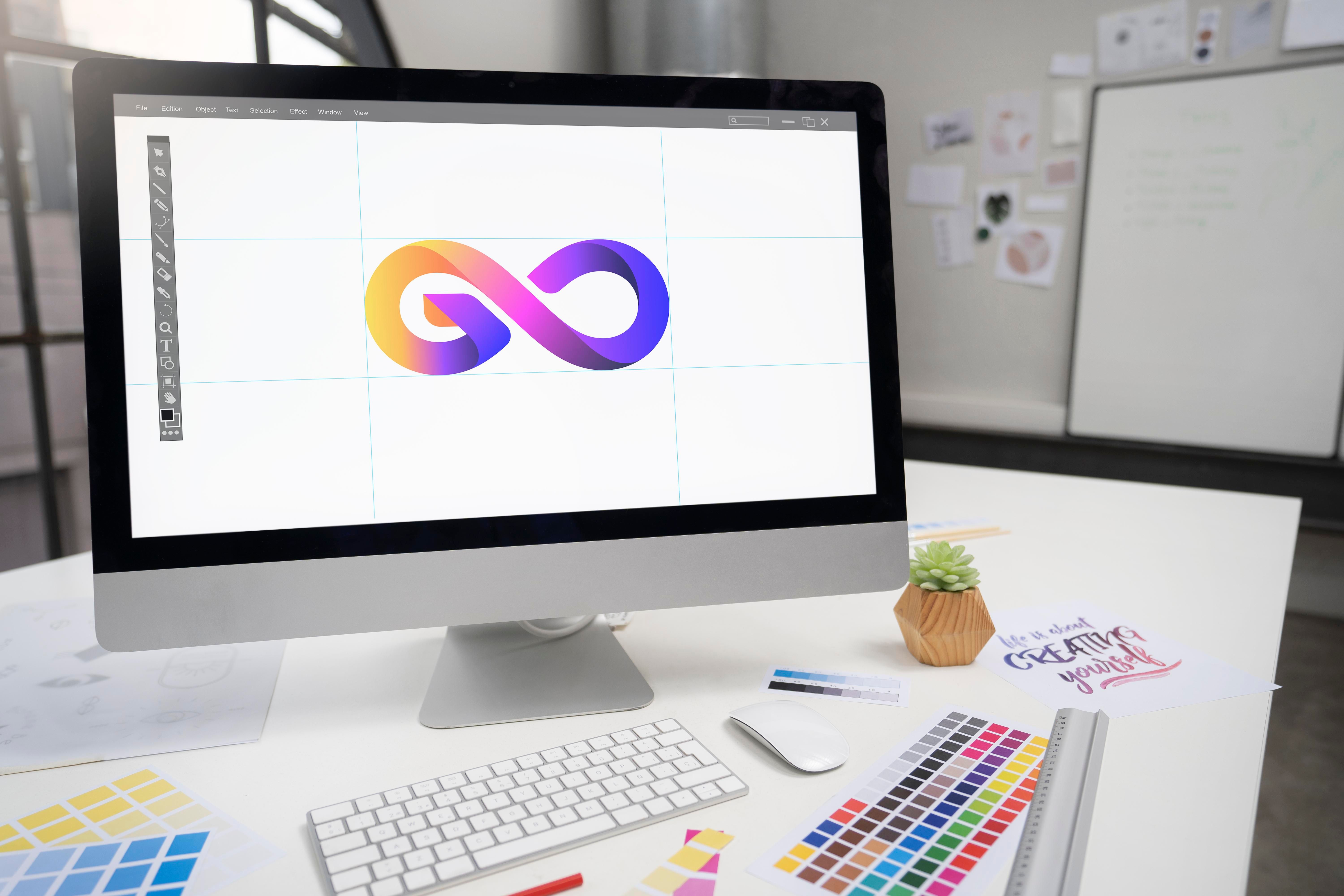
How to Make Your Logo Work Across Digital and Print Media
Your logo isn’t just a design, it’s the face of your brand.
It’s the first thing people see, the image that reflects your business goals. Logos are visible everywhere. From social media icons to websites and billboards, your logo needs to adapt without losing clarity or impact.
But achieving this branding consistency can be tricky. What looks stunning on a brochure might not look appealing on their website.
Be it print or paper you need a logo that must not lose its originality when shrunk for a mobile app icon.
That’s why you need to understand the power of scalable logo design. Whether you’re rebranding or starting fresh, we’ll help you walk through how to make your logo work across digital and print platforms with versatile logo design tips.
Why Responsive Logo Design Is Crucial
Think about how many times your logo appears: website header, Instagram profile, email signature, business card, packaging, and even merchandise
It’s important to understand how these platforms have their own format, color limitations, and display conditions.
A logo that’s not designed to adapt can quickly lose its magic. On screens, it might look pixelated; in print, the colors might shift. Inconsistent logos confuse customers and make your brand appear unprofessional.
That’s why digital and print branding consistency isn’t just nice to have, it’s essential to build trust and recognition. You need professional, scalable logos to help your brand remain memorable whether viewed on a phone or printed on a billboard.
Key Differences Between Digital and Print Branding
Before designing or refining your logo, it’s crucial to understand the major differences between digital and print environments. Here’s what every brand should know:
1. Color Palette: RGB vs. CMYK
Digital screen RGB (Red, Green, Blue), colors that work in low light. Print, on the other hand, uses CMYK (Cyan, Magenta, Yellow, Black), colors created by ink.
A vivid blue on your website might appear dull in print unless it’s adjusted correctly. Only a professional designer can help you analyze both versions and ensure colors match brand standards through Pantone or HEX codes.
2. Resolution and Clarity
Digital images are defined by pixels (PPI), while print uses dots per inch (DPI). Low-resolution files that look fine online may appear blurry when printed. Always ensure your logo is created in a vector format, which keeps it sharp at any size. This is a key aspect when it comes to scalable logo design.
3. File Formats
The logo format varies depending on the platform. Each medium needs the right file or format to be visible. The following file formats work in digital and print:
Digital: SVG, PNG, JPG (for web and apps)
Print: EPS, PDF, or AI (for high-quality printing)
Having both formats will ensure your logo always looks crisp and professional, no matter where it’s displayed.
Core Principles for Logos That Scale and Adapt
Creating a logo that is scalable and adaptable for every platform is key to success. For such perfection, it’s important to partner with a logo design company in Dubai. A professional logo, scalabilit,y and adaptability are the core of the process. Here are some essential principles ofa scalable logo:
1. Keeping it simple
Nothing grabs attention more than simplicity. Adding complex details may look elegant on large screens but disappear in smaller versions. Clean, simple designs ensure visibility. Whether your logo is on a business card or a billboard.
2. Versatility Matters
Your logo should work in multiple formats. From horizontal, stacked, icon-only, or text-only. You need to have multiple versions that offer flexibility across platforms and help maintain brand cohesion.
3. Strong Typography
Fonts need to be clear and in all sizes. Avoid ultra-thin typefaces or overly decorative fonts that might compromise readability when scaled down.
4. Balance and Proportion
A well-proportioned logo maintains balance, icon, and whitespace. This balance ensures your logo feels stable and professional across all media.
5. Color Flexibility
An adaptable logo has variations. It has full color, monochrome, grayscale, and transparent versions. These ensure visibility on different backgrounds and materials.
Step-by-Step Process for Designing an Adaptive Logo
Creating a logo that transitions effortlessly from digital to print isn’t luck, it’s strategy. Here’s how professional designers approach it:
1. Define Your Brand Identity
Before you even start sketching, understand what your brand stands for. What emotions do you want to evoke? What values do you represent? This foundation ensures your logo visually communicates your message across every platform.
2. Research and Brainstorm
Study competitors, explore market trends, and identify visual elements that align with your identity. Inspiration is key, but originality sets you apart.
3. Sketch and Conceptualize
Designers usually create multiple concepts. Some are minimal, whereas some are detail-oriented. It helps them understand how to see how each adapts to different contexts. Early sketches help identify what works well across sizes and formats.
4. Digitize in Vector Format
Vector software (like Adobe Illustrator) can help scale without quality loss. This is the golden rule of scalable logo design. Scalable images should have contrast, pixelate when resized.
5. Create Multiple Variations
Relying on one version of logos can help you scale it. Your brand should have logo versions for:
Full color (main use)
Black and white (for contrast-heavy materials)
Simplified icon (for app icons, favicons, social media)
Horizontal and stacked formats
6. Test Across Platforms
Mockup your logo on web pages, business cards, packaging, and signage. Testing helps you spot any issues early, from color shifts to spacing problems.
7. Refine and Finalize
Once you’ve tested, adjust details like contrast, stroke weight, or kerning. Your goal: a logo that looks effortlessly consistent everywhere.
Technical Considerations and File Essentials
Even the most beautiful logo fails if it’s not saved or exported properly. A reputable logo design company in Dubai will always deliver a comprehensive file package, including:
AI or EPS: Editable vector files for printers and designers
SVG: Web-optimized scalable format
PNG: Transparent background version for digital use
PDF: Print-ready, shareable format
JPEG: Compressed file for general digital use
Also, make sure your logo has color codes (HEX for web, CMYK for print, Pantone for brand precision). This ensures perfect color matching across all touchpoints, which is a must for professional digital and print branding.
Testing and Optimization Across Devices and Media
Designers often call this the “real-world test.” Once your logo is ready, test it across every possible environment.
Try it on:
Mobile devices (does it stay clear on small screens?)
Large signage or billboards (is it sharp and impactful?)
Merchandise and stationery (does the print color hold up?)
Different backgrounds (does it remain visible and balanced?)
A logo that maintains clarity, proportion, and brand feel in all of these contexts is truly adaptive.
For added professionalism, consider mockups during the approval process. This visualizes how your logo will live in the real world before final printing or launch.
Real-Life Case Studies: Logos That Adapt Brilliantly
Let’s consider some of the most renowned brand logos to understand how scalable and adaptable logos work.
Nike
The Nike swoosh is one of the most flexible designs ever created. It works in black or white, small or large. It is ideal for both printed and digital marketing. This simple logo proves that simplicity is versatile.
Coca-Cola
Despite its complex script, Coca-Cola’s wordmark is instantly recognizable because of consistent use, strong contrast, and careful attention to scaling.
FedEx
Its hidden arrow symbolizes precision and a forward-moving approach. FedEx logo remains legible and strong across packaging, vehicles, and digital ads.
These examples highlight how thoughtful design and professional logos can create powerful, multi-environment identities.
Common Challenges and How to Overcome Them
1. Loss of Detail
Fine lines and intricate patterns can disappear at small sizes. Simplify your design elements for better scalability.
2. Color Shifts
Colors may look different on screen and print. Always make sure your logo is in CMYK and RGB versions to maintain accuracy.
3. File Mismanagement
Brands often use outdated or incorrect files. Maintain a centralized logo folder with clearly labeled versions for each purpose.
4. Inconsistent Usage
Different teams using slightly altered logos can damage brand credibility. A style guide prevents inconsistency.
5. Poor Font Choices
Fonts that don’t render well on screen or blur in print can ruin readability. Choose high-quality, licensed fonts designed for multi-platform use.
Future Trends in Logo Adaptability
Logos are evolving alongside technology. Here’s what’s next in digital and print branding:
Responsive Logos: Versions that automatically adjust based on screen size or context (e.g., full version on desktop, simplified mark on mobile).
Animated Logos: For web and video, subtle motion adds personality without losing brand identity.
Dynamic Branding: Logos that shift color or shape depending on interaction or environment.
Minimalist, Variable Design: Simpler shapes and variable fonts that maintain personality while adapting seamlessly.
Forward-thinking brands, especially those planning to launch in a dynamic location like the UAE, need professional assistance from a logo design company in Dubai that is already embracing these trends to future-proof their identities.
Sum Up
Your logo is the visual representation of a brand; it tells your story at a glance. But to truly represent you, it must work flawlessly across every medium.
By following these versatile logo design tips and understanding technical nuances, you can create a unique identity. It is best to collaborate with professionals who specialize in digital and print branding, as this ensures your logo stands out wherever it appears, both online and offline.
If you’re ready to refine your visual identity, consider partnering with a trusted logo design company in Dubai. Craft a logo that not only looks stunning but also works hard everywhere your brand appears.
Appreciate the creator