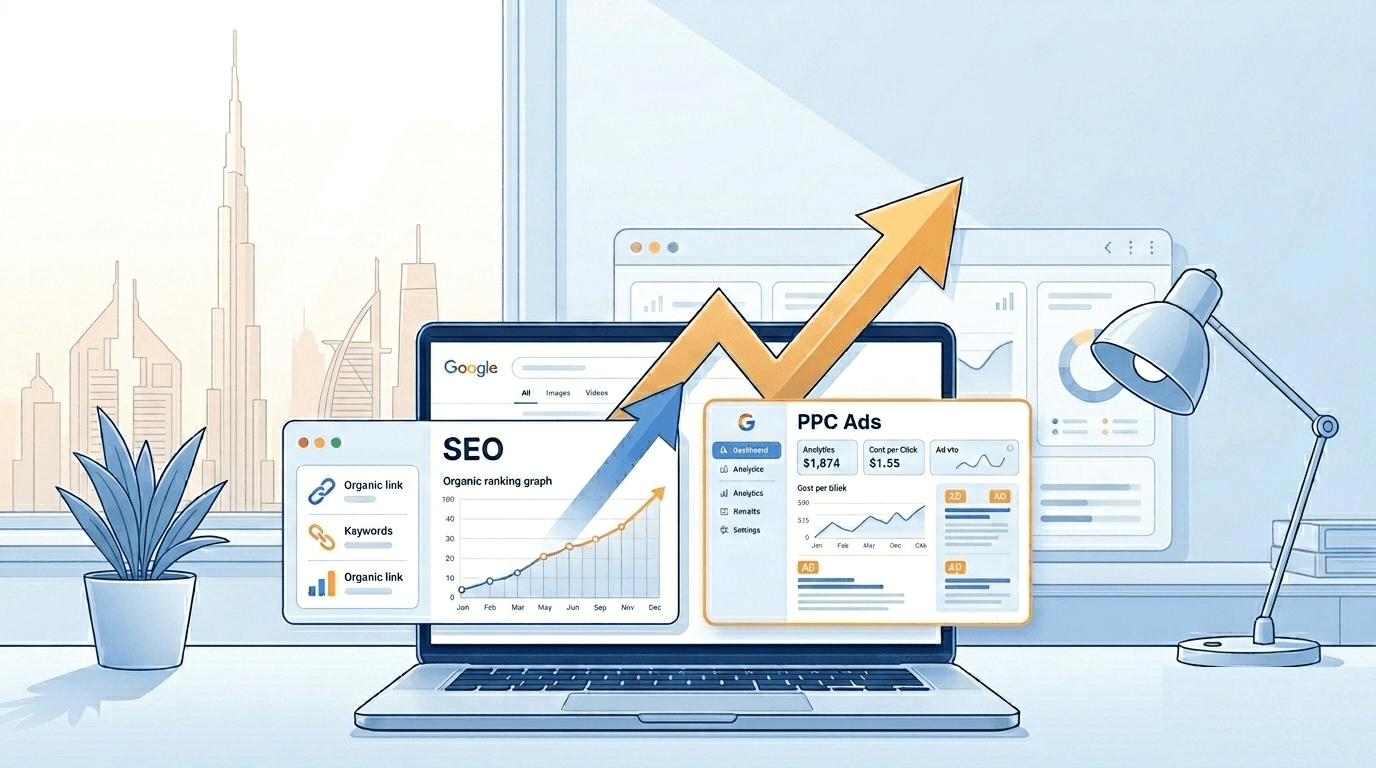
How to Combine SEO and PPC to Dominate Google Search Results
Introduction
When it comes to getting found on Google, most businesses focus on either SEO or paid ads but rarely both at the same time. That is a missed opportunity.
When you combine SEO and PPC together, you do not just get more visibility. You get smarter visibility. You appear in more places, reach more people, and build a stronger digital presence overall.
This article explains how both strategies work, what makes them different, and most importantly, how to use them together to get the best results from Google.
What Is SEO?
SEO stands for Search Engine Optimisation. It is the process of improving your website so that it ranks higher in Google's free (organic) search results.
When someone types a question into Google and clicks on a result without it being marked as an ad, that is SEO at work. Good SEO involves creating useful content, using the right keywords, building credibility online, and making sure your website is fast and easy to use.
The biggest advantage of SEO is that it builds long-term, sustainable traffic. Once you rank well, you can keep getting visitors without paying for every click. However, SEO takes time — it can take months before you see strong results.
What Is PPC?
PPC stands for Pay-Per-Click. It is a form of paid advertising where you pay Google every time someone clicks on your ad. These are the results you see at the very top of a search page, usually marked with a small "Sponsored" label.
With PPC, you can appear at the top of Google almost immediately. You choose your keywords, set a budget, write your ad, and your campaign can go live within hours.
The downside is that once you stop paying, the traffic stops too. But for businesses that need quick results a product launch, a seasonal offer, or entering a new market, PPC is incredibly effective.
Differences Between SEO and PPC
While both strategies help you appear on Google, they work in very different ways.
SEO is a long-term investment. It takes time to build, but it delivers consistent results over months and years. PPC is a short-term tool. It delivers fast results but requires an ongoing budget to maintain.
SEO builds trust. Most users know that organic results are not paid for, so they often trust them more. PPC gives control. You can target specific audiences, locations, devices, and even times of day.
Think of SEO as planting a tree that is slow to grow but rewarding in the long run. Think of PPC as renting a billboard for instant visibility, but you pay for every day it stays up.
Why Using Both Together Is Powerful
Here is where things get interesting. When you use SEO and PPC at the same time, they do not just add up they multiply each other's impact.
Appearing in both the paid ads section and the organic results for the same keyword makes your brand look dominant. Users see your name twice on the same page, which builds familiarity and trust. Studies have shown that this increases the chance of someone clicking through to your website.
PPC also gives you valuable keyword data almost instantly. You can see which keywords are driving clicks and conversions, and then use that information to strengthen your SEO strategy. It removes the guesswork.
For businesses working with a digital marketing agency in Dubai, combining both channels is one of the most recommended approaches for competitive markets.
Practical Ways to Combine SEO and PPC
Use PPC to test keywords before investing in SEO SEO takes time and resources. Before you commit to a long-term content strategy around a keyword, run a short PPC campaign to see how well it actually converts. If people click but do not buy, that keyword may not be worth chasing organically.
Retarget organic visitors with PPC ads. Someone visits your website through an organic Google result but does not make a purchase. With PPC retargeting, you can show them ads as they browse other websites, gently reminding them to come back. This turns free traffic into paid conversions.
Cover your weak spots If there are keywords where your SEO ranking is low or inconsistent, run PPC ads for those specific terms. This ensures you still show up while your organic ranking catches up.
Share data between both channels. Your PPC campaigns will tell you which ad copy gets the most clicks. Use that same language and messaging in your SEO content, meta descriptions, and page titles. What works in ads often works in organic results, too.
Real-World Example: A Dubai-Based Business
Imagine a company in Dubai that sells office furniture. They invest in SEO services in Dubai to rank organically for terms like "best office chairs in Dubai" and "buy office desks online." This takes around four to six months to show strong results.
At the same time, they run PPC services in Dubai targeting the same keywords and related terms like "same-day furniture delivery Dubai." Within days, they are appearing at the top of Google for those searches.
While their SEO builds momentum in the background, their PPC ads are already bringing in inquiries and sales. Six months later, when their organic rankings are strong, they reduce their PPC budget but keep running ads for the most competitive keywords. The result is a steady, cost-effective flow of traffic from both channels.
Common Mistakes to Avoid
Running SEO and PPC in isolation, many businesses treat these as two separate strategies managed by different teams with no communication. This wastes budget and misses powerful opportunities to share data and insights.
Stopping PPC the moment SEO starts working. Some businesses cut their paid ads as soon as they rank organically. This is a mistake. Keeping both active — even at a reduced spend — ensures you maintain maximum visibility.
Ignoring landing page quality Both SEO and PPC bring traffic to your website. If your landing pages are slow, confusing, or unconvincing, you will lose visitors no matter how well your campaigns perform. Always optimise the page people land on.
Not tracking results properly. Without proper tracking, you cannot tell which channel is performing better or where your budget is best spent. Use Google Analytics and conversion tracking to measure everything.
Conclusion
SEO and PPC are not competing strategies; they are partners. When used together thoughtfully, they give your business a real edge on Google, covering both the short-term need for fast traffic and the long-term goal of organic growth.
Whether you are a start-up trying to get noticed or an established business looking to scale, combining both channels is one of the smartest moves you can make. A good digital marketing agency in Dubai will always look at both SEO and PPC together rather than treating them as separate boxes to tick.
The businesses that dominate Google search results are rarely doing just one thing well. They are doing many things in coordination, and that is exactly what this combined approach gives you.
Appreciate the creator