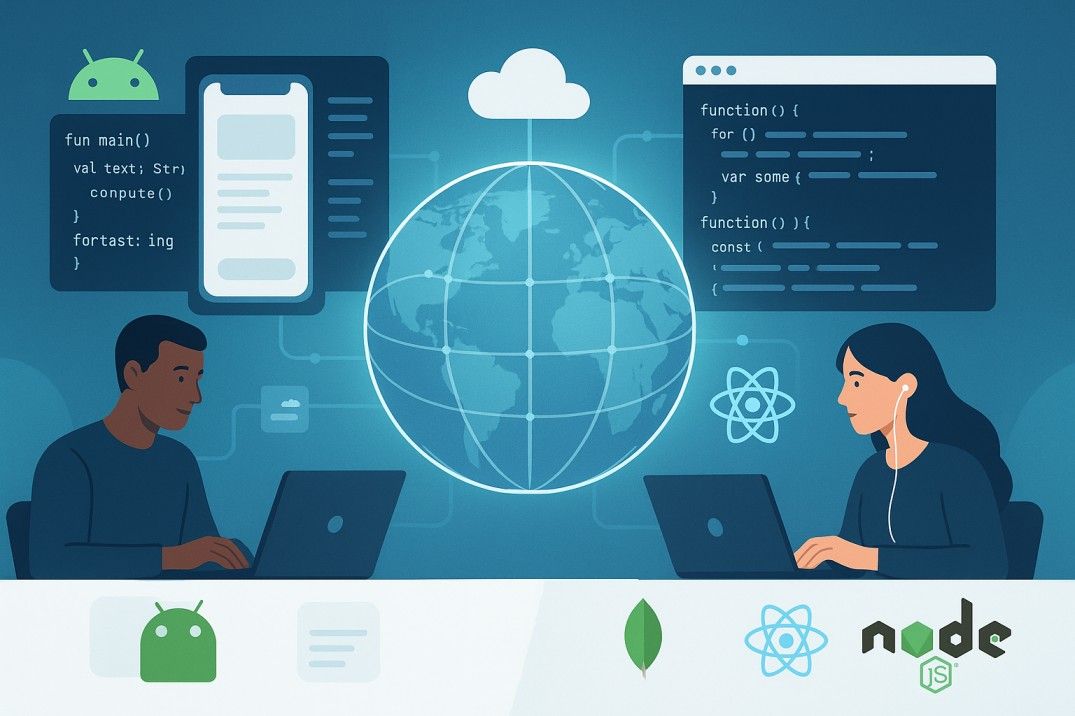
How to Build a Scalable Tech Team: Hiring Android and MERN Stack Developers Remotely
In today’s fast-moving tech world, building a scalable and agile development team isn’t just a choice—it’s a necessity. For CTOs and tech leaders across the USA, the challenge isn’t just hiring developers. It’s about finding the right talent, in a way that aligns with modern, remote-first working models. If you’re considering hiring Android and MERN Stack developers remotely, you’re on the right track to scaling smart.
Why Remote Hiring Is the Future
Remote work isn’t just a trend—it’s now standard practice. According to Buffer’s 2024 State of Remote Work, 98% of professionals want to continue working remotely, at least part of the time, for the rest of their careers. For tech companies, this presents a golden opportunity to access a global talent pool and reduce operational costs.
But the key to success lies in building remote teams with the right approach—from vetting technical skills to maintaining collaboration across time zones.
Start With the Right Tech Stack
Your stack should shape your team—not the other way around. Two stacks continue to dominate the application development scene in 2025:
Android development: Still a leader in mobile, Android powers over 71% of smartphones globally (StatCounter, 2025).
MERN Stack: A powerful JavaScript-based stack (MongoDB, Express.js, React.js, Node.js) for building modern web apps—favored for its flexibility, scalability, and performance.
When building scalable digital products, these two stacks offer strong technical foundations and community support.
Why Build Remotely with Android and MERN Experts?
Whether you're launching a new mobile app or upgrading your legacy system into a cloud-first web platform, hiring Android and MERN Stack developers remotely offers clear advantages:
Cost-Efficiency: Remote hiring lets you tap into skilled developers from emerging tech hubs at lower cost without compromising quality.
Scalability: Quickly scale your team up (or down) based on project needs.
Round-the-Clock Development: With remote, distributed teams, your development cycle never stops.
Many U.S.-based CTOs now partner with offshore teams to push projects forward faster. A 2024 Deloitte survey noted that 70% of businesses outsource software development to boost scalability and productivity.
Where to Begin: Hiring Android Developers
When hiring remotely, finding top-tier Android talent starts with clarity. Know what you want: are you building a consumer app, enterprise tool, or integrating with wearables?
Once you’ve defined the scope, it's time to hire Android app developers who are experienced in Kotlin, Java, Android SDK, and third-party integrations.
Evaluate candidates not just on code—but communication, documentation, and their ability to work asynchronously. In remote teams, soft skills often matter as much as technical ones.
Building the Right Web Foundation with MERN Stack Developers
Web apps today must be responsive, secure, and fast. That’s where MERN comes in. You need developers who can handle both frontend and backend tasks using JavaScript across the board. From dynamic dashboards to scalable APIs, MERN simplifies development with one unified language.
When you hire MERN Stack developers, make sure they’re familiar with microservices, database optimization, and containerization (like Docker). The right developers will help your app grow smoothly without performance hiccups.
Setting Up for Remote Success
Hiring remotely isn’t about just sourcing candidates. You need systems in place for onboarding, collaboration, and performance tracking. Here's what successful companies do:
Use clear documentation: From day one, create SOPs and project outlines.
Adopt async-friendly tools: Tools like Slack, Jira, Notion, and GitHub keep everyone aligned.
Schedule regular check-ins: Weekly stand-ups and retros help maintain momentum.
Encourage ownership: Developers work best when they feel part of the product, not just a gig.
Interviewing Tips for Remote Developers
The remote interview process is more than just a technical screening. It’s about evaluating whether someone can work independently, communicate clearly, and thrive without daily hand-holding.
When hiring Android and MERN Stack developers remotely, focus your interviews around:
Live coding sessions: Use platforms like CoderPad or HackerRank to assess real-time problem-solving.
Project-based tests: Ask candidates to build a mini-project using either Android or the MERN stack. This reveals coding habits, documentation, and clarity of logic.
Scenario questions: “What would you do if your internet went down during a deployment?” Practical answers matter.
Async communication check: Test written skills. Assign a short technical write-up task—it shows how clearly they document and explain code.
Time Zones Aren’t a Dealbreaker—If You Plan Right
Remote teams span the globe. That’s not a problem—it’s an advantage when managed well. Think of time zones like a relay race: your East Coast team finishes a sprint, and your team in India picks up the baton.
Here’s how to make it work:
Overlap 2–4 hours daily for real-time meetings.
Use shared Kanban boards (Trello, Jira) to track progress.
Record meetings for async updates—tools like Loom or Zoom help.
Celebrate wins across all regions. A Slack shoutout goes a long way.
Cross-cultural collaboration takes a bit of intentional effort—but it brings fresh ideas and innovation to the table.
Managing Code Quality in a Remote Setup
When developers aren’t sitting down the hall, how do you keep your code clean, scalable, and bug-free?
Simple. You create systems that make great code the default:
Code Reviews: Mandatory pull request reviews build a safety net.
Automated Testing: Use Jest for MERN and Espresso for Android to catch issues early.
CI/CD Pipelines: Automate deployment through GitHub Actions, Jenkins, or Bitbucket.
Shared Style Guides: Ensure consistent formatting and naming conventions across the codebase.
You’re not managing lines of code—you’re managing clarity, communication, and collaboration.
How Hidden Brains Makes Remote Hiring Seamless
If your internal team is maxed out or you lack in-house hiring expertise, working with a partner like Hidden Brains can fast-track your journey.
We help CTOs and tech leaders in the USA hire Android app developers and hire MERN stack developers with a remote-first approach that works.
Here’s what we offer:
Pre-vetted talent pool: Every developer goes through a multi-stage assessment.
Flexible engagement models: Need part-time help or a full-time team? We adapt.
End-to-end support: From onboarding to project delivery, we stay involved.
USA time zone overlap: We schedule our teams for maximum collaboration with your core hours.
One of our U.S. retail clients scaled their app development by 3x in six months—without hiring a single in-house engineer. Remote hiring isn’t just cost-saving; it’s business-building.
Final Thoughts: Build Smart, Build Remote
Scalability doesn’t happen by accident. It’s a mix of strategy, people, and process. With mobile and web technologies advancing at breakneck speed, hiring Android and MERN Stack developers remotely gives you the agility to move fast, stay lean, and grow confidently.
Your next great developer might not be sitting in your city. They could be in another country, but just a Slack ping away.
So whether you’re building the next big app or scaling your enterprise backend, remote hiring opens doors to better talent, faster delivery, and long-term growth.
💬 Ready to scale your tech team? Talk to Hidden Brains about building your remote Android or MERN Stack development team today.
Appreciate the creator