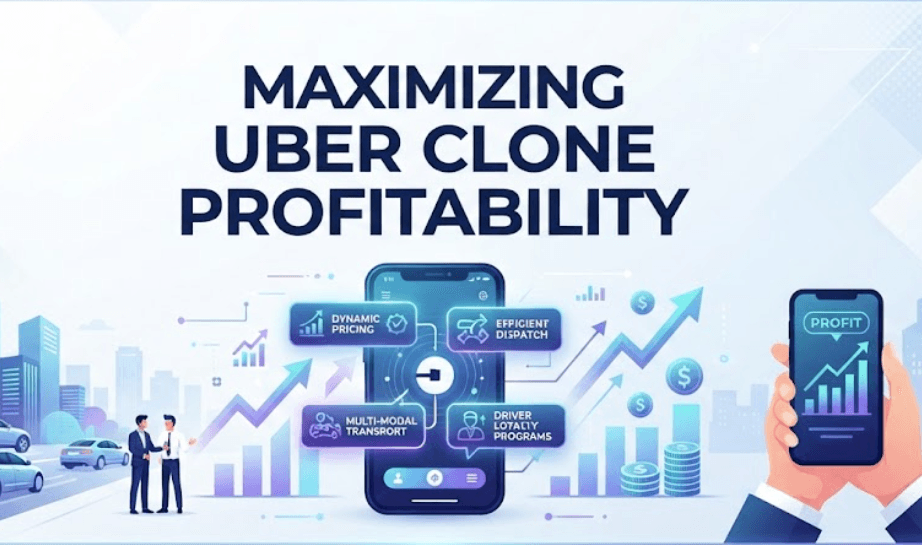
How the Right Features Can Improve Profitability in an Uber Clone Business
Launching a ride-hailing platform is not only about getting more rides. A profitable business needs to earn efficiently from every booking while keeping riders and drivers active. This is where the right features in an Uber Clone can make a measurable difference.
Instead of treating features as a checklist, business owners can use them to improve revenue, reduce operational costs, and increase customer retention.
1. Multiple Revenue Options
A ride-hailing platform does not have to depend on one commission model.
An Uber Clone can support different revenue streams such as:
Commission from each completed ride
Booking or platform fees
Surge or dynamic pricing
Cancellation charges
Driver subscription plans
Corporate ride packages
Premium vehicle categories
Advertising opportunities
Having multiple revenue channels can make the business less dependent on ride volume alone.
2. Dynamic Pricing Can Increase Revenue
Demand changes throughout the day. Airports, business districts, entertainment areas, and peak commuting hours can generate higher demand than other locations.
A dynamic pricing feature can automatically adjust fares based on factors such as:
Current demand
Driver availability
Distance
Time
Location
Vehicle category
When demand increases, the platform can generate higher revenue per ride while giving drivers an additional incentive to accept bookings.
3. Driver Incentives Can Improve Ride Availability
Profitability also depends on having enough drivers online when customers need rides.
An Uber Clone can include driver incentive tools for:
Peak-hour bonuses
Ride completion targets
Weekly rewards
Referral incentives
Area-based incentives
Better driver availability can reduce booking cancellations and improve the overall customer experience.
4. Automated Driver Matching
Sending every booking through manual intervention increases operational workload.
A smart driver-matching system can consider:
Driver proximity
Vehicle type
Driver availability
Estimated arrival time
Driver acceptance history
Passenger preferences
Faster matching means shorter waiting times and fewer abandoned bookings.
For the business, automation also reduces the need for constant manual coordination.
5. Scheduled Rides Create Predictable Demand
Not every customer wants an immediate ride.
Scheduled booking allows passengers to reserve transportation for:
Airport transfers
Business meetings
Events
Early-morning travel
Long-distance journeys
This feature gives operators an opportunity to capture bookings in advance and improve driver planning.
6. Corporate Accounts Can Increase Booking Value
Business customers can become an important revenue source because companies may generate rides repeatedly rather than making occasional bookings.
A corporate module can support:
Employee ride management
Business profiles
Monthly billing
Ride limits
Multiple employees
Expense tracking
Corporate reporting
Instead of focusing only on individual passengers, the platform can build recurring B2B revenue.
7. Wallets and Digital Payments Improve Convenience
An integrated digital wallet can make repeat bookings easier.
Passengers can add funds and use them for future rides without entering payment information each time.
The platform can also support multiple payment methods and automatically process:
Ride fares
Discounts
Refunds
Cancellation charges
Driver payouts
This reduces payment-related manual work and creates a smoother booking experience.
8. Analytics Helps Control Profit Leakage
One of the most valuable features for an operator is often the admin analytics dashboard.
Business owners can monitor:
Total bookings
Completed rides
Cancellation rates
Revenue
Commission
Driver earnings
Popular locations
Peak booking periods
Customer retention
These insights help identify where the business is earning money and where revenue may be getting lost.
For example, if a particular zone has high customer demand but low driver availability, the operator can introduce targeted driver incentives instead of spending money across the entire market.
9. Promotions Without Destroying Margins
Discounts can attract customers, but excessive promotions can reduce profitability.
A flexible promotion system allows operators to create targeted offers based on:
New users
Specific locations
Vehicle categories
Minimum booking value
First ride
Returning customers
Limited periods
This gives the business greater control over promotional spending.
10. Different Vehicle Categories Increase Average Order Value
A single vehicle category limits the customer's choices.
An Uber Clone can offer options such as:
Economy
Sedan
SUV
Premium
Luxury
XL vehicles
Customers who want comfort or additional capacity can choose higher-priced categories, increasing the platform's potential revenue per booking.
Profitability Comes From More Than More Rides
A profitable ride-hailing business is not simply the one with the highest number of bookings.
It is the platform that can increase booking value, encourage repeat usage, reduce cancellations, automate operations, and maintain a healthy balance between rider demand and driver supply.
That is why features such as dynamic pricing, corporate accounts, scheduled rides, automated matching, driver incentives, analytics, and multiple vehicle categories are important when choosing an Uberclone.
The right platform gives entrepreneurs more than a booking application. It provides the tools needed to build a ride-hailing business that can scale revenue while keeping operations manageable.
If you're planning to launch your own ride-hailing platform, explore the Uber Clone and build a platform around the features and revenue models that fit your target market.
Appreciate the creator