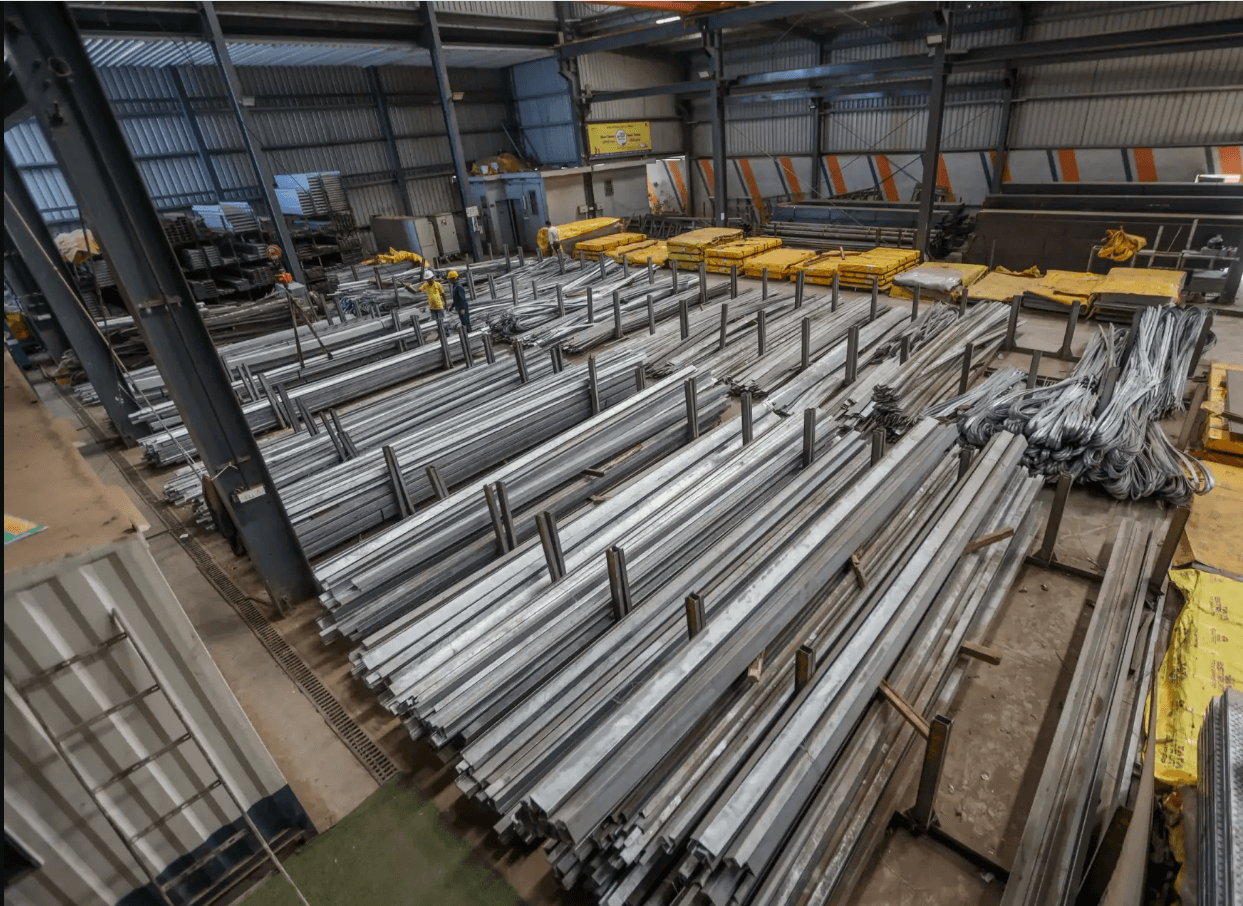
How Steel Product Manufacturers Maintain Consistent Quality Standards: A Guide by Parco Engineers
How Steel Product Manufacturers Maintain Consistent Quality Standards: A Guide by Parco Engineers
Steel products are used where strength, durability, dimensional accuracy and corrosion resistance matter. From structural components to galvanized materials, manufacturers must maintain strict steel quality standards throughout production. In a market where product consistency can directly affect project performance, quality cannot depend only on the final inspection.
According to the World Steel Association, global crude steel production reached approximately 1.85 billion tonnes in 2025, while India produced about 164.9 million tonnes, making India the world's second-largest crude steel producer.
What Are Steel Product Quality Standards?
Steel product quality standards are defined requirements used to ensure that steel products meet specified expectations for chemical composition, mechanical properties, dimensions, surface condition and performance.
In practice, steel quality standards may be based on applicable Indian Standards, ASTM specifications, customer requirements or other recognized technical standards.
For galvanized products, standards can also address the zinc coating. For example, ASTM A123/A123M covers requirements for zinc hot-dip galvanized coatings on a range of iron and steel products.
What do quality standards typically cover?
Material grade and chemical composition
Mechanical strength
Dimensions and tolerances
Surface condition
Coating requirements
Manufacturing consistency
Inspection and testing requirements
Traceability and documentation
Why Is Quality Control Important in Steel Manufacturing?
Steel quality control ensures that variations are identified before products reach the customer. Effective quality control in steel manufacturing begins with incoming materials and continues through production, finishing and final inspection.
A strong quality system helps manufacturers identify issues such as incorrect material grades, dimensional variations, surface defects or inadequate coating before dispatch.
ISO 9001 is a globally recognized quality-management standard focused on establishing, maintaining and continually improving a quality management system.
For steel manufacturers, quality control therefore involves more than testing finished products. It involves controlling the complete manufacturing process.
How Do Steel Manufacturers Maintain Consistent Quality?
Consistent steel quality comes from controlling each stage of production rather than relying on one final check.
A practical quality workflow includes:
Define product specifications before production.
Verify incoming raw materials against purchase and technical requirements.
Control manufacturing parameters during processing.
Monitor dimensions and tolerances at relevant production stages.
Conduct product-specific testing.
Inspect surface finish and coating quality.
Document inspection results and traceability information.
Release only conforming products for dispatch.
This process helps reduce variation and creates a repeatable approach to steel manufacturing quality.
How Is Raw Material Quality Checked?
Raw material inspection is the first important checkpoint. Steel manufacturers need to verify that incoming materials match the required grade, dimensions and specifications.
Depending on the product and application, steel material testing may include chemical composition checks and mechanical testing.
Key checks can include:
Material grade
Thickness and dimensions
Surface condition
Heat or batch identification
Chemical composition
Mechanical properties
Supplier documentation
The objective is simple: the correct material should enter production before further processing begins.
What Tests Are Performed on Steel Products?
Steel product testing depends on the product type, applicable standard and intended application.
Common categories of steel quality testing include:
Test/Check
What It Helps Verify
Chemical analysis
Material composition
Tensile testing
Strength and elongation
Hardness testing
Material hardness
Dimensional inspection
Size and tolerance
Visual inspection
Surface condition
Coating inspection
Galvanized coating quality
Thickness measurement
Product/coating thickness
For hot-dip galvanized products, coating-related requirements are particularly important because the zinc layer forms part of the corrosion-protection system. ASTM maintains specific standards covering hot-dip galvanized coatings and related practices.
How Do Manufacturers Ensure Dimensional Accuracy?
Dimensional accuracy is essential when steel products must fit with other components during installation.
Manufacturers compare actual measurements with approved product specifications, including length, width, thickness, diameter, or profile dimensions.
Thickness tolerance is especially important because even a small variation can affect fabrication, fitment, weight, and performance.
Regular measurement during production allows deviations to be identified early rather than after the entire batch has been completed.
What Role Does Quality Inspection Play in Steel Manufacturing?
Steel quality inspection provides an independent checkpoint between manufacturing and dispatch.
A structured steel product inspection may review:
Product dimensions
Surface appearance
Material identification
Coating condition
Quantity
Packaging
Required documentation
Compliance with specified requirements
For galvanized products, inspection should also consider the condition and consistency of the galvanized zinc coating. ASTM's active standards include specifications for hot-dip galvanized coatings and practices for high-quality zinc coatings and repair of damaged galvanized areas.
How Does Parco Engineers Maintain Consistent Quality Standards?
For Parco Engineers, maintaining quality should be approached as a process rather than a single inspection point. Every steel product should be evaluated against its defined technical requirements, from incoming material through manufacturing, finishing, and final inspection.
For products involving galvanization, attention to the galvanizing process is particularly important. Hot-dip galvanizing involves immersing fabricated or unfabricated steel products in molten zinc, creating a protective zinc coating.
A quality-focused approach can therefore involve:
Clearly defined product specifications
Incoming material verification
Controlled manufacturing processes
Dimensional checks
Product-specific testing
Surface and coating inspection
Batch-level documentation
Final quality verification before dispatch
For buyers evaluating a hot dip galvanizing plant or steel product manufacturer, asking about inspection procedures, applicable standards, testing documentation, and traceability can provide a clearer picture of quality controls.
Conclusion
Consistent steel quality standards are built through disciplined control at every stage from raw material inspection and steel material testing to dimensional verification, product testing, and final quality inspection.
For Parco Engineers, a structured approach to quality can help ensure that steel and galvanized products are manufactured against clearly defined requirements and inspected before reaching the customer. For buyers, understanding these quality checkpoints makes it easier to evaluate steel products based on measurable requirements rather than appearance alone.
Frequently Asked Question
What are steel quality standards?
Steel quality standards define technical requirements that steel products must meet for properties such as composition, strength, dimensions, surface condition, and coating. The applicable standard depends on the product, application, customer specification, and regulatory requirements.
Why is quality control important in steel manufacturing?
Quality control helps manufacturers identify material, dimensional, surface, and performance variations before products are dispatched. It supports consistency, reduces avoidable defects, and helps ensure that products meet agreed technical specifications.
What is raw material inspection in steel manufacturing?
Raw material inspection involves checking incoming steel against specified requirements. Depending on the product, this may include grade verification, dimensions, surface condition, chemical composition, mechanical properties, and supplier documentation.
What is steel product testing?
Steel product testing involves evaluating properties relevant to the product and its application. Tests may include chemical analysis, tensile testing, hardness testing, dimensional measurement, visual inspection, and coating-related checks.
How is galvanized coating quality checked?
Galvanized coating quality is assessed against the applicable specification. Depending on the standard and product, inspection can include visual examination and measurement of coating characteristics. ASTM A123/A123M is one recognized specification for hot-dip galvanized coatings on iron and steel products.
What causes galvanizing corrosion?
Galvanized steel is designed to provide corrosion protection through its zinc coating, but environmental exposure and damage can affect performance. Proper material preparation, galvanizing practice, coating quality, and appropriate handling all contribute to corrosion protection.
How can buyers evaluate a steel manufacturer?
Buyers can ask about applicable standards, raw material inspection, testing procedures, dimensional controls, coating inspection, traceability, and quality documentation. These questions provide practical insight into how consistently a manufacturer controls its production process.
Appreciate the creator