How Social Media Can Create Legal Problems for Doctors
Introduction
Today, social media is everywhere. Many doctors use Instagram, Facebook, YouTube, and WhatsApp to share medical knowledge, connect with patients, and grow their professional image. Social media can be helpful, but if doctors are not careful, it can also create legal problems.
In Delhi, many doctors are facing complaints because of social media mistakes like sharing patient photos, giving treatment advice online, or posting misleading information.
According to Dr. Vimalkant Goyal, doctors should use social media carefully because one small online mistake can affect reputation, patient trust, and even career safety.
If you are searching for guidance from a Medico legal consultant in Delhi, understanding social media risks is very important for every doctor today.
Think of social media like a public stage — once something is posted online, many people can see it, share it, and even misuse it.
This blog explains in simple language how social media can create legal problems for doctors and how they can stay safe online.
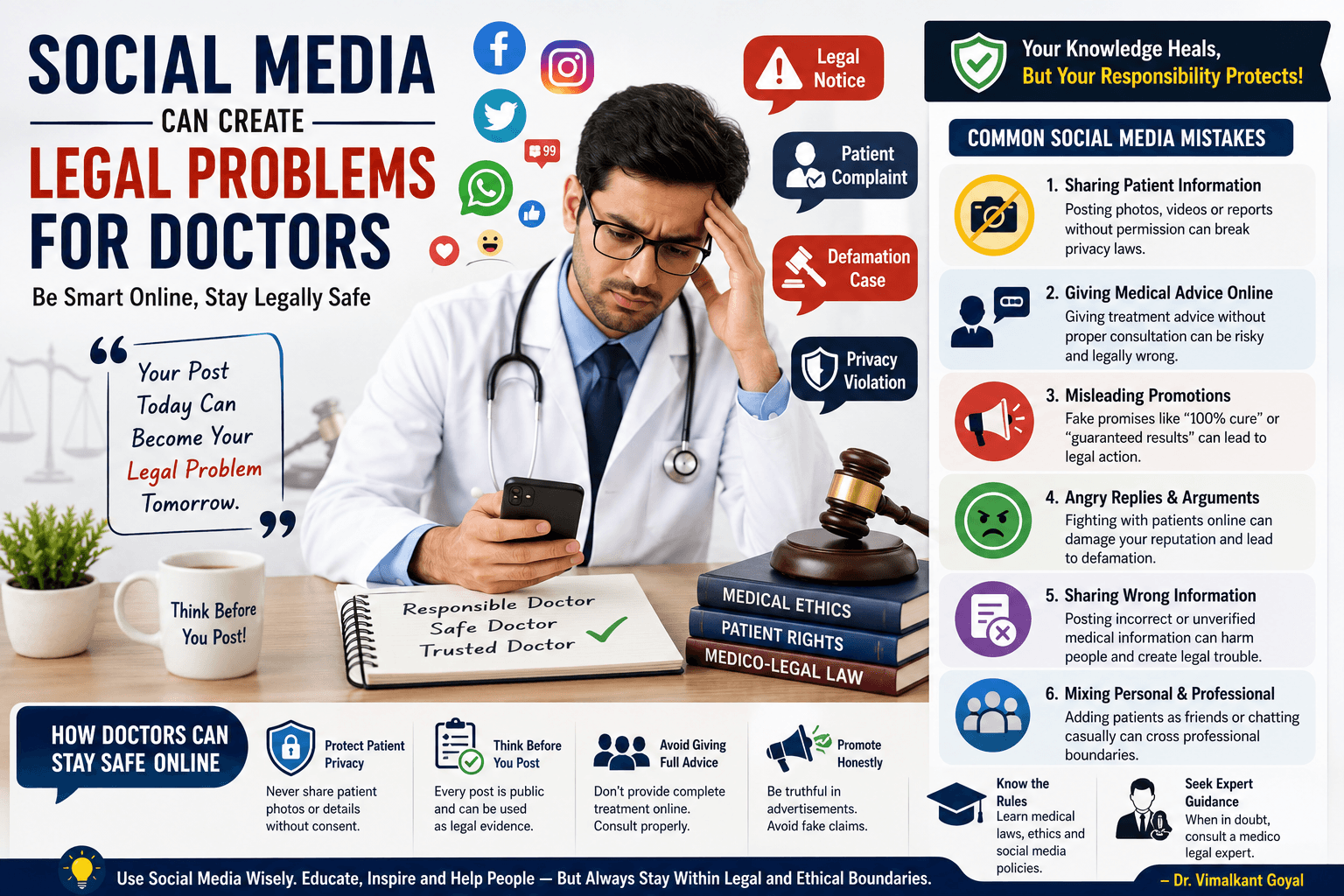
Common Causes of Social Media Legal Problems
Many doctors do not create problems intentionally. Most issues happen because of small mistakes.
Let’s understand the common reasons.
1. Sharing Patient Photos Without Permission
Some doctors post:
Patient photos
Surgery videos
Treatment results
Medical reports
without proper permission.
Even if the doctor wants to educate people, sharing patient details without consent can break privacy rules and create legal trouble.
Patient privacy should always come first.
2. Giving Medical Advice in Chat or Comments
Many patients send messages like:
“Doctor, which medicine should I take?”
“Can you suggest treatment?”
“Please check my report.”
Some doctors quickly reply without proper examination.
This can become risky because:
Wrong advice may harm the patient
Online chats can become legal proof later
Doctors may not know full medical history
Social media is not a complete replacement for proper consultation.
3. Making Big Promises Online
Some doctors post advertisements like:
“100% cure”
“Guaranteed results”
“No side effects”
“Best treatment”
Such claims may create legal and ethical problems.
In medicine, no treatment can guarantee perfect results for every patient.
4. Fighting with Patients Online
Sometimes patients write negative reviews or complaints online.
Doctors may become angry and reply emotionally.
Public arguments on social media can:
Damage reputation
Create defamation issues
Reduce patient trust
Professional behavior is very important online.
5. Posting Wrong Health Information
Doctors should never share:
Fake medical news
Unverified treatment tips
Misleading health advice
Wrong information can confuse patients and create legal complaints.
Always share trusted and scientifically correct information.
6. Mixing Personal and Professional Life
Adding patients to personal accounts or chatting casually online can create misunderstandings.
Doctors should maintain healthy professional boundaries even on social media.
How to Fix / Treat Social Media Risks
Protect Patient Privacy
Never share:
Patient photos
Reports
Videos
Personal details
without proper written permission.
If sharing for education, hide patient identity completely.
Think Before Posting
Before posting anything, ask yourself:
Is this professional?
Is this medically correct?
Can this hurt someone?
Can this create legal problems later?
One careless post can create long-term trouble.
Avoid Full Treatment Advice Online
Doctors can share general health awareness online, but complete treatment advice should happen only after proper consultation.
It is safer to ask patients to visit the clinic or book an official appointment.
Use Honest Promotion
Doctors should avoid fake promises and exaggerated advertisements.
According to Dr. Vimalkant Goyal, ethical online behavior is now an important part of safe medical practice.
Many doctors also take guidance from a Medico legal expert in Delhi to understand safe social media practices.
Keep Professional Accounts Separate
It is better to:
Use separate professional accounts
Keep communication respectful
Avoid unnecessary personal interaction with patients online
This protects professional image.
Learn Social Media Rules
Doctors should know basic rules related to:
Patient privacy
Online medical ethics
Medical advertising
Telemedicine
Defamation laws
Learning these rules helps doctors stay safer online.
Expert Tips for Doctors
1. Stay Calm Online
Do not reply emotionally to angry comments or negative reviews.
Professional silence is often smarter than public arguments.
2. Share Educational Content
Use social media for:
Health awareness
Fitness tips
Disease prevention
Medical myths and facts
Educational content builds trust.
3. Never Share Patient Secrets
Patient confidentiality is very important both offline and online.
Respecting privacy builds long-term patient trust.
4. Be Careful with Humor
Medical jokes, memes, or funny patient stories may offend people or create misunderstandings.
Always stay respectful.
5. Check Your Online Reputation
Regularly monitor:
Reviews
Comments
Fake profiles
Incorrect information using your name
Early action can prevent bigger issues.
6. Take Legal Advice Early
If any online issue becomes serious, take professional guidance immediately.
Dr. Vimalkant Goyal believes doctors should become more aware about digital legal safety because social media risks are increasing rapidly.
Conclusion
Social media can help doctors grow professionally, educate people, and connect with patients. But careless social media use can also create legal and ethical problems.
Doctors can stay safe by:
Protecting patient privacy
Posting responsibly
Avoiding fake promises
Maintaining professionalism
Sharing correct information
A few smart habits can protect both reputation and career.
If you are looking for trusted Medico legal help for medical professionals in Delhi, understanding safe social media practices is now very important for every doctor.
FAQs
1. Can doctors post patient photos online?
Only after taking proper patient permission and consent.
2. Is giving treatment advice on WhatsApp risky?
Yes, because doctors may not know the patient’s full medical condition online.
3. Can doctors reply to bad online reviews?
Yes, but replies should stay calm, polite, and professional.
4. Why should doctors avoid “100% cure” advertisements?
Because such promises can create legal and ethical problems.
5. Is social media useful for doctors?
Yes, when used professionally for awareness and education.
6. How can doctors stay legally safe online?
By protecting patient privacy, sharing correct information, and maintaining professional behavior online.
Appreciate the creator