How Proper Medical Documentation Can Protect Doctors from Legal Disputes
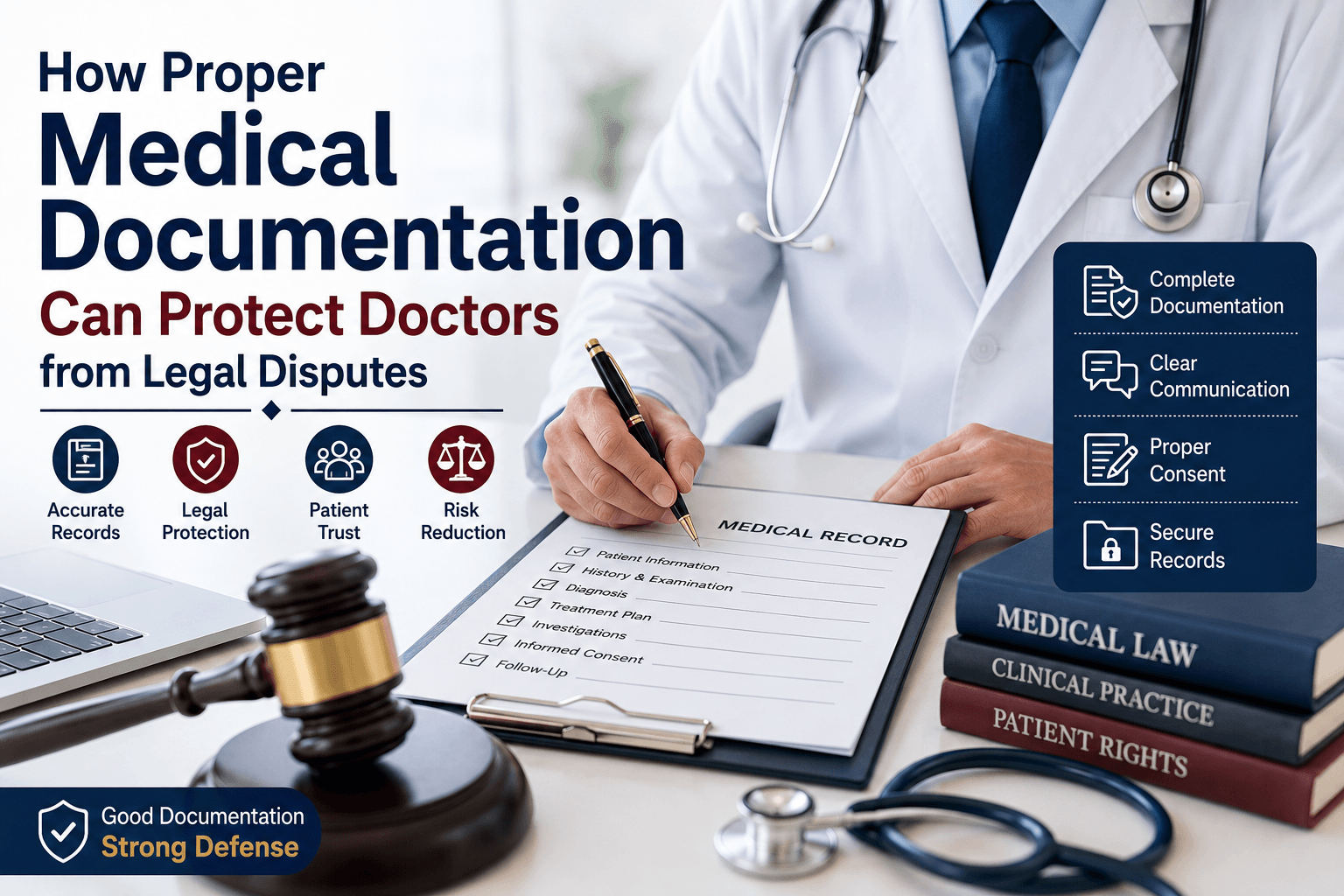
In today's healthcare environment, doctors face increasing professional responsibilities that go beyond diagnosis and treatment. Along with delivering quality medical care, healthcare professionals must also protect themselves from potential medico-legal challenges. One of the most effective ways to do this is through proper medical documentation.
Medical records are more than just administrative paperwork. They serve as a detailed account of a patient's medical history, treatment decisions, consent discussions, and follow-up care. In many medico-legal cases, documentation becomes the most important evidence available to support a doctor's clinical judgment.
According to Dr. Poonam Goyal, maintaining accurate and comprehensive records is one of the strongest safeguards available to healthcare professionals. A reliable Legal Guide for Doctors in Delhi often emphasizes that well-maintained documentation can significantly reduce the risk of legal disputes and strengthen a doctor's defense if questions arise about patient care.
Why Medical Documentation Matters More Than Ever
Modern healthcare is becoming increasingly complex. Patients are more informed, legal awareness is growing, and expectations regarding healthcare outcomes continue to rise.
Documentation Creates a Clear Medical History
Every patient interaction contributes to the overall treatment journey. Proper records help healthcare providers understand previous diagnoses, investigations, medications, and treatment plans.
Documentation Supports Continuity of Care
When multiple healthcare professionals are involved in patient management, medical records ensure that everyone has access to accurate information.
Documentation Protects Both Patients and Doctors
Good documentation benefits both parties. Patients receive better coordinated care, while doctors have evidence supporting their medical decisions.
What Should Be Included in Medical Records?
Many doctors believe that brief notes are sufficient. However, comprehensive documentation should cover every significant aspect of patient care.
Patient Information
Basic details should include:
Demographic Information
Name, age, gender, and contact information.
Medical History
Previous illnesses, surgeries, allergies, and chronic conditions.
Clinical Findings
Every consultation should include detailed observations.
Symptoms Presented
Record the patient's complaints and symptoms accurately.
Examination Findings
Document physical examination results clearly.
Provisional Diagnosis
Include your clinical assessment and diagnostic reasoning.
Treatment Plan
The treatment strategy should be recorded comprehensively.
Prescriptions
Document medications, dosage instructions, and duration.
Investigations
Record laboratory tests, imaging studies, and referrals.
Follow-Up Advice
Include recommendations regarding future consultations and monitoring.
The Role of Documentation in Legal Protection
Medical documentation often becomes the primary source of evidence during investigations and legal proceedings.
Demonstrating Standard of Care
Accurate records help demonstrate that treatment decisions were made according to accepted medical standards.
Supporting Clinical Judgment
Documentation explains why specific decisions were made at different stages of treatment.
Defending Against False Allegations
Sometimes complaints arise from misunderstandings rather than negligence. Proper records can clarify what actually occurred.
Providing Objective Evidence
Unlike memory, written records provide objective and verifiable information.
Informed Consent: A Critical Part of Documentation
One of the most important aspects of medical documentation involves informed consent.
Why Consent Matters
Patients have the right to understand:
Benefits of Treatment
Expected positive outcomes.
Potential Risks
Possible complications and side effects.
Available Alternatives
Alternative treatment options when applicable.
Documenting Consent Properly
Consent should never be treated as a routine formality.
Doctors should document:
Discussion of risks
Explanation of benefits
Alternative treatments
Patient questions
Final decision
Well-documented consent can be crucial in preventing future disputes.
Common Documentation Mistakes Doctors Should Avoid
Even experienced healthcare professionals sometimes make documentation errors.
Incomplete Notes
Brief or vague entries can create uncertainty during investigations.
Delayed Documentation
Recording information long after the consultation increases the risk of inaccuracies.
Illegible Handwriting
Poorly written notes may create confusion and misunderstandings.
Missing Consent Records
Failure to document consent can weaken a doctor's position significantly.
Altering Medical Records
Records should never be modified after the fact. Any corrections must follow proper documentation protocols.
Electronic Medical Records and Legal Protection
Technology has transformed healthcare documentation.
Advantages of Electronic Records
Electronic systems provide:
Better Accessibility
Authorized healthcare providers can access records easily.
Improved Accuracy
Digital records reduce handwriting-related errors.
Enhanced Security
Electronic systems often include audit trails and access controls.
Importance of Data Protection
Doctors must ensure that patient information remains confidential and secure at all times.
How Proper Documentation Improves Patient Trust
Documentation is not only about legal protection. It also strengthens the doctor-patient relationship.
Better Communication
Accurate records support clear communication during consultations.
Greater Transparency
Patients appreciate transparency regarding their diagnosis and treatment plans.
Improved Treatment Outcomes
Detailed records help healthcare providers make informed decisions and monitor progress effectively.
When Should Doctors Seek Medico-Legal Guidance?
Certain situations require professional support.
Patient Complaints
Formal complaints should be reviewed carefully alongside medical records.
Legal Notices
Any legal communication should be addressed promptly.
Consumer Court Cases
Documentation becomes particularly important in consumer disputes.
Allegations of Negligence
Detailed records can play a decisive role in defending clinical decisions.
In such situations, obtaining Medico legal advice for doctors in Delhi can help healthcare professionals understand their legal position and respond appropriately.
Building Strong Documentation Habits
Good documentation should become a routine part of medical practice.
Create Records Immediately
Document consultations as soon as possible.
Use Clear Language
Avoid ambiguous terms and unclear abbreviations.
Be Consistent
Maintain the same documentation standards across all patient interactions.
Review Records Regularly
Periodic audits help identify gaps and improve record quality.
The Perspective of Dr. Poonam Goyal
Dr. Poonam Goyal believes that medical documentation is not merely an administrative requirement but an essential component of professional medical practice. Proper records improve patient care, strengthen communication, and provide valuable protection in medico-legal situations.
Healthcare professionals who invest time in maintaining high-quality records are often better prepared to manage challenges and protect their professional reputation.
Frequently Asked Questions
Why is medical documentation important for doctors?
Medical documentation provides evidence of clinical decisions, treatment plans, communication, and informed consent.
Can proper documentation prevent legal disputes?
While it may not prevent every dispute, strong documentation significantly improves a doctor's ability to defend their actions.
What information should every medical record contain?
Patient history, examination findings, diagnosis, treatment plans, investigations, prescriptions, consent discussions, and follow-up advice.
Are electronic medical records legally useful?
Yes. Electronic records often provide additional security, accuracy, and traceability.
When should doctors seek medico-legal advice?
Doctors should seek guidance when facing patient complaints, legal notices, negligence allegations, or consumer court proceedings.
Conclusion
Proper medical documentation is one of the most powerful tools available to healthcare professionals. Beyond supporting patient care, it provides protection against misunderstandings, complaints, and legal disputes. Accurate records demonstrate professionalism, strengthen communication, and create transparency throughout the treatment process.
A trusted Legal Guide for Doctors in Delhi consistently highlights the importance of documentation as a fundamental risk-management strategy. When challenges arise, seeking Medico legal advice for doctors in Delhi can help healthcare providers understand their rights and responsibilities. Ultimately, following the Best Medico legal Guidance for doctors in Delhi and maintaining comprehensive records can help doctors safeguard their reputation, strengthen patient trust, and continue practicing medicine with confidence.
Appreciate the creator