How Poor Communication Leads to Medico-Legal Disputes
Introduction
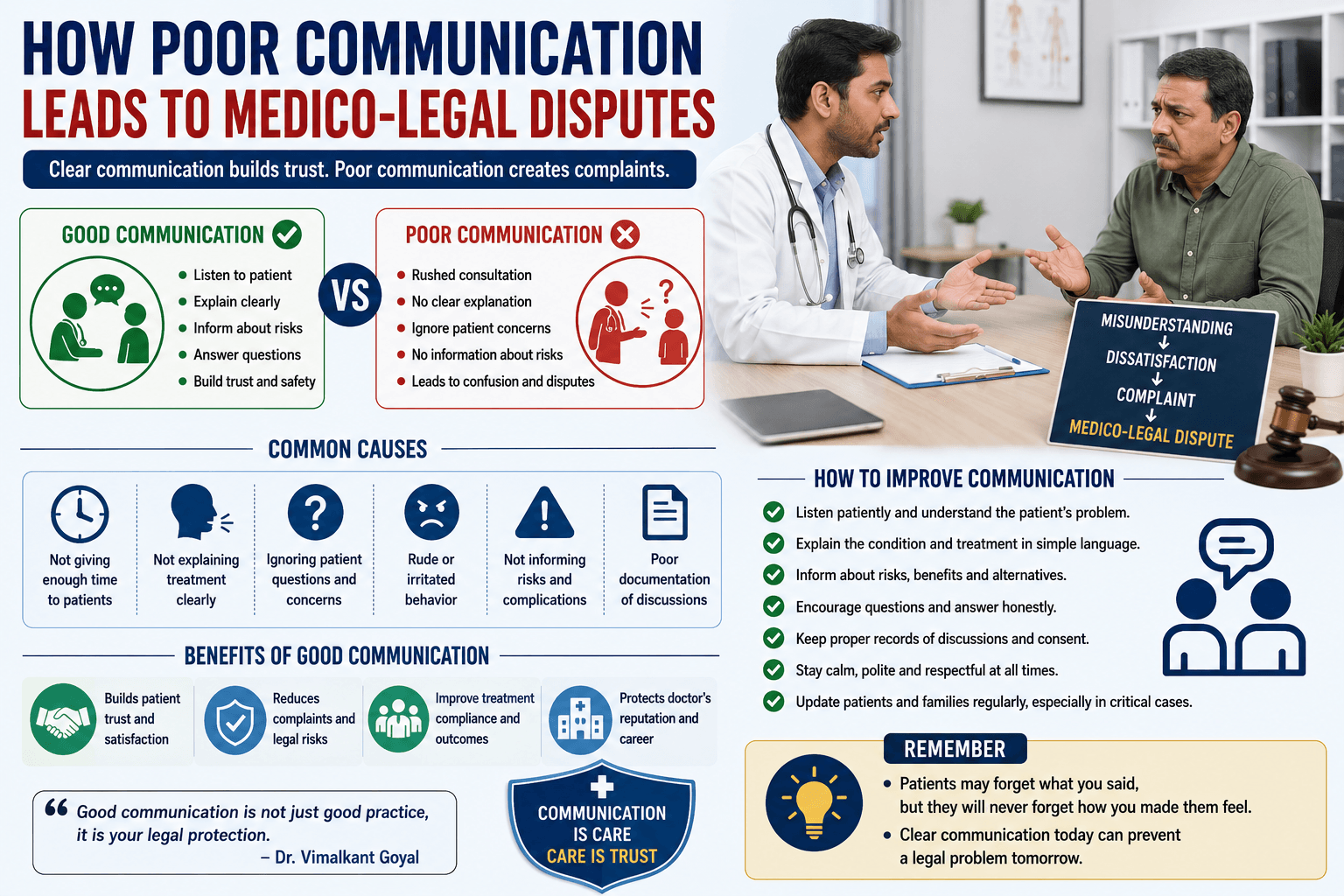
Good communication is one of the most important parts of medical practice. Patients not only expect good treatment from doctors, but they also want clear explanations, respectful behavior, and proper guidance. When communication becomes weak, misunderstandings start growing, and sometimes these misunderstandings turn into medico-legal disputes.
Today in Delhi, many complaints against doctors happen not because of wrong treatment, but because patients feel ignored, confused, or disrespected. Even skilled doctors can face legal trouble if they fail to communicate properly with patients and their families.
According to Dr. Vimalkant Goyal, strong communication helps build patient trust and reduces the chances of legal conflicts.
If you are searching for Medico legal help for medical professionals in Delhi, understanding the role of communication in medical practice is very important.
Think of communication like a bridge between doctors and patients. If the bridge becomes weak, trust can break very quickly.
This blog explains in simple language how poor communication creates medico-legal disputes and how doctors can improve patient relationships safely and professionally.
Common Causes of Communication Problems
Many medico-legal disputes begin because of small communication mistakes.
Let’s understand the common reasons.
1. Not Explaining Treatment Properly
Some doctors explain treatment very quickly or use difficult medical language.
Patients may not understand:
Their disease
Treatment process
Risks involved
Recovery time
When patients remain confused, frustration increases.
2. Giving Very Little Time to Patients
Busy clinics and hospitals often create rushed consultations.
Patients feel unhappy when doctors:
Do not listen properly
Interrupt frequently
Ignore questions
Patients want attention and understanding, not only medicines.
3. Rude or Angry Behavior
Sometimes stress, workload, or pressure affects doctor behavior.
Even small things like:
Angry tone
Impatient replies
Ignoring concerns
can damage patient trust.
Respectful behavior is very important in healthcare.
4. Poor Communication During Emergencies
During serious situations, families become emotional and scared.
If doctors fail to explain the patient’s condition clearly, family members may think:
Treatment is delayed
Information is hidden
Care is not proper
This can increase conflict and complaints.
5. Not Discussing Risks Clearly
Every treatment has some risks and limitations.
If doctors do not explain:
Possible complications
Side effects
Chances of failure
patients may develop unrealistic expectations.
When results differ from expectations, disputes may happen.
6. Lack of Proper Documentation
Good communication should also be documented.
Missing:
Consent forms
Treatment explanations
Patient discussions
can create problems later during legal investigations.
How to Fix / Improve Communication
Speak in Simple Language
Doctors should avoid difficult medical words while talking to patients.
Simple explanations help patients understand treatment better.
Patients feel more comfortable when communication is easy.
Listen Carefully
Patients want doctors to hear their problems properly.
Listening carefully:
Builds trust
Reduces misunderstanding
Improves patient satisfaction
Good listening is also part of good treatment.
Give Clear Information
Doctors should clearly explain:
Disease condition
Treatment plan
Risks involved
Recovery expectations
Clear communication reduces confusion and fear.
Stay Calm and Respectful
Even during stressful situations, doctors should remain polite and patient.
Calm behavior helps manage difficult situations better.
Take Proper Consent
Before surgery or risky treatment:
Explain risks clearly
Answer patient questions
Take written consent
Consent protects both doctors and patients.
Maintain Communication Records
Doctors should document:
Treatment discussions
Consent details
Advice given
Important instructions
Good records become helpful during disputes.
Many doctors seek Legal help for doctors in Delhi to understand proper communication and documentation practices.
Dr. Vimalkant Goyal believes strong communication combined with proper records can prevent many medico-legal problems.
Expert Tips for Doctors
1. Make Eye Contact
Simple eye contact makes patients feel heard and respected.
It improves patient confidence.
2. Avoid Showing Anger
Doctors should avoid:
Shouting
Arguing
Emotional replies
Professional behavior protects reputation.
3. Encourage Questions
Patients should feel comfortable asking questions.
Answering doubts clearly reduces confusion and fear.
4. Inform Families Regularly
During serious illness or emergency situations, families should receive regular updates.
Lack of information increases stress and misunderstanding.
5. Improve Communication Skills
Communication is a skill that doctors can improve with practice and training.
Good communication creates stronger doctor-patient relationships.
6. Stay Professional Online
Doctors should also communicate carefully on:
WhatsApp
Instagram
Facebook
Email
Wrong online communication can also create legal disputes.
Dr. Vimalkant Goyal strongly believes communication awareness is becoming as important as medical knowledge today.
Conclusion
Poor communication is one of the biggest reasons behind medico-legal disputes today. Many complaints happen because patients feel confused, ignored, or disrespected.
Doctors can reduce legal risks by:
Speaking clearly
Listening carefully
Explaining risks honestly
Maintaining proper records
Staying calm and respectful
Good communication builds trust, improves patient satisfaction, and protects doctors professionally.
If you are looking for trusted Medico legal support in Delhi, improving communication skills is one of the smartest ways to reduce medico-legal disputes and build a safer medical practice.
FAQs
1. Can poor communication create legal problems for doctors?
Yes. Many complaints happen because of misunderstanding and lack of clear communication.
2. Why is patient communication important?
Good communication builds trust and improves patient satisfaction.
3. Should doctors explain treatment risks clearly?
Yes. Patients should understand risks, complications, and treatment expectations properly.
4. Why is documentation important during communication?
Documentation works as proof of discussions and consent during legal disputes.
5. Can polite behavior reduce patient complaints?
Yes. Respectful communication often prevents conflicts and misunderstandings.
6. How can doctors improve communication skills?
Doctors can improve communication by listening carefully, speaking simply, and practicing patient-friendly behavior.
Appreciate the creator