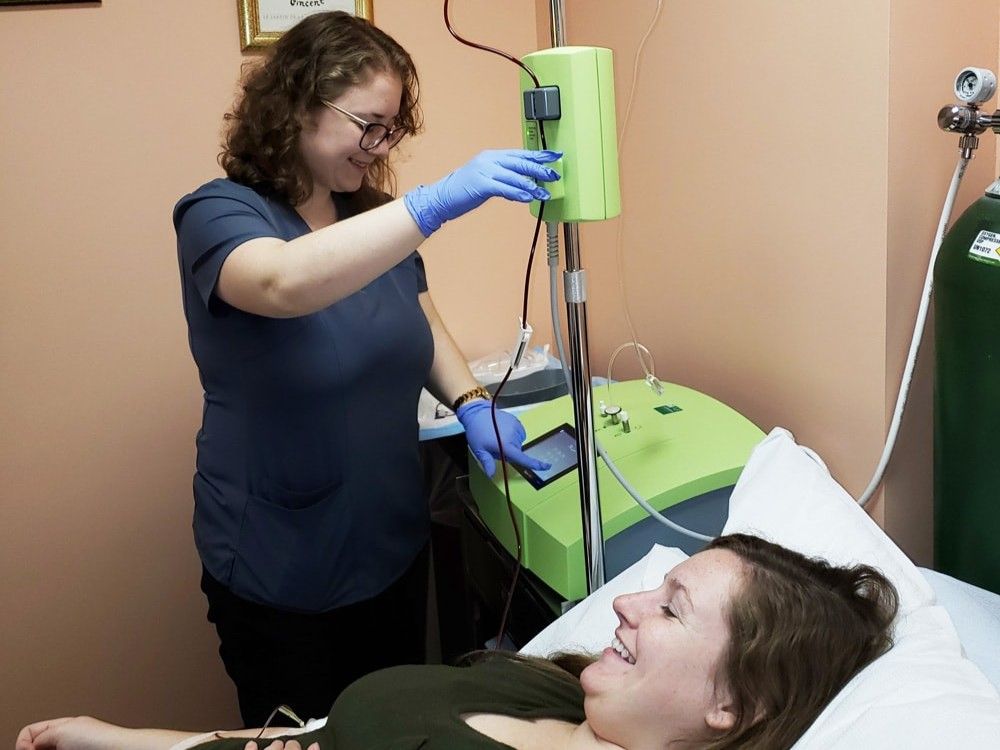
How Ozone Autohemotherapy Is Becoming a Quiet Revolution in Chronic Care
Chronic illness doesn’t always follow clear rules. It doesn’t always show up on lab reports. And for many, it doesn’t fully go away. Even after medication, lifestyle changes, and countless appointments.
That’s why a growing number of people are turning to therapies that support the body’s natural healing processes, rather than overriding them.
One of the most promising therapies people are resorting to lately is blood ozone therapy, also known as ozone autohemotherapy.
Though it’s been used in parts of Europe for decades, ozone therapy has only recently begun to gain traction in the U.S.
In simple terms, the process involves drawing a small amount of a patient’s blood, infusing it with medical-grade ozone gas, and then reintroducing it back into the bloodstream.
This enriched blood acts like a catalyst, stimulating oxygen utilization, modulating the immune response, and promoting detoxification—all while using the body’s own circulatory system as the delivery route.
For those unfamiliar with ozone outside of environmental news, the idea of infusing it into the bloodstream may sound unusual, even alarming.
But in clinical settings, ozone is carefully generated at medical-grade concentrations, and the gas is never inhaled or used in an uncontrolled way.
In this therapy, ozone (O3) acts less like a foreign substance and more like a biological signal, nudging cells and systems back into balance.
So, what exactly does blood ozone therapy aim to do?
One of its core effects is enhancing oxygen metabolism.
Chronic conditions such as fibromyalgia, chronic fatigue syndrome, or autoimmune disorders often involve some degree of mitochondrial dysfunction, meaning the body’s cells aren’t using oxygen efficiently.
Ozone therapy helps stimulate enzymes that improve cellular respiration, enabling tissues to generate energy more effectively.
This may explain why many patients report improved energy levels, clearer thinking, and a gradual lift in overall vitality after a series of treatments.
Another critical role of ozone is its effect on inflammation.
Most chronic illnesses today—from metabolic conditions to autoimmune disorders—share a common thread: systemic, low-grade inflammation.
Ozone therapy has been shown to activate the production of antioxidant enzymes like superoxide dismutase (SOD) and glutathione peroxidase, which in turn help regulate inflammatory pathways.
Rather than simply suppressing inflammation, it seems to normalize immune activity—an effect that is especially relevant for those with immune dysregulation.
There’s also emerging evidence suggesting ozone therapy may help regulate cytokines, the signaling proteins of the immune system.
In autoimmune or chronic inflammatory states, these proteins can become overactive or unbalanced. Ozone’s influence here appears to act as a modulator, helping to calm hyperactivity without suppressing healthy immune vigilance.
One of the more unique qualities of ozone therapy is its subtlety. It doesn’t produce the dramatic shifts often associated with pharmaceuticals or surgical interventions.
Instead, its benefits unfold gradually through improved circulation, better oxygen delivery, more efficient waste removal, and quieter immune signals.
Patients often describe the change as cumulative: a better night’s sleep here, slightly clearer focus there, and eventually a meaningful shift in how their body feels and functions.
That doesn’t mean ozone therapy is right for everyone, or that it replaces conventional medicine. It’s most commonly used as a complementary therapy—alongside standard treatments for chronic illness, autoimmune conditions, or recovery from infections.
Many integrative practitioners also incorporate it into broader care plans that include nutrition, IV therapy, and movement practices.
Ozone for Long COVID
It's worth noting that ozone therapy is being explored in the context of post-viral syndromes, including long COVID.
These are conditions that often leave individuals with persistent fatigue, brain fog, and unrelenting inflammation—areas where ozone’s mechanisms seem particularly relevant.
While larger clinical trials are still needed, the anecdotal and early observational data are promising enough to warrant cautious interest.
The Rising Popularity of Ozone Therapy
Of course, with rising popularity comes the need for clarity and responsibility. One of the challenges with ozone therapy today is ensuring it’s delivered safely.
That means using only medical-grade ozone equipment, precise concentration protocols, and trained professionals to administer it.
The rise in unregulated devices or DIY ozone therapy kits has raised concerns in the medical community.
Ozone, while powerful, is not something to experiment with casually. Its benefits depend entirely on correct usage and careful clinical oversight.
Also essential is managing expectations. Blood ozone therapy is not a cure-all. It doesn’t promise overnight miracles or dramatic transformations.
Rather, it offers support, especially for people dealing with stubborn symptoms or complex chronic illness.
Its role is to restore balance, improve internal communication, and help the body function more efficiently under stress.
Working With Blood Ozone Therapy
Understanding this therapy requires a shift in how we think about healing.
In a healthcare system largely oriented around diagnosis and symptom suppression, alternative healing systems like blood ozone therapy invite a different question: not “How do we fix this disease?” but “How can we create an internal environment where healing is possible?”
This reframe may explain why blood ozone therapy is starting to gain traction not just in wellness circles but also in select integrative clinics, functional medicine practices, and regenerative health centers.
It’s part of a broader movement toward therapies that work with the body’s systems, not around or against them.
The quiet nature of this therapy, its subtle improvements, and its cumulative effects belie its transformative potential.
It may not make headlines, but for many navigating the long road of chronic illness, ozone autohemotherapy is offering something much more meaningful: a return to vitality, on the body’s own terms.
Featured Image Courtsey: American Regenerative Clinic
Appreciate the creator