How Nasal Polyps Affect Breathing and Sinus Health
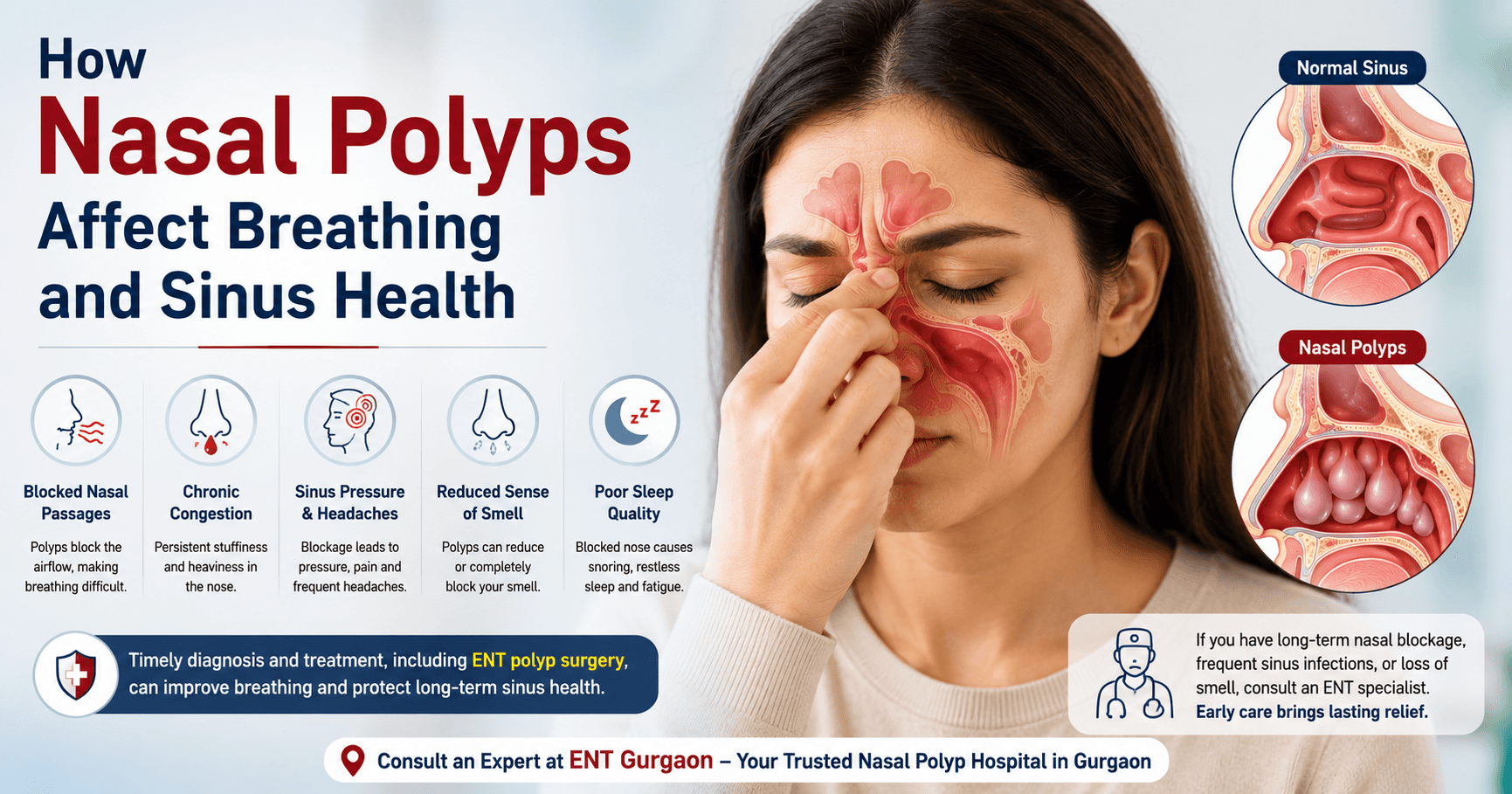
A surprising fact many people don't expect is that nasal polyps can quietly affect breathing long before they cause obvious discomfort. Left untreated, they can gradually disrupt airflow and sinus drainage, sometimes requiring ENT polyp surgery in Gurgaon (https://www.entgurgaon.com/polyp-surgery.php) to restore normal function. Understanding how these growths affect breathing and sinus health helps you recognize the problem sooner.
What Are Nasal Polyps and Where Do They Form?
Nasal polyps are soft, teardrop-shaped growths that develop inside the nasal passages and sinuses due to ongoing inflammation. They form most often in areas where sinuses drain into the nasal cavity.
Because these areas are narrow, even a small polyp can significantly reduce airflow. Larger polyps or multiple growths can block the nasal passage almost completely over time.
How Do Nasal Polyps Affect Breathing?
In many cases, patients first notice breathing difficulty rather than pain, since polyps rarely cause discomfort in their early stages. This makes early detection somewhat challenging.
Common breathing-related effects include:
Persistent nasal blockage on one or both sides
Mouth breathing, especially noticeable during sleep
Snoring or disrupted sleep due to restricted airflow
A feeling of heaviness or pressure in the nose
Reduced airflow that worsens with colds or allergies
As polyps grow larger, these breathing difficulties tend to become more constant rather than occasional.
Impact on Sinus Health and Drainage
You may notice that nasal polyps don't just block airflow, they also interfere with how sinuses drain mucus naturally. This can create a cycle of ongoing irritation and infection.
Effects on sinus health often include:
Mucus buildup due to blocked drainage pathways
Frequent sinus infections that keep recurring
Chronic sinus pressure or facial discomfort
Reduced sense of smell affecting taste as well
Postnasal drip that persists for weeks at a time
Over time, this ongoing blockage can make sinuses more prone to repeated infections needing further treatment.
Common Causes Behind Nasal Polyp Development
Many patients worry that nasal polyps appear randomly without any clear reason. In many cases, however, they develop from specific underlying triggers.
Chronic sinusitis lasting several months or longer
Allergic rhinitis causing ongoing nasal inflammation
Asthma, which frequently coexists with nasal polyps
Sensitivity to aspirin or certain anti-inflammatory medications
Genetic factors linked to chronic sinus conditions
Identifying the root cause helps guide whether medical management or polyp removal surgery in Gurgaon (https://www.entgurgaon.com/polyp-surgery.php) offers better relief.
Risk Factors That Worsen Breathing and Sinus Symptoms
Most people don't realize how certain conditions can accelerate polyp growth and worsen breathing difficulties over time.
Common risk factors include:
Long-standing asthma or chronic bronchitis
Recurrent sinus infections over several years
Known sensitivity to NSAIDs or aspirin
Ongoing exposure to smoke or strong environmental irritants
Family history of chronic sinus or nasal conditions
Recognizing these risk factors early can prompt timely evaluation before symptoms significantly affect breathing.
Diagnosis of Nasal Polyps and Sinus Involvement
Diagnosis typically starts with a nasal endoscopy to directly examine the size and location of polyps within the nasal passages. This is why early diagnosis matters, since it helps track whether sinus drainage is significantly affected.
Typical diagnostic steps include:
Nasal endoscopy using a thin, flexible camera
CT imaging to assess sinus involvement and blockage
Allergy testing when a trigger is suspected
Breathing assessment to gauge airflow restriction
Dr. Manish Prakash uses these findings to determine whether medication alone will help or whether surgical removal is necessary.
Treatment Options for Better Breathing
In many cases, treatment begins with nasal sprays, steroids, or saline rinses aimed at reducing polyp size and inflammation. Surgery becomes relevant when these measures fail to restore adequate airflow.
Common treatment paths include:
Corticosteroid nasal sprays to shrink polyp size
Oral steroids for short-term symptom control
Polyp removal surgery in Gurgaon for persistent blockage
Ongoing allergy or asthma management to prevent recurrence
Dr. Manish Prakash recommends surgery only after confirming medication has not provided lasting improvement.
Recovery and Lifestyle Advice
Recovery after polyp removal generally allows for noticeably easier breathing within a few weeks as swelling reduces and sinus passages heal.
Quick tips for supporting recovery and long-term sinus health include:
Use saline rinses regularly to keep nasal passages clear
Manage allergies and asthma consistently with your doctor's guidance
Avoid smoke and strong irritants that trigger inflammation
Attend follow-up visits at a trusted nasal polyp hospital in Gurgaon (https://www.entgurgaon.com/polyp-surgery.php)
Parents often ask whether children experience similar breathing improvements after treatment. With proper care, most children notice clearer breathing and better sleep quality within weeks.
Myths vs Facts About Nasal Polyps and Breathing
People frequently assume nasal polyps are just a minor nuisance rather than something affecting long-term sinus health. That assumption often underestimates their impact over time.
Myth: Nasal polyps only cause minor stuffiness. Fact: Left untreated, they can significantly disrupt breathing and sinus drainage.
Myth: Nasal sprays alone always resolve polyps completely. Fact: Larger or recurring polyps often need surgical removal for lasting relief.
Conclusion
Nasal polyps can quietly affect breathing and sinus health long before symptoms feel severe, making early recognition genuinely valuable. When medication no longer provides relief, ENT polyp surgery in Gurgaon can help restore normal airflow and reduce recurring sinus problems. Dr. Manish Prakash recommends a thorough nasal evaluation if breathing difficulty or sinus symptoms persist. Book a consultation today to explore the most suitable treatment for clearer, easier breathing.
Frequently Asked Questions
Can nasal polyps cause long-term breathing problems if untreated?
Yes, untreated polyps can progressively block airflow and disrupt sinus drainage, potentially leading to chronic sinus infections and ongoing breathing difficulty over time.
How do I know if my breathing issues are caused by polyps?
Persistent nasal blockage, reduced smell, and recurring sinus infections despite treatment often indicate polyps. A nasal endoscopy can confirm their presence accurately.
Do nasal polyps affect sleep quality?
Yes, restricted airflow from polyps can lead to mouth breathing, snoring, and disrupted sleep, especially when blockage affects one or both nasal passages significantly.
Can polyp removal surgery fully restore normal breathing?
Many patients experience significant improvement in breathing after surgery, though results vary depending on sinus involvement and how well underlying inflammation is managed afterward.
What should I look for in a nasal polyp hospital in Gurgaon?
Look for experienced ENT specialists, proper diagnostic imaging facilities, and a strong track record with endoscopic sinus procedures for safe, effective treatment outcomes.
Appreciate the creator