How Missing Medical Records Can Create Serious Legal Problems
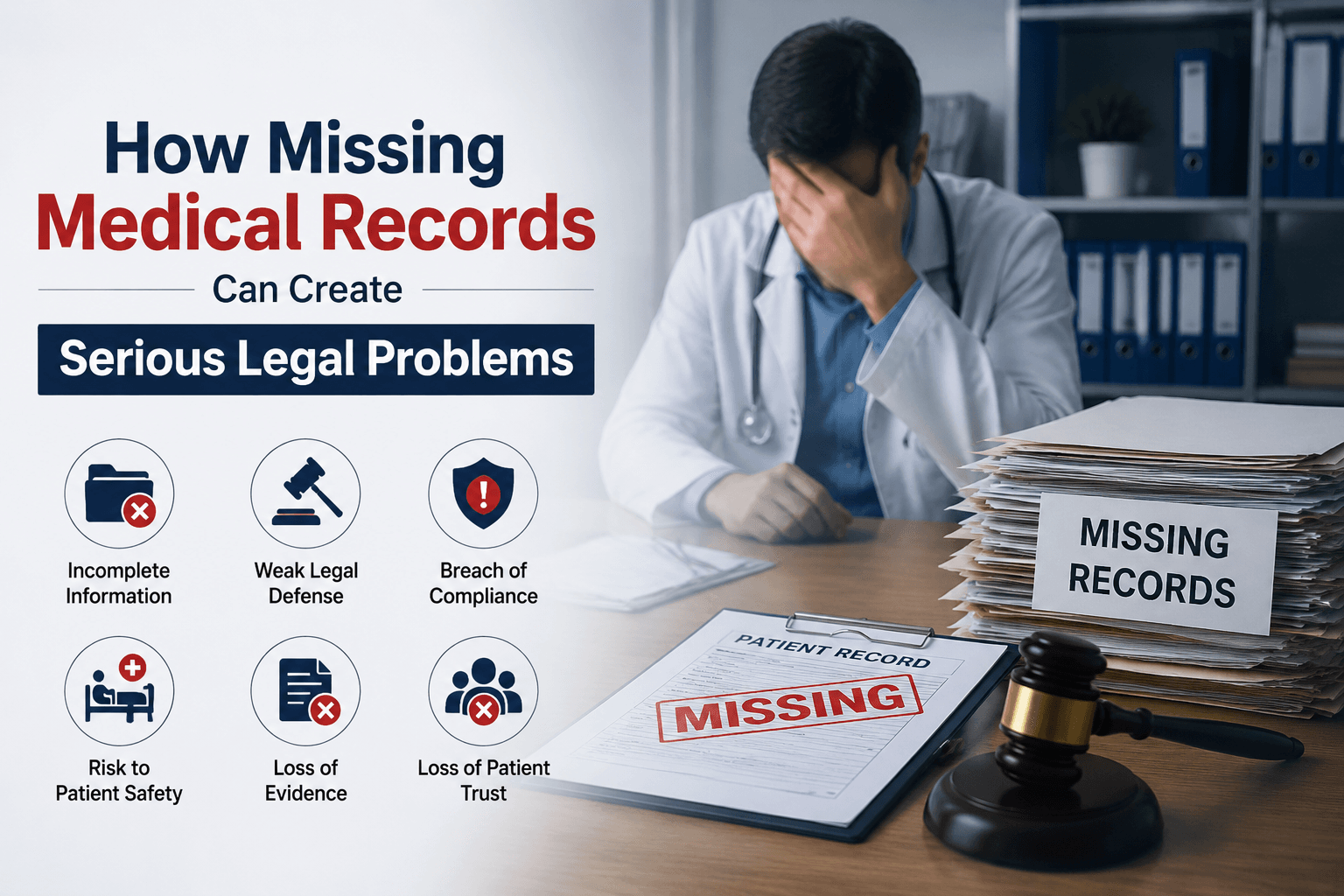
When a patient's file cannot be located during a dispute, the absence itself becomes evidence, and rarely in the doctor's favour. This is one of the clearest warnings in any legal guide for medical in Delhi (https://drvimalkantgoyal.com/medico-legal-guide.php): missing medical records do not just create administrative inconvenience, they actively weaken a doctor's or hospital's legal position. Even when treatment was appropriate, an incomplete or untraceable file can make it impossible to prove what actually happened. Doctors often assume that good clinical judgment will speak for itself, but without the paperwork to support it, that judgment is difficult to demonstrate to anyone reviewing the case after the fact. A practical healthcare quality guide in Delhi treats reliable record-keeping as a core part of patient safety, not a background task handled somewhere else in the system.
Legal Guide for Medical in Delhi: Why Missing Records Are a Legal Risk
What Counts as a Missing Medical Record
A missing medical record is not always a completely absent file. It can include lost pages, unreadable scans, records stored in the wrong patient's file, or documents that exist but cannot be retrieved when needed. Any thorough legal guide for medical in Delhi treats these partial gaps just as seriously as a fully missing file, since both leave the same evidentiary hole.
Why Missing Records Are Treated Seriously in Legal Cases
Courts and medical boards rely heavily on documentation to reconstruct what happened during treatment. When records are missing, the burden often shifts toward the doctor or hospital to explain the gap, and unexplained absences are frequently interpreted unfavourably. This makes missing records one of the most damaging issues a defence can face.
How Medical Records Go Missing in Everyday Practice
Poor Filing and Storage Systems
Outdated or disorganised filing systems remain a leading cause of missing records, especially in busy hospitals handling high patient volumes. Paper files misplaced during transfers between departments, or digital records saved under incorrect patient identifiers, can become effectively lost even though no document was ever destroyed. In many cases, the record technically exists somewhere in the system, but no one can locate it quickly enough when it actually matters.
Human Error During Busy Clinical Hours
During emergencies or high-pressure shifts, documentation can be delayed, skipped, or recorded in the wrong file entirely. Human error is understandable given clinical demands, but from a legal standpoint, the reason behind a missing record matters far less than the fact that it cannot be produced when requested.
Legal Consequences of Missing Medical Records
Weakening the Doctor's or Hospital's Defence
Without a complete record, doctors are forced to rely on memory rather than documented evidence, which is a far weaker position during any investigation. Missing records can undermine an otherwise strong defence, turning a case that should be straightforward into one that appears far more uncertain than the actual clinical care warranted. Opposing parties often use these gaps to argue that proper care was never taken, regardless of what actually occurred at the bedside.
Impact on Patient Safety and Continuity of Care
Missing records also create direct patient safety risks beyond any legal dispute. Without access to prior history, allergies, or previous treatment decisions, other clinicians may unintentionally repeat tests, miss important warnings, or make decisions without full context, increasing the chance of harm during future care.
Hospital Quality Guide in Delhi: Building Reliable Record-Keeping Systems
Standardising Medical Records Management
A structured hospital quality guide in Delhi (https://drvimalkantgoyal.com/hospital-quality-guide-in-delhi.php) typically recommends standardised systems for storing, labelling, and retrieving medical records, whether paper-based or digital. Consistency across departments reduces the chance of files being misplaced or saved under the wrong identifiers, which is one of the most common causes of missing documentation flagged in any legal guide for medical in Delhi.
Strengthening Hospital Compliance Through Regular Audits
Routine audits of record storage and retrieval systems help hospitals catch gaps before they become legal liabilities. Following a hospital quality guide in Delhi, many institutions now conduct periodic checks to confirm that files can actually be located and accessed, not just that they were created in the first place.
Best Practices to Prevent Missing Records
Digital Record-Keeping and Backup Systems
Digital systems with automatic backups significantly reduce the risk of records being permanently lost, compared to paper-only storage. Cloud-based or server-backed systems also make it easier to track when a record was created or modified, adding another layer of protection during any later dispute.
Training Staff on Documentation Responsibility
Clear training on where and how to file records, along with defined responsibility for each stage of documentation, reduces the chance of files falling through the cracks. When every staff member understands their specific role in record-keeping, accountability becomes easier to trace if a document does go missing.
Following a Healthcare Quality Guide in Delhi to Reduce Legal Risk
Aligning Record-Keeping with Healthcare Regulations
A reliablehealthcare quality guide in Delhi (https://drvimalkantgoyal.com/hospital-quality-guide-in-delhi.php) ensures that record-keeping practices meet current healthcare regulations, including requirements around retention periods and secure storage. Staying aligned with these standards protects hospitals from compliance penalties in addition to strengthening their position in individual legal disputes.
When to Seek Expert Legal Review
Hospitals and doctors should periodically review their record-keeping systems with expert legal guidance, rather than waiting until a file goes missing during an active dispute. Early review, guided by a sound healthcare quality guide in Delhi, helps identify weak points in storage and retrieval before they cause real damage.
Missing medical records rarely happen through deliberate neglect, but their legal consequences can be just as serious as an outright documentation error. Following a dependable legal guide for medical in Delhi, and treating reliable record-keeping as a genuine priority, protects both patients and practitioners when disputes arise. Dr. Vimal Kant Goyal advises every hospital and doctor to review their record-keeping systems regularly, since a record that cannot be found offers no protection at all.
Appreciate the creator