How Is an NDIS Cleaning Plan Tailored to Your Home?
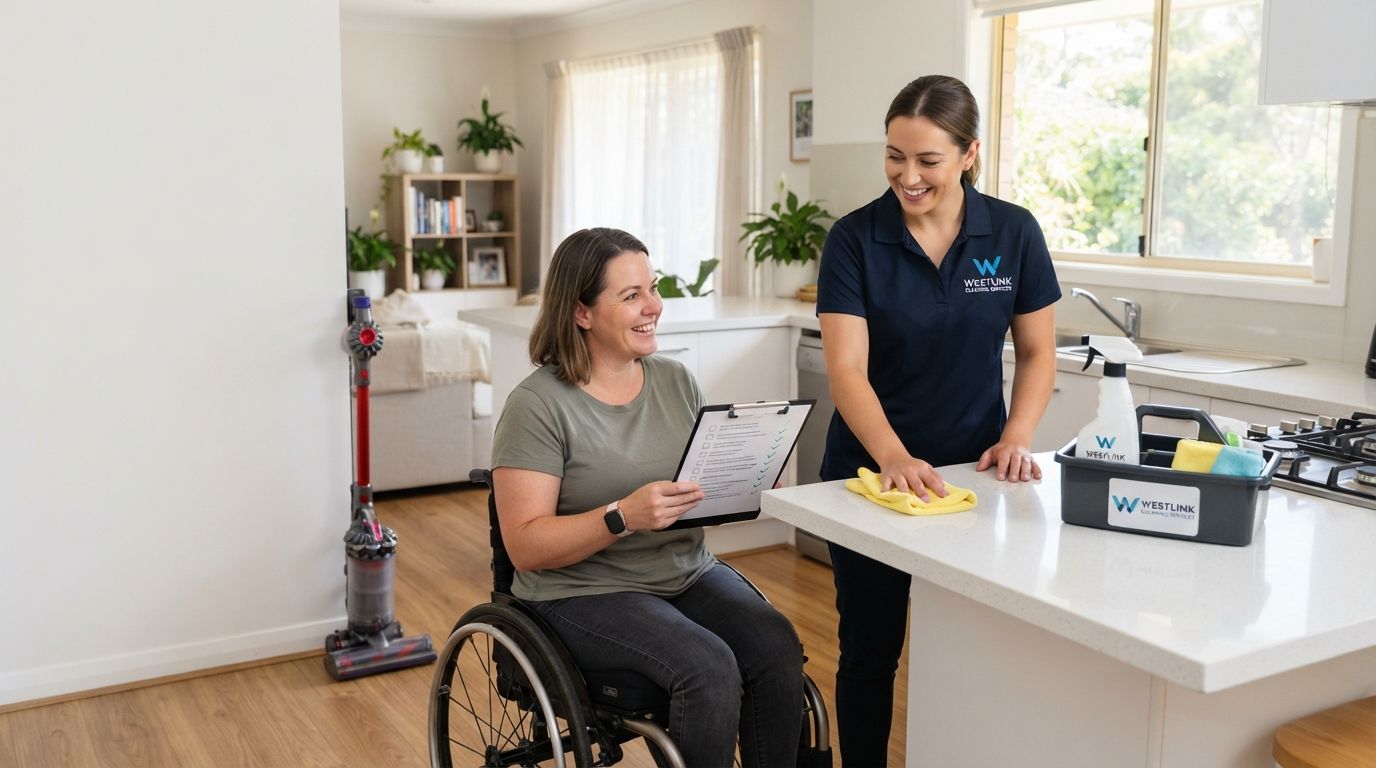
An NDIS cleaning plan is a practical cleaning arrangement built around your home and the tasks you need help with. It can set out priority rooms, a realistic task list, visit length, timing, access instructions and preferences for products or privacy. A small apartment where the bathroom and floors need regular attention calls for a different checklist from a larger home with several living areas.
The term cleaning plan describes an agreement with a provider. It is not your official NDIS plan and does not decide what funding you receive. Start by describing your home and priorities, then confirm that the proposed service fits your individual support and funding arrangements. Sydney providers such as Westlink Cleaning Services can discuss a cleaning scope based on those details.
What Is a Personalised NDIS Cleaning Plan?
A personalised cleaning plan is a set of service instructions agreed between you and a cleaning provider. It records which rooms and tasks are included, what should happen first if time is limited, how often visits are proposed, and how long each visit will last. It can also record access details, products to use or avoid, and belongings or spaces the cleaner should leave undisturbed.
Your official NDIS plan are different. It sets out your funded supports and budgets. A cleaning checklist helps a worker deliver an agreed service consistently; writing one does not add funding or approve a particular task. Confirm the funding and service terms separately before booking.
Start With the Home, Not a Standard Cleaning Package
Property type and layout
An apartment may involve lifts, shared entrances and limited storage for equipment. A single-storey house and a multi-storey home can require different travel between rooms. In a shared home or supported living setting, establish which areas and responsibilities belong in the proposed service arrangement.
Size, rooms and flooring
List the bathrooms, bedrooms, kitchen and living spaces that need attention. More rooms generally mean more work, while carpets, tiles and timber may call for different methods. Property size affects a quote and schedule, but does not by itself establish an NDIS funding entitlement.
Frequently used areas
A kitchen or accessible bathroom used daily may need attention ahead of a rarely used guest room. Tell the provider how the household actually uses each space.
Identify the Household Tasks That Need Support
Make a task-by-task list instead of assuming the cleaner should do every chore. You may need help vacuuming, mopping, cleaning the shower and toilet, wiping kitchen surfaces, dusting, emptying bins or cleaning a bedroom. You might still manage lighter work, such as wiping a table or organising your belongings.
Describe what is difficult in practice without assuming that a diagnosis alone defines the service. The NDIS lists cleaning among everyday tasks that Assistance with Daily Life may support, depending on the participant's circumstances and plan. A provider can then quote for an agreed scope rather than an undefined “whole house clean.” See also a guide to NDIS cleaning services in Sydney.
Prioritise the Rooms That Matter Most
Kitchen
Specify food preparation surfaces, the sink, stovetop and floor, along with any appliances or areas that require separate agreement.
Bathroom
Identify the toilet, shower, basin, mirror, vanity and floor. Say which tasks must be completed on every visit.
Bedroom and living areas
Include accessible surfaces, floors, tables, dusting and bins as needed. Set boundaries around personal items and storage.
Hallways and entry areas
Frequently used paths may be a priority, particularly where mobility equipment needs room to pass. Tell the cleaner which rooms come first when the booked time cannot cover everything.
Divide Cleaning Tasks Into Essential, Regular and Periodic Work
These are useful household planning labels, not official NDIS funding categories.
Essential tasks
Put your highest priorities first, such as the bathroom, kitchen surfaces and frequently used floors.
Regular tasks
Use the recurring list for work such as bedroom floors, dusting, living-area surfaces and bins, where these fit the visit.
Periodic tasks
Schedule lower-frequency work, such as skirting boards, window ledges, cupboard fronts or less-used rooms, when time and the agreed scope allow. If a visit runs short, the priority order tells the cleaner what to complete and what to discuss for next time.
Tailor the Cleaning Frequency to the Household
Weekly cleaning
This may suit a household where priority areas need frequent attention or little routine cleaning can be completed between visits.
Fortnightly cleaning
This may be workable when the household can manage longer between appointments.
Periodic or custom schedules
Some tasks need only occasional attention, while other homes need a different pattern altogether. Consider the number of residents, pets, room use, work done between visits, service time, provider availability and funding arrangements. Discuss a realistic schedule and review it after a few visits. No particular frequency is automatically funded.
Fit Cleaning Around the Participant’s Daily Routine
Preferred days and times
Share days and time windows that fit work, study, meals, appointments, rest and family commitments. Confirm what the provider can offer.
Avoiding scheduling conflicts
Consider therapy, support-worker visits and community activities. If two services overlap, clarify whether the household will remain accessible and whether the visits interfere with each other.
Property access
Agree on apartment entry, keys, security procedures, parking and whether someone must be present. Keep these instructions current when arrangements change.
Build Accessibility Requirements Into the Cleaning Plan
Mobility equipment and pathways
Tell the cleaner whether a wheelchair, walker, shower chair or other equipment may be moved. Identify commonly used pathways you want left reasonably clear.
Equipment and accessible areas
Mark items that must stay in place and surfaces that need particular handling. Ask the provider to record these instructions for any replacement worker.
Assistance animals
Explain how the worker should enter and clean around an assistance animal, including doors and any areas to avoid. Practical instructions specific to your home are more useful than assumptions.
Include Cleaning Product and Surface Preferences
Products and fragrance
Tell the provider which products you prefer or wish to avoid and whether you have a fragrance preference. Confirm what it can accommodate.
Surface requirements
Identify timber, stone, laminate, tiles and other surfaces that need suitable methods. Point out manufacturer instructions where relevant.
Who supplies products?
Ask whether the provider brings products and equipment or expects you to supply them. Settle this before the first visit so the agreed work can proceed.
Account for Other People, Pets and Shared Living Areas
Household members, children and pets affect how rooms are used and how much cleaning may be requested. Pet hair and tracked-in debris, for example, can change the practical workload. Assistance animals may also require particular entry and handling instructions.
In a shared home, clarify which kitchen, bathroom and living areas are included and who is responsible for ordinary household chores. The presence of other residents does not automatically make their cleaning needs an NDIS-funded support for the participant. Keep the proposed assistance tied to the participant's individual circumstances and agreed service scope.
Set Privacy Boundaries for Personal Belongings
Identify rooms, drawers, papers, medications, assistive devices and personal items that should not be touched or moved. Say whether the cleaner may shift small objects to wipe a surface and where they should be returned. If photos, entry codes or keys are involved, agree how the provider will handle them. Clear boundaries let the worker clean confidently while respecting your home.
Match the Task List to the Time Available
A long checklist does not make every task possible in a short appointment. Ask the provider to estimate time from the number of rooms, their condition, the methods needed and access arrangements. Identify the tasks that must happen first, then decide whether to extend the visit, rotate periodic jobs or narrow the scope. Check how extra time or additional tasks would be quoted and approved before they occur.
Discuss Laundry, Bed Linen and Other Additional Tasks
Do not assume laundry, changing bed linen, dishes, oven cleaning, windows or outdoor work are part of a standard cleaning visit. Ask whether the provider offers each task, what equipment is required and how it affects time and price. Some work may need a separate service or specialist. Any proposed NDIS-funded task should also fit the participant's support arrangements.
Review the Cleaning Plan as Needs Change
After the first few visits, compare the checklist with what was actually completed. Change priorities if a room needs more attention, if a task is no longer required or if the appointment length is unrealistic. A move, new household member, changed routine or different accessibility requirement may call for a new scope and quote. Record agreed changes so both you and the worker have the same instructions.
Does NDIS Funding Affect the Cleaning Plan?
Yes, but the practical checklist and the funding decision serve different purposes. You and a provider can agree on preferred tasks and timing; that agreement does not determine what the NDIS will fund. The NDIS says Assistance with Daily Life in Core Supports may help with everyday tasks such as cleaning when relevant to a participant's needs and goals. Check your official plan, available budget and applicable rules before committing to a service.
Confirm that the proposed provider suits your funding management arrangement and that its quote, invoicing and any additional charges are clear. NDIA-managed supports require a registered provider. Self-managed and plan-managed participants can usually choose registered or unregistered providers for many supports, with exceptions. Ask your my NDIS contact, support coordinator or plan manager about your individual arrangement if uncertain.
What to Tell Your Cleaner Before the First Visit
Priority rooms and tasks: What should be completed first?
Tasks you manage: Which work should remain outside the cleaning scope?
Frequency and timing: What schedule fits your routine, subject to availability?
Access: How will the worker enter and park?
Accessibility: Which equipment stays in place and which pathways matter?
Products: What should be used or avoided, and who supplies it?
Privacy: Which areas and belongings are off limits?
Invoicing: Who receives the invoice, and what details are required?
Put the agreed answers in a short checklist the provider can share with the worker assigned to your home.
Questions to Ask When Choosing a Tailored NDIS Cleaning Service
Can I choose which rooms and tasks are prioritised?
Ask how the provider records your priorities and handles a visit that runs short.
Can you follow a written checklist?
Confirm that workers can access current instructions, including when someone fills in.
Can the schedule change?
Ask about weekly, fortnightly or custom visits, availability, and how rescheduling works.
How do you handle accessibility and products?
Explain equipment boundaries, access needs and product preferences. Check what the provider can accommodate.
What is included, and how long is a visit?
Request a clear list of tasks and exclusions with a realistic duration.
How do pricing, invoicing and cancellations work?
Get the rate, possible additional charges, invoice process and cancellation terms in writing.
Do you service my suburb, and how are changes recorded?
Confirm coverage and the process for updating the checklist after a review.
Choosing Tailored NDIS Cleaning Services in Sydney
Compare providers using the same description of your home and tasks. Ask each one for a proposed scope, appointment length, scheduling options, price, invoicing process and exclusions. Check how workers receive accessibility, privacy and access instructions. Confirm that the provider actually covers your suburb and is compatible with your funding arrangement.
Westlink Cleaning Services is one Sydney cleaning provider you can consider when researching NDIS Cleaning Services Sydney. Ask it to confirm its availability, service boundaries, proposed charges and ability to follow your priorities. Compare the written answer with other quotes rather than relying on a service label alone.
Frequently Asked Questions About Personalised NDIS Cleaning Plans
Is an NDIS cleaning plan an official NDIS document?
No. It is a practical service checklist or agreement. Your official NDIS plan sets out funded supports.
Can I choose which rooms and tasks matter most?
You can discuss priorities with the provider and record them in the agreed scope, subject to the service and available time.
Can my cleaning schedule be changed?
Ask the provider to review it. Changes depend on availability, service terms and your funding arrangements.
Can I ask the cleaner not to move certain items?
Yes. Identify equipment, belongings and restricted areas before work starts.
Can I choose cleaning products?
Share your preferences and ask what the provider can use or whether you need to supply products.
Can cleaning be weekly or fortnightly?
Either may be proposed if suitable, but no frequency is automatically funded or available from every provider.
Can laundry or bed linen be added?
Ask whether these tasks are offered, how they are charged and whether they fit your support arrangement.
Does a larger home mean more NDIS cleaning funding?
No. Size affects workload, but funding depends on the participant's individual plan and circumstances.
What if I move house?
Review the rooms, access, travel or suburb coverage, visit length and quote with the provider.
Build a Cleaning Plan Around Your Home and Priorities
Start with your home's layout, the tasks you need assistance with and the rooms that matter most. Add accessibility and privacy instructions, product preferences, a preferred schedule and a realistic visit length. Then check that the proposed service fits your NDIS funding and provider arrangements.
Before enquiring with Westlink Cleaning Services, prepare a short list of rooms, priority tasks, your Sydney suburb and preferred frequency. Ask for a written scope and quote you can review.
Appreciate the creator