How Hearing Loss Surgery Helps Improve Hearing
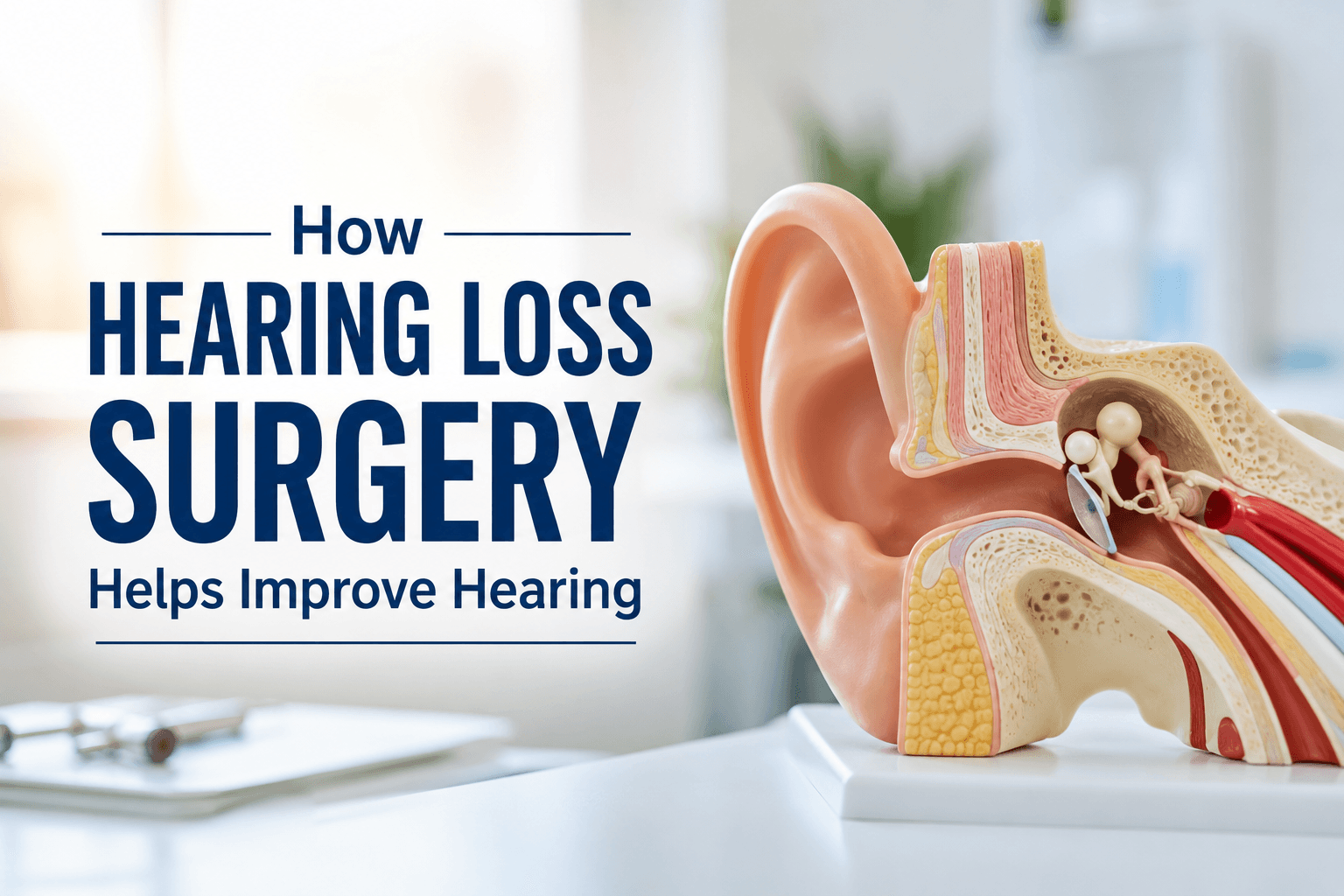
Most people don't realize that hearing loss surgery isn't a single procedure, it covers several different techniques, each targeting a specific part of the ear. Hearing loss surgery in Gurgaon can address problems ranging from a torn eardrum to damaged hearing bones, often improving hearing more effectively than amplification alone. Here is how these procedures actually work and what to expect from the process.
What Types of Hearing Loss Surgery Are Available?
Hearing loss surgery refers to a group of procedures designed to correct structural problems within the ear rather than simply making sounds louder. Each type targets a different cause of hearing difficulty.
Common categories include:
Tympanoplasty to repair a perforated eardrum
Ossiculoplasty to reconstruct damaged hearing bones
Stapedectomy for otosclerosis affecting the stapes bone
Cholesteatoma removal with reconstructive repair
Ear bone surgery in Gurgaon (https://www.entgurgaon.com/bone-anchored.php) for combined ossicular damage
Dr. Manish Prakash determines the specific type needed based on which ear structure is affected and how severely.
How Does Surgery Actually Improve Hearing?
In many cases, hearing loss surgery works by restoring a physical structure that sound depends on to travel properly. This is different from hearing aids, which compensate for damage rather than correcting it.
For example, repairing a perforated eardrum restores its ability to vibrate properly, while ear bone replacement surgery in Gurgaon (https://www.entgurgaon.com/bone-anchored.php) rebuilds the pathway that carries these vibrations to the inner ear. Both approaches aim to restore more natural hearing function.
Complications to Be Aware Of
You may notice that most hearing surgeries carry a generally low complication rate when performed by an experienced surgeon, though risks still exist and should be discussed beforehand.
Possible complications can include:
Temporary changes in taste sensation
Dizziness during the initial recovery period
Incomplete hearing improvement in some cases
Rare risk of infection at the surgical site
Possible need for a follow-up procedure
Discussing these risks openly with your surgeon helps set realistic expectations before deciding on treatment.
Lifestyle Advice Before and After Surgery
Many patients worry that daily habits might affect their surgical outcome. In many cases, a few simple precautions can support better healing and long-term results.
Avoid smoking, as it can slow healing of ear tissue
Manage chronic sinus or allergy issues before surgery
Protect ears from loud noise exposure during recovery
Follow prescribed medication schedules carefully
Attend every scheduled follow-up appointment
These habits support the surgical outcome and reduce the chances of complications during the healing period.
Diagnosis Before Recommending Surgery
Diagnosis starts with a comprehensive hearing test paired with a detailed ear examination. This is why early diagnosis matters, since it helps pinpoint exactly which structure needs repair.
Typical diagnostic steps include:
Pure tone audiometry to assess hearing thresholds
Tympanometry to evaluate middle ear function
CT imaging to examine bone and tissue condition
Review of infection history and prior treatments
Dr. Manish Prakash uses these results to confirm the most suitable surgical approach for each patient's specific condition.
Prevention Tips to Protect Your Hearing
One common concern is whether future hearing damage can be prevented after surgery. While not all causes are avoidable, certain habits do lower long-term risk significantly.
Treat ear infections promptly instead of waiting them out
Avoid inserting objects into the ear canal
Use hearing protection in consistently loud environments
Schedule regular hearing checkups, especially with a family history
Address chronic nasal or sinus congestion early
Following these steps can help protect surgical results and reduce the likelihood of future ear problems.
Recovery Timeline After Surgery
Recovery timelines vary by procedure type, though most patients notice gradual improvement over several weeks as swelling reduces and tissues heal fully.
Quick recovery tips include:
Keep the ear dry until your doctor confirms it's safe
Avoid air travel and swimming during initial healing
Rest adequately and avoid strenuous activity for a few weeks
Report unusual pain, dizziness, or discharge promptly
Parents often ask how long children need before returning to normal activities. Most children resume school within a week, though full healing continues for several weeks afterward.
Myths vs Facts About Hearing Loss Surgery
People frequently assume all hearing surgeries carry the same risks and recovery time. That assumption overlooks how differently each procedure is designed and performed.
Myth: All hearing loss surgeries take the same amount of time to heal. Fact: Recovery varies significantly depending on which ear structure is repaired.
Myth: Surgery always eliminates the need for hearing aids afterward. Fact: Some patients still benefit from mild amplification even after successful surgery.
Conclusion
Hearing loss surgery in Gurgaon (https://www.entgurgaon.com/bone-anchored.php) offers a way to address the actual cause of hearing difficulty rather than only managing its symptoms. With several surgical options available, the right choice depends entirely on which ear structure needs repair. Dr. Manish Prakash recommends a complete hearing evaluation to identify the most suitable treatment for your condition. Book a consultation today to take a meaningful step toward clearer, more natural hearing.
Frequently Asked Questions
Which type of hearing loss surgery is right for me?
The right procedure depends on which ear structure is damaged. A detailed hearing test and imaging help your doctor recommend tympanoplasty, ossiculoplasty, or another suitable surgical option.
Is hearing loss surgery safe for older adults?
Yes, age alone rarely prevents surgery. Overall health, ear condition, and realistic expectations matter more in determining whether surgery is a suitable option for senior patients.
How long before I can return to work after surgery?
Most patients return to light work within a week, though this depends on the specific procedure. Physically demanding jobs may require a slightly longer recovery period.
Can hearing loss return after successful surgery?
In some cases, underlying conditions like infections or bone regrowth can affect long-term results. Regular follow-up visits help catch and address any recurring issues early.
Does insurance typically cover hearing loss surgery?
Coverage varies by provider and policy. It's best to check directly with your insurance company and clinic beforehand to understand what costs may be covered for your specific procedure.
Appreciate the creator