How Golf Simulators Can Help Improve Your Real Golf Performance
Golf improvement has never been easy. Most players spend countless hours at the driving range, watch instructional videos, and experiment with swing changes, only to find themselves struggling with the same issues on the course. One week it’s a slice off the tee, the next it’s inconsistent iron contact, and often the biggest challenge is simply understanding what’s causing these problems in the first place.
Modern golf simulators are changing that process. What was once viewed as a form of entertainment has evolved into a powerful training tool that helps golfers practice with purpose. By combining advanced tracking technology, detailed swing analysis, and realistic course simulation, today’s systems provide insights that can accelerate improvement and build confidence when it’s time to play a real round.
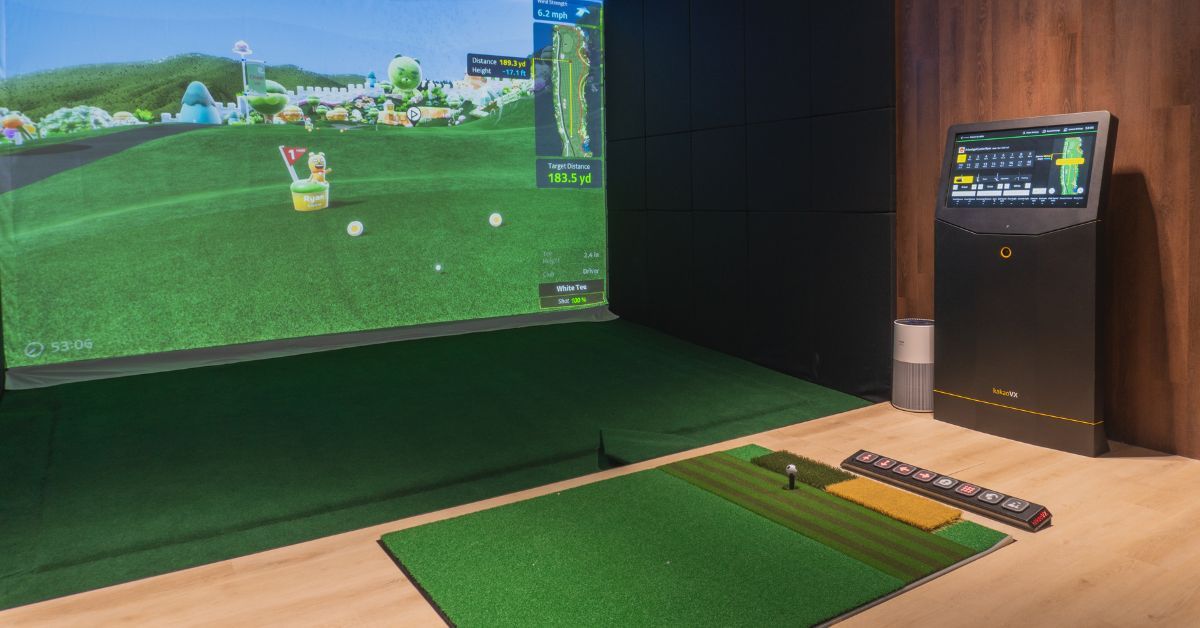
Platforms like Golf VX are taking simulator training even further by combining AI-powered swing analysis, real-time shot tracking, and immersive course experiences that help golfers better understand their performance and make more informed adjustments. Whether golfers choose the entry-level T2 Simulator, the advanced FA Simulator, or the flagship Quantum Simulator, they gain access to tools designed to support skill development, game improvement, and year-round practice.
Instant Feedback Creates Faster Improvement
One of the biggest reasons golfers struggle to improve is the delay between making a swing change and understanding whether it worked. On a driving range, a shot may look good, but visual observation alone rarely tells the complete story.
Golf simulators eliminate that uncertainty by providing detailed feedback after every shot. Players can see exactly how club path, face angle, spin rates, and launch conditions influence ball flight. Instead of guessing why a shot sliced or hooked, they can identify the root cause and make informed adjustments.
For example, Golf VX’s advanced simulator technology provides real-time performance insights that help golfers identify swing tendencies immediately, making practice sessions more productive and results-driven. The FA Simulator and Quantum Simulator take this experience even further with enhanced swing analytics and performance-tracking capabilities that help golfers make more informed adjustments during practice sessions.
This type of feedback creates a much more efficient learning environment because every swing becomes an opportunity to gather information and refine technique.
Better Swing Mechanics Through Data-Driven Practice
Many golfers spend years trying to fix swing flaws without fully understanding what is happening at impact. A simulator provides objective measurements that help players evaluate their mechanics and track progress over time.
For example, a golfer struggling with distance may discover that poor launch conditions are limiting carry yardage. Another player may learn that an open clubface is responsible for a persistent fade. Rather than making random swing changes, they can focus on specific issues backed by real data.
Golf VX’s simulator lineup supports this process through detailed shot analysis and training features that help golfers understand how small adjustments can produce measurable improvements in ball flight and consistency.
Over time, this approach helps golfers develop more repeatable mechanics and build confidence in their swing.
Simulated Golf Still Teaches Real Golf Skills
Although a simulator cannot perfectly replicate every aspect of outdoor golf, it can still improve many of the skills required on the course. Modern systems allow golfers to play realistic versions of famous courses, work through strategic decisions, and experience pressure situations that mimic competitive golf.
Players can practice:
Course management
Shot shaping
Distance control
Risk-versus-reward decision making
Competitive tournament scenarios
This is where advanced systems such as Golf VX stand out. Features like realistic course environments and dynamic gameplay help golfers practice situations that closely resemble real on-course decision-making rather than simply hitting balls into a screen.
For golfers seeking the most immersive experience, the Quantum Simulator introduces advanced terrain simulation and realistic gameplay elements that more closely mirror the conditions encountered on an actual golf course.
These experiences help golfers become more comfortable making decisions during actual rounds, which often translates into improved performance when scores matter.
Final Thoughts
Golf simulators have become one of the most effective tools available for players looking to improve their game. By providing instant feedback, accurate performance data, and year-round practice opportunities, they help golfers identify weaknesses, refine mechanics, and develop greater consistency.
While no simulator can perfectly replicate every challenge found on a golf course, the insights gained through technology-driven practice can have a meaningful impact on real-world performance. Whether you’re working to lower your handicap, improve ball striking, or simply gain confidence in your swing, a modern golf simulator can help bridge the gap between practice and results.
With innovative solutions from Golf VX combining advanced analytics, immersive gameplay, and realistic practice environments, golfers now have more tools than ever to accelerate improvement and translate practice into better on-course performance. From the T2 Simulator for accessible and effective practice to the FA Simulator for enhanced performance analysis and the Quantum Simulator for next-generation realism, Golf VX offers solutions that support golfers at every stage of their development journey.
Originally published at https://www.apsense.com.
Appreciate the creator