How Global Data Science Certifications Are Reshaping Career Growth in 2026
Data science hiring has changed structurally. Portfolios and self-directed learning histories no longer carry the same weight they held years ago.
Organizations scaling AI adoption across operational and strategic functions cannot afford to evaluate every candidate individually through project review. Standardized verification has become the faster, more reliable alternative.
According to the U.S. Bureau of Labor Statistics Monthly Labor Review, January 2026, data scientist employment is projected to grow 33.5% between 2024 and 2034, the fourth-fastest growing occupation in the U.S. economy, with approximately 23,400 openings expected annually across that period.
That growth draws a proportionally larger applicant pool. Global data science certification has become the mechanism employers use to distinguish candidates.
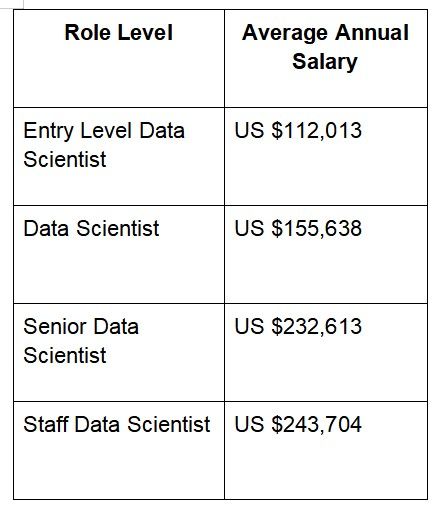
What Data Science Professionals Earn in 2026
Salary data published by Glassdoor 2026 reflects the full earning trajectory across experience levels in the United States:
What Global Data Science Certifications Signal to Employers
A recognized certification communicates four specific things that informal learning records cannot:
● Learning followed a structured curriculum with a formal assessment endpoint.
● The qualification carries consistent meaning across industries and geographic markets.
● The candidate meets a technical baseline that does not require individual interpretation by each recruiter.
As USDSI® highlights in its 2026 industry resource on the power of data science certification, structured data science certification has moved from an optional differentiator to a professional necessity, enabling clear transitions from entry-level analytics into senior roles with substantially stronger compensation outcomes.
Global Certifications Professionals Are Pursuing in 2026
The programs gaining consistent traction share one defining characteristic: credentials are issued directly by the certifying institution and earned through formal assessment, not passive course completion.
USDSI® Certified Lead Data Scientist
CLDS™ is designed for professionals moving into lead and data architect roles. It is a vendor neutral data science certification that covers enterprise-scale ML systems, AI-driven business strategy, advanced analytics leadership, and end-to-end data architecture. Self-paced over 4–25 weeks at 8–10 hours per week.
USDSI® Certified Senior Data Scientist
CSDS™ targets experienced practitioners requiring validation at the organizational decision-making level. Curriculum spans predictive analytics, advanced statistical modeling, large-scale data processing, and production-level implementation, vetted by 30 Fortune 500 CIOs and CTOs. Three-year validity with mandatory renewal.
Graduate Certificate in Machine Learning and Data Science Foundation by Carnegie Mellon University
Five credit-bearing graduate courses delivered 100% online directly by CMU's School of Computer Science. Courses appear on an official CMU transcript. Twelve-month program covering Python for Data Science, Mathematical and Computational Foundations of ML, and Foundations of Computational Data Science. Designed for STEM professionals with programming experience.
Advanced Certificate in Applied Data Science and Analytics by SMU Academy
Issued directly by Singapore Management University's professional training division. Multi-module program covering statistical foundations, visual analytics using Tableau, and applied data science for business decision-making. Instructors bring 10–35 years of industry experience across banking, risk, and enterprise analytics. Singapore-based professionals may apply SkillsFuture credits.
Why Geographic Portability Matters More Than Ever
Employer-specific training-focused certifications carry limited weight when a professional is applying across borders or to multinational organizations.
Credentials from USDSI®, Carnegie Mellon University, and Singapore Management University carry established institutional recognition across regional hiring environments in financial services, enterprise technology, healthcare analytics, and consulting, without requiring contextual support from the candidate.
The Future Direction of Certification-Based Hiring
The emphasis on verified credentials is not a transitional phase.
As AI governance frameworks formalize, as organizations introduce model audits, and as applicant volumes for senior roles continue growing, credential-based screening will become a consistent practice rather than a selective one.
Professionals who establish globally recognized credentials now will carry a structural advantage:
● Stronger positioning at the shortlisting stage
● A clearer basis for senior compensation negotiations
● Greater mobility across geographic markets and industries
● Recognition within organizations where internal advancement is tied to verified competency milestones
The professionals who formalize their expertise ahead of that standard becoming universal will not be catching up to it later. They will be the benchmark others are measured against.
Frequently Asked Questions
Is global data science certification valuable for professionals who already have significant industry experience?
Yes, experience demonstrates exposure; certification provides independently verified proof of competency that employers can assess consistently across all candidates.
How do university-issued certificates such as CMU's differ from professional certifications like CLDS™ or CSDS™?
University certificates establish graduate-level academic rigor on an institutional transcript, while professional certifications validate applied, role-specific industry competency through domain-focused examination.
What core technical skills should a data science professional develop alongside certification to remain competitive in 2026?
Proficiency in Python, machine learning frameworks, SQL, and data visualization tools remains foundational, with growing employer emphasis on LLM integration and AI governance practices.
Appreciate the creator