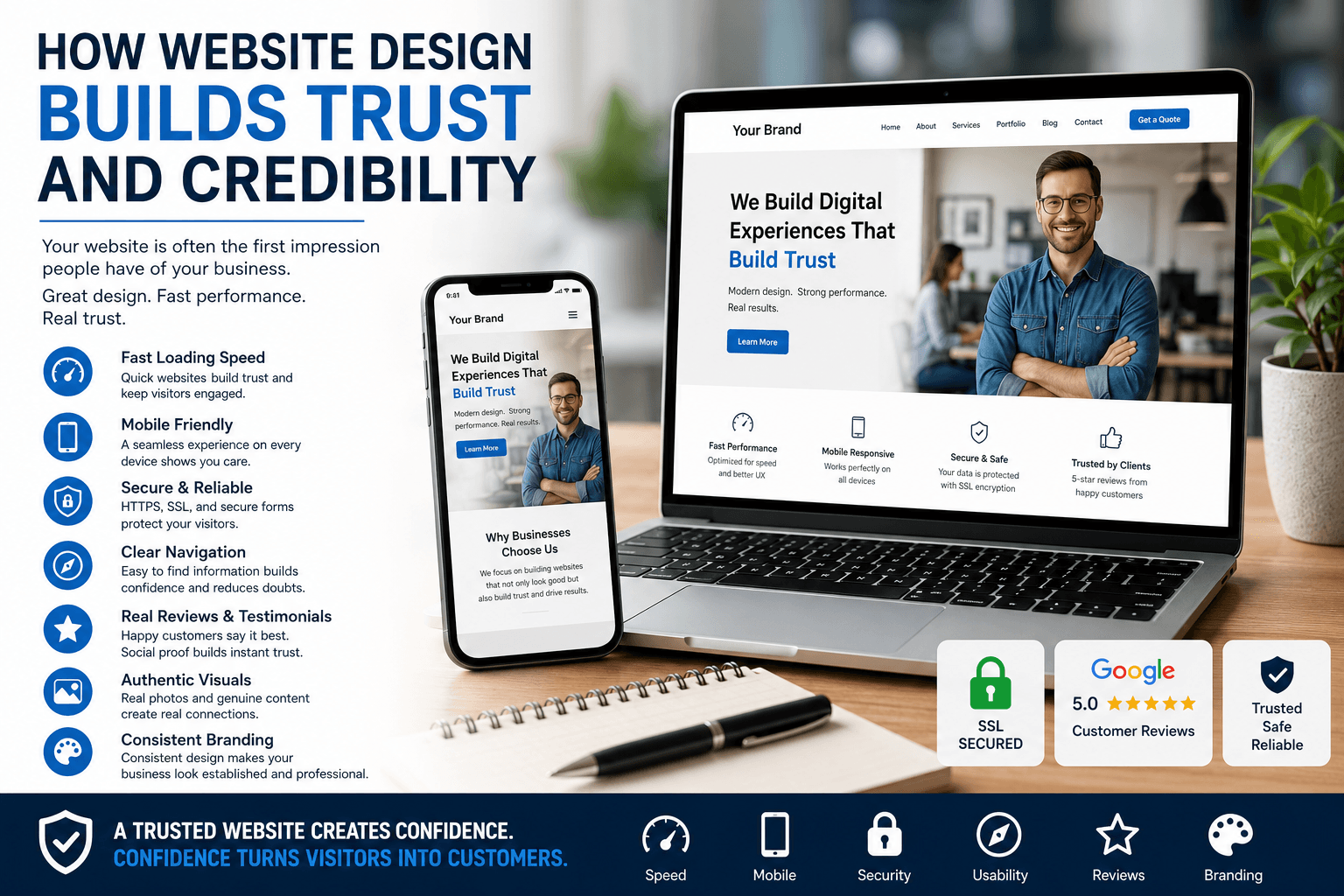
How Does Good Website Design Secretly Build Client Trust?
We've all landed on a website that looks like it hasn't been updated since 2012. Weird fonts. Tiny text. Buttons that don't work. Pages that take forever to load.
What do most people do? They leave. Not because they know anything about the company, but because the website made them feel unsure.
That's the funny thing about trusting online. People start judging your business long before they read about your services, pricing, or experience. In fact, your website often speaks for you before you have the chance to. A good website tells visitors, "You're in the right place."
Your Website is Basically Your Digital Storefront
Imagine walking past two coffee shops. One has pristine windows, friendly staff, and a welcoming atmosphere. The other has broken signs, messy tables, and a door that barely opens. Most people won't need a sales pitch to decide where they're going.
Websites work exactly the same way.
Visitors naturally connect the quality of your website with the quality of your business. If your site feels polished and easy to use, people assume your services are too. It might not seem fair, but that's how online trust works.
Slow Websites Raise Red Flags
People often blame themselves for a few seconds when a website loads slowly. After that, they start blaming the business. A website that takes forever to load can make visitors wonder the following:
Is this company still active?
Is this website secure?
Will customer support be just as slow?
Image compression, browser caching, optimised code, reliable hosting, and Core Web Vitals directly affect how trustworthy your website feels. The faster your site loads, the more professional your business appears.
People Love Knowing Where to Click Next
Visitors don't want to solve puzzles. They want answers. Simple navigation helps people feel comfortable because they know exactly where they are and where to go next.
Clear menus, logical page structures, visible contact information, and well-placed call-to-action buttons all remove uncertainty. And when uncertainty disappears, trust starts growing.
Mobile Experience Matters More Than Most Businesses Realise
Here's something many website owners forget. Most visitors are probably viewing your website on a phone while sitting on a couch, waiting in line, or scrolling during lunch. If buttons are too small, text is difficult to read, or pages don't fit properly on mobile screens, people notice immediately.
Responsive design isn't a bonus anymore. It's expected. A website that works smoothly across smartphones, tablets, and desktops sends a simple message:
We care enough to make this easy for you.
Importance of Small Security Details
Most visitors won't understand SSL certificates, HTTPS encryption, or secure server protocols. But they definitely notice warning messages. Nothing kills trust faster than a browser telling someone, "This site may not be secure." Security features work quietly in the background, but they're important. Such as:
SSL certificates
HTTPS connections
Secure payment gateways
Spam-protected forms
Privacy policies
Real Photos Beat Perfect Stock Photos
We've all seen them. The overly excited business team is pointing at a laptop. The customer is smiling at absolutely nothing. People can spot generic stock photos from a mile away.
Original team photos, real-life projects, genuine customer success stories, and exclusive images from the projects create something stock photos can't: authenticity. And authenticity builds trust much faster than perfection.
Consistency Makes Your Business Feel Established
One page uses blue. Another uses orange. A third uses three different fonts. The logo changes size everywhere. It may sound minor, but inconsistent branding makes a business feel unorganised. Good web design keeps everything consistent:
Fonts
Colours
Logo placement
Messaging
Layout structure
When everything feels connected, visitors naturally feel they're dealing with an established company rather than something thrown together over a weekend.
Reviews Do the Talking for You
People trust others. It's that simple. You can tell visitors you're amazing all day long, but customer reviews, testimonials, and case studies carry far more weight. A well-designed website makes these trust signals simple to find without forcing visitors to search for them.
Think of reviews as digital word-of-mouth. They're often the final push someone needs before making contact.
Why Businesses Invest in Better Website Design
Many business owners think website design is mostly about appearance. It's not. Good design reduces doubts. It fulfills users' search intent, improves page load speed, enhances safety, and helps visitors feel confident trusting you.
In recent times, the search for affordable web design services in California has increased. Visitors look for a website that makes a strong first impression and helps turn visitors into loyal customers.
To Wrap Up
Trust is a big thing. There are several factors you need to address, such as fast page load times, responsive design, simple navigation, reliable security, consistent branding, and authentic content. The best websites don't scream, "Trust us!" They quietly prove it.
If you're ready to create a website that looks professional, responsive, and attractive, contact AcessiWise. Visit the website for more information.
FAQs
1. How does website design affect customer trust?
Ans: Website design shapes the first impression visitors have of your business. A decent layout, professional design, and simple navigation make people feel more confident about your company before they even contact you.
2. What website features make a business look more trustworthy?
Ans: It includes HTTPS connections, customer reviews, explicit contact information, professional branding, and fast loading speeds. Visitors feel more comfortable engaging with businesses that offer a smooth and transparent online experience.
3. Can a slow website make customers leave?
Ans: Absolutely. Most users expect websites to load within a few seconds. If pages take too long to open, visitors often leave before exploring your services.
4. Why is mobile-friendly web design important for trust?
Ans: A large percentage of website traffic now comes from mobile devices. If your website doesn't work properly on smartphones or tablets, visitors may become frustrated and leave.
5. Do customer reviews on a website really increase credibility?
Ans: Yes, they do. Reviews and testimonials act as digital word-of-mouth recommendations. When potential customers see positive feedback from real people, they feel more confident about choosing your business and are more likely to make contact.
Appreciate the creator