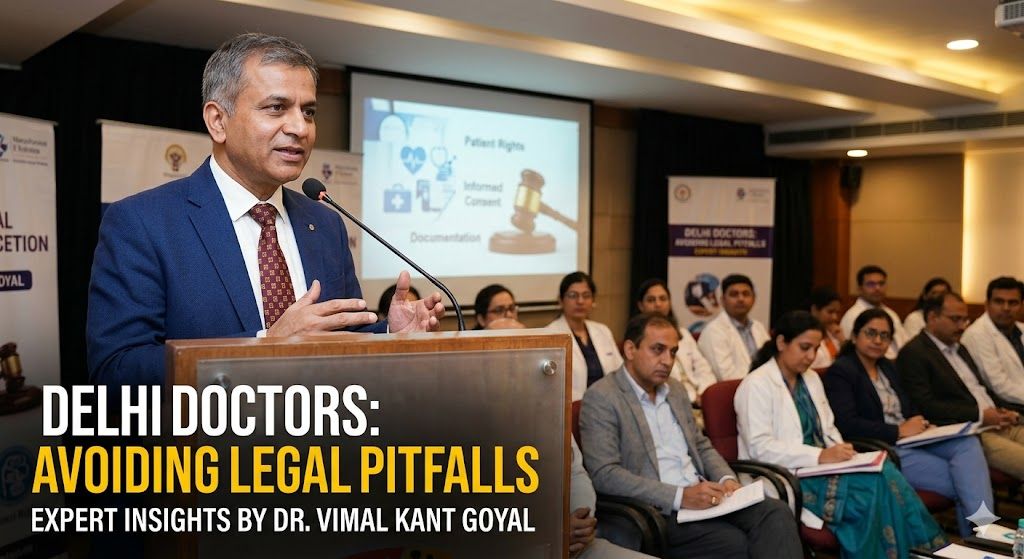
How Delhi Doctors Can Avoid Legal Pitfalls: Expert Insights by Dr. Vimal Kant Goyal
In today’s demanding healthcare environment, doctors are expected to balance clinical excellence with legal awareness. In a city like Delhi—where patient expectations, regulatory scrutiny, and medico-legal cases are steadily increasing—avoiding legal pitfalls has become essential for every medical professional.
While most doctors focus on diagnosis and treatment, even small gaps in communication, documentation, or compliance can lead to serious legal consequences. With the right guidance and preventive approach, these risks can be minimized effectively.
Understanding the Most Common Legal Pitfalls
Before avoiding legal issues, it’s important to recognize where doctors often go wrong. The most frequent medico-legal challenges in Delhi arise from:
Inadequate or incomplete documentation
Lack of proper informed consent
Poor communication with patients or families
Ignoring standard protocols or guidelines
Mishandling patient complaints
These issues are not always due to negligence but often stem from oversight or lack of legal awareness. This is where a Medico legal expert in Delhi plays a crucial role in guiding doctors toward safer practices.
1. Prioritize Accurate and Complete Documentation
Documentation is the backbone of medico-legal defense. In legal proceedings, what is written holds more value than what is remembered.
Doctors should ensure:
Detailed patient history and examination records
Clear treatment plans and progress notes
Proper discharge summaries
Timely updates in patient files
Incomplete or vague records can weaken even the strongest clinical case. With proper Medico legal help for medical professionals in Delhi, doctors can adopt standardized documentation practices that stand strong in legal scrutiny.
2. Never Compromise on Informed Consent
One of the most critical legal requirements in medical practice is obtaining informed consent. It is not just a formality but a legal safeguard.
Effective consent should include:
Explanation of diagnosis and treatment options
Risks, benefits, and possible complications
Alternatives to the proposed treatment
Patient’s voluntary agreement
Failure to obtain proper consent is one of the leading causes of legal disputes. Legal help for doctors in Delhi ensures that consent procedures are legally valid and properly documented.
3. Strengthen Doctor–Patient Communication
Many legal cases arise not because of medical errors, but due to communication gaps. When patients feel unheard or confused, they are more likely to file complaints.
Doctors should:
Communicate clearly and honestly
Avoid medical jargon when explaining conditions
Set realistic expectations about outcomes
Show empathy and patience
Good communication builds trust, and trust significantly reduces the risk of litigation. As highlighted by Dr. Vimal Kant Goyal, effective communication is one of the simplest yet most powerful tools to avoid legal trouble.
4. Follow Standard Medical Protocols
Adhering to established clinical guidelines is essential for both patient safety and legal protection.
Doctors must:
Stay updated with latest medical standards
Follow hospital protocols and ethical guidelines
Avoid experimental treatments without proper approvals
Deviation from accepted practices without justification can be viewed as negligence in legal cases. A Medico legal expert in Delhi helps doctors understand how to align their practice with legal expectations.
5. Handle Patient Complaints Professionally
Ignoring or mishandling patient complaints can escalate minor issues into major legal disputes.
Best practices include:
Address complaints promptly
Maintain a calm and professional tone
Document all interactions
Seek legal advice when necessary
With proper Legal help for doctors in Delhi, doctors can learn structured approaches to resolve conflicts before they turn into litigation.
6. Stay Compliant with Medical Laws and Regulations
Delhi’s healthcare system is governed by multiple laws and regulatory bodies. Non-compliance, even unintentionally, can result in penalties or legal action.
Key areas of compliance include:
Registration and licensing
Ethical medical practices
Patient rights and confidentiality
Biomedical waste management
Regular guidance through Medico legal help for medical professionals in Delhi ensures that doctors remain compliant and legally secure.
7. Be Prepared for High-Risk Situations
Certain medical scenarios carry higher legal risk, such as:
Emergency cases
ICU management
Surgical complications
Patient deaths
In these situations, decisions must be both medically sound and legally defensible. Consulting experts like Dr. Vimal Kant Goyal can provide critical support in handling such sensitive cases.
8. Seek Timely Medico-Legal Guidance
One of the biggest mistakes doctors make is seeking legal help too late—often after receiving a notice or facing a complaint.
Instead, doctors should:
Consult medico-legal experts proactively
Conduct regular legal audits of their practice
Attend medico-legal training and workshops
Early intervention through a Medico legal expert in Delhi can prevent issues before they escalate.
Building a Legally Secure Medical Practice
Avoiding legal pitfalls is not about practicing defensive medicine—it’s about practicing smart medicine. A legally secure practice allows doctors to focus on patient care with confidence.
By integrating:
Proper documentation
Ethical conduct
Clear communication
Legal awareness
Doctors can significantly reduce their exposure to legal risks.
Conclusion
In the modern medical environment of Delhi, legal challenges are an unavoidable reality. However, with the right knowledge and expert guidance, doctors can effectively avoid most legal pitfalls.
Proactive steps, combined with professional Legal help for doctors in Delhi, ensure not only legal safety but also long-term career stability. With insights from experts like Dr. Vimal Kant Goyal, medical professionals can confidently navigate the intersection of medicine and law.
FAQs
1. What are the most common legal mistakes doctors make?
Common mistakes include poor documentation, lack of informed consent, and ineffective communication with patients.
2. How can doctors reduce the risk of legal cases?
By maintaining proper records, following protocols, communicating clearly, and seeking timely medico-legal guidance.
3. Why is informed consent important legally?
It protects doctors by ensuring patients are aware of risks and agree to the treatment voluntarily.
4. When should doctors consult a medico-legal expert?
Doctors should seek guidance during complaints, complex cases, or whenever they are unsure about legal aspects of their practice.
Appreciate the creator