How Clinics Can Stay Legally Compliant in Delhi
Introduction
Running a clinic in Delhi is not only about treating patients. Doctors and clinic owners also need to follow important medical rules and legal requirements. Legal compliance helps clinics work safely, professionally, and smoothly.
Today, patients are more aware of their rights. Government departments are also becoming stricter about healthcare rules, patient safety, and medical documentation. Even small mistakes in records, consent, licenses, or waste management can create legal trouble for clinics.
Many clinics face complaints because they do not fully understand legal responsibilities. Proper legal awareness helps clinics avoid penalties, patient disputes, and professional stress.
If you are searching for a trusted Hospital Quality Guide in Delhi, understanding legal compliance is very important for clinics and healthcare centers.
This blog explains simple and easy ways clinics can stay legally compliant in Delhi.
What Does Legal Compliance Mean for Clinics?
Legal compliance means following all important healthcare rules, safety standards, and government regulations properly.
This includes:
Clinic registration
Patient documentation
Consent procedures
Waste management
Staff safety
Patient privacy
Emergency preparedness
Legal compliance helps protect:
Patients
Doctors
Clinic reputation
Healthcare quality
Why Legal Compliance Is Important
Clinics that follow legal rules properly:
Face fewer complaints
Build patient trust
Improve healthcare quality
Avoid penalties
Work more professionally
Ignoring legal responsibilities may lead to:
Legal notices
Government action
Financial penalties
Reputation damage
Patient dissatisfaction
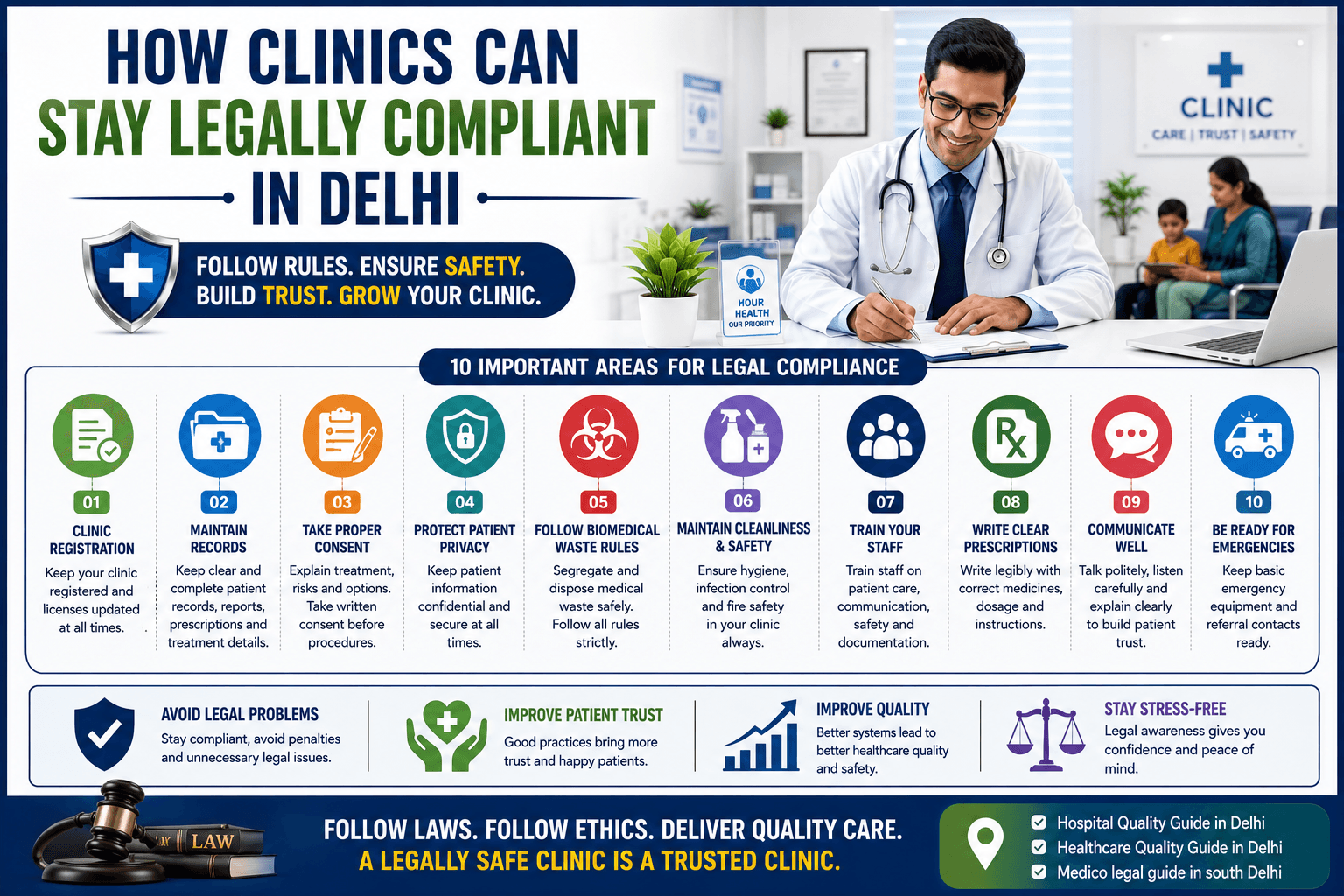
Important Legal Rules Clinics Should Follow
1. Maintain Proper Clinic Registration
Every clinic should have:
Valid registration certificate
Updated licenses
Required permissions
Clinic owners should renew documents on time.
Running an unregistered clinic can create serious legal problems.
2. Keep Proper Patient Records
Documentation is one of the most important parts of legal safety.
Clinics should maintain:
Patient history
Prescriptions
Test reports
Consent forms
Treatment details
Good records help during:
Complaints
Legal investigations
Patient disputes
Incomplete records can create major medico-legal risks.
3. Follow Proper Consent Procedures
Before surgeries or risky treatments, clinics should take proper written consent.
Doctors should explain:
Treatment details
Risks involved
Possible complications
Alternative options
Patients should understand everything clearly before signing.
Consent protects both clinics and patients legally.
4. Protect Patient Privacy
Patient information should always stay confidential.
Clinics should safely protect:
Medical records
Reports
Personal details
Treatment information
Sharing patient details without permission can create legal trouble.
Staff should also avoid posting patient information on social media or WhatsApp.
5. Follow Biomedical Waste Rules
Clinics should properly dispose:
Needles
Syringes
Gloves
Medical waste
Improper waste management may create:
Infection risks
Government penalties
Legal complaints
Safe waste disposal improves healthcare quality and patient safety.
6. Maintain Cleanliness and Safety
Clean clinics create better trust and safer treatment conditions.
Clinics should maintain:
Clean waiting areas
Sanitized equipment
Infection control systems
Fire safety measures
Good safety standards improve patient confidence.
Many clinics follow guidance from a trusted Healthcare Quality Guide in Delhi to improve safety and professional standards.
7. Train Staff Properly
Clinic staff should know:
Patient handling
Emergency response
Documentation rules
Communication skills
Infection control
Poor staff behavior or mistakes can also create complaints.
Good teamwork improves clinic safety.
8. Write Clear Prescriptions
Doctors should write:
Correct medicine names
Proper dosage
Easy instructions
Unreadable prescriptions may create confusion and treatment mistakes.
9. Communicate Clearly with Patients
Many legal disputes happen because of poor communication.
Doctors and staff should:
Speak politely
Explain treatment clearly
Answer patient questions
Stay calm during stressful situations
Good communication improves patient trust.
10. Stay Prepared for Emergencies
Clinics should have:
Emergency contact numbers
Basic emergency equipment
Referral systems
First aid support
Emergency preparedness improves patient safety and reduces risks.
Common Legal Mistakes Clinics Should Avoid
1. Poor Documentation
Missing records can create serious legal trouble.
Always maintain complete patient files.
2. Ignoring Consent
Never start risky procedures without proper written consent.
3. Poor Waste Disposal
Improper disposal of medical waste can create penalties and health risks.
4. Sharing Patient Information
Patient privacy should always be protected.
5. Poor Communication
Rude behavior or lack of explanation often creates complaints.
How Legal Awareness Improves Healthcare Quality
Legal compliance and healthcare quality are closely connected.
Clinics that follow proper rules usually provide:
Safer treatment
Better patient communication
Cleaner environments
Stronger documentation
More professional healthcare services
If you are searching for a trusted Hospital Quality Guide in Delhi, legal awareness is an important part of quality healthcare practice.
Importance of Medico-Legal Guidance
Today, medico-legal awareness is becoming necessary for every clinic owner and healthcare professional.
Many doctors and clinics seek support from a trusted Medico legal guide in south Delhi to understand:
Patient rights
Documentation standards
Consent procedures
Complaint handling
Legal safety practices
Proper guidance helps clinics stay legally safe and professionally strong.
Simple Tips to Keep Clinics Legally Safe
Here are some easy tips clinics should follow daily:
Maintain complete patient records
Renew licenses on time
Take written consent
Train staff regularly
Follow waste management rules
Keep clinics clean and safe
Communicate politely with patients
Protect patient privacy
Small precautions can prevent bigger legal problems later.
Conclusion
Legal compliance is very important for every clinic in Delhi. Following proper medical laws and safety standards helps clinics improve healthcare quality, patient trust, and professional safety.
Clinics can stay legally compliant by:
Maintaining proper records
Taking consent carefully
Following healthcare rules
Training staff properly
Protecting patient privacy
Improving communication
Good legal awareness protects both patients and healthcare professionals.
If you are looking for a trusted Healthcare Quality Guide in Delhi or reliable Medico legal guide in south Delhi, understanding legal compliance can help clinics create safer and more professional healthcare services.
FAQs
1. Why is legal compliance important for clinics?
Legal compliance helps clinics avoid complaints, penalties, and professional risks.
2. Why are patient records important?
Patient records work as proof during complaints and investigations.
3. Is written consent necessary?
Yes. Written consent protects both clinics and patients legally.
4. Why should clinics protect patient privacy?
Sharing patient information without permission can create legal problems.
5. How can clinics improve healthcare quality?
Clinics can improve quality through safety, documentation, communication, and staff training.
6. How can clinics reduce legal risks?
Clinics can reduce risks through proper records, consent, communication, and legal awareness.
Appreciate the creator