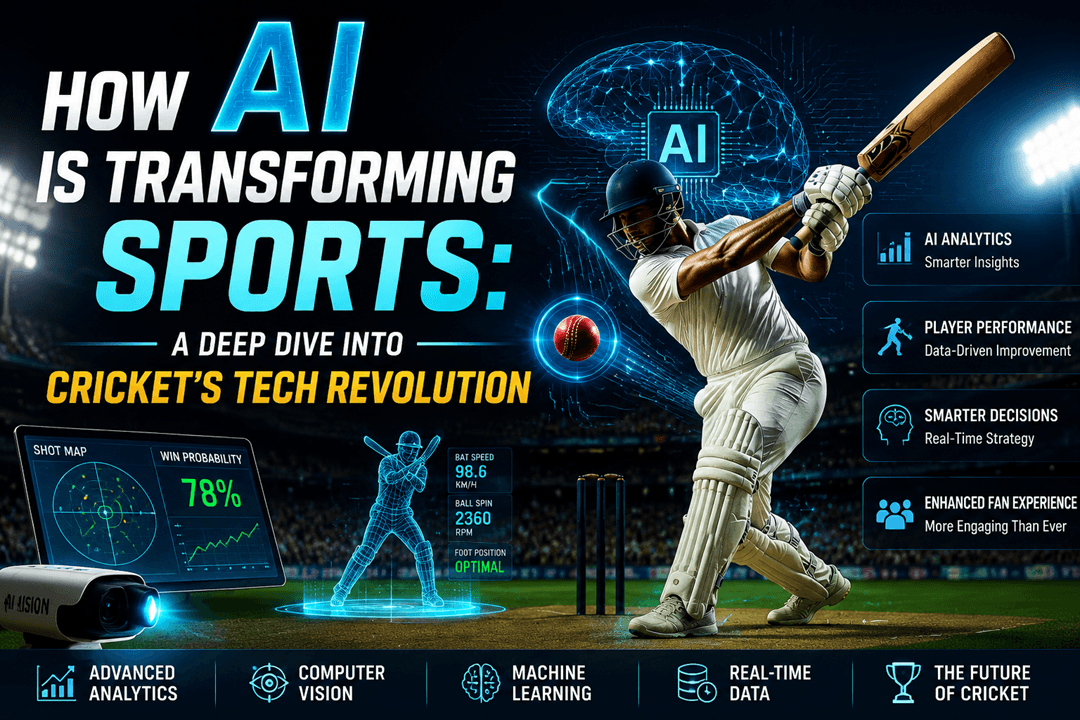
How AI Is Transforming Sports: A Deep Dive into Cricket's Tech Revolution
Artificial intelligence has quietly become one of the most influential forces in modern sports. What was once limited to science fiction is now a daily reality for athletes, coaches, and teams across the globe. From predicting player performance to enhancing fan experiences, AI is reshaping how sports are played, coached, watched, and understood.
This shift isn't just about flashy technology — it's about giving athletes and organizations a genuine competitive edge through data-driven insights that were unimaginable just a decade ago.
The Rise of AI in Athlete Performance Analysis
One of the most significant applications of artificial intelligence in sports is performance analysis. Wearable sensors, smart cameras, and motion-tracking systems now capture massive amounts of data during training sessions and matches. AI algorithms process this data to identify patterns in an athlete's movement, technique, and decision-making that would be nearly impossible for the human eye to catch.
For example, AI-powered video analysis tools can break down a bowler's action in cricket, a sprinter's stride pattern in athletics, or a footballer's positioning during a match. Coaches use these insights to fine-tune techniques, correct inefficiencies, and help athletes reach peak performance faster than traditional training methods alone.
Injury Prevention and Player Health
Injuries are one of the biggest setbacks in any athlete's career, and AI is playing a growing role in minimizing their impact. By analyzing historical injury data alongside real-time biometric information such as heart rate, muscle fatigue, and joint stress, AI systems can flag early warning signs of potential injuries before they happen.
This predictive approach allows medical and coaching staff to adjust training loads, recommend rest periods, or modify workout intensity for specific athletes. As a result, teams are seeing fewer long-term injuries and faster, safer recoveries when injuries do occur.
AI-Driven Coaching and Strategy
Coaching has traditionally relied on experience, intuition, and manual video review. AI is now complementing these methods with data-backed strategic insights. Machine learning models can analyze thousands of hours of match footage to identify opposition patterns, preferred playing styles, and tactical weaknesses.
In team sports like football, basketball, and cricket, AI tools help coaches simulate different game scenarios and predict likely outcomes based on various strategic choices. This allows for smarter in-game decisions, more effective training plans, and better preparation against upcoming opponents.
Enhancing the Fan Experience
Artificial intelligence isn't just changing what happens on the field — it's transforming how fans experience sports from the outside as well. AI-powered platforms now offer personalized content recommendations, real-time statistics, and interactive match graphics that make following a game more engaging than ever.
Smart chatbots and virtual assistants provide instant answers to fan queries, while AI-generated highlight reels automatically compile the most exciting moments of a match within minutes of it ending. Broadcasters also use AI to enhance commentary with real-time statistical overlays, giving viewers deeper context and richer storytelling during live broadcasts.
AI in Talent Scouting and Recruitment
Identifying promising young talent has traditionally depended on scouts attending countless matches in person. AI is streamlining this process by analyzing performance data from junior leagues, academies, and even amateur competitions. Algorithms can assess a young athlete's potential based on measurable metrics like speed, agility, decision-making speed, and consistency.
This data-driven approach helps sports organizations discover hidden talent in regions that traditional scouting networks might overlook, creating more equal opportunities for athletes regardless of where they come from.
Officiating and Decision-Making Support
AI has also found its way into officiating, helping improve the accuracy and fairness of decisions in sports. Technologies like automated line-calling systems, ball-tracking software, and AI-assisted video review tools support referees and umpires in making more precise calls.
In cricket, for instance, ball-tracking technology assists in decisions related to leg-before-wicket appeals. In football, AI-powered offside detection systems help officials make faster, more accurate calls. These tools reduce human error while maintaining the integrity and flow of the game.
Challenges and Ethical Considerations
Despite its many benefits, the integration of AI in sports isn't without challenges. Data privacy remains a significant concern, especially when it comes to biometric and health-related athlete information. There are also questions about over-reliance on technology potentially diminishing the role of human intuition and experience in coaching and officiating.
Additionally, smaller sports organizations and lower-income countries may face barriers to adopting these advanced technologies due to cost, creating a potential gap between well-funded and under-resourced teams. Addressing these challenges responsibly will be key to ensuring AI benefits the sports world as a whole, rather than just a select few.
The Future of AI in Sports
Looking ahead, the role of artificial intelligence in sports is only expected to grow. Emerging technologies like AI-powered virtual reality training, advanced biomechanical simulations, and even AI-generated personalized fitness plans are already being explored by leading sports organizations.
As AI models become more sophisticated, they will likely play an even greater role in real-time strategy adjustments, immersive fan experiences, and holistic athlete wellness programs that go beyond just physical performance to include mental and emotional well-being.
Final Thoughts
Artificial intelligence is no longer a futuristic concept in sports — it is an active, evolving part of how athletes train, how teams strategize, how officials make decisions, and how fans engage with the games they love. As adoption continues to expand across all levels of sport, the fusion of human talent and artificial intelligence promises to unlock new levels of performance, fairness, and excitement for the entire sporting world.
The coming years will likely reveal even more innovative ways AI reshapes sports, making this an exciting space to watch for athletes, organizations, and fans alike.
Author: Admin Asif Khalid
Appreciate the creator