How AI Is Tackling Healthcare Accessibility Challenges in Rural Areas
Key Takeaways
Rural healthcare faces challenges such as provider shortages, limited infrastructure, transportation issues, and financial barriers.
AI is improving healthcare accessibility through telemedicine, predictive analytics, remote patient monitoring, and automation.
These technologies enable earlier diagnosis, better chronic disease management, and improved access to specialists.
AI reduces administrative workload, allowing healthcare providers to focus more on patient care.
The future of rural healthcare lies in combining AI-powered innovation with human expertise to deliver more accessible and efficient care.
For millions of people living in rural communities, accessing timely healthcare remains a persistent challenge. Geographic isolation, physician shortages, limited healthcare infrastructure, and financial constraints often prevent patients from receiving the care they need. An elderly individual managing diabetes may postpone routine check-ups because transportation is unavailable, while a patient experiencing chest pain may need to travel hours to consult the nearest cardiologist. In many cases, delays in accessing specialist care can lead to worsening health conditions and poorer outcomes.
These barriers are not isolated incidents but reflect broader disparities in rural healthcare accessibility. Rural healthcare systems frequently face shortages of physicians and specialists, aging populations with complex medical needs, and increasing financial pressures. According to the U.S. Department of Agriculture, 146 rural hospitals in the United States closed or stopped providing inpatient services between 2005 and 2023, reducing access to essential healthcare services for many communities. Furthermore, recent reports suggest that hundreds of rural hospitals remain financially vulnerable, underscoring the ongoing strain on healthcare delivery in underserved regions.
The consequences of these challenges are significant, often resulting in delayed diagnoses, preventable complications, and increased reliance on emergency care. For patients living far from healthcare facilities, even routine medical visits can require substantial time, travel, and expense.
However, a transformative shift is underway. AI in rural healthcare is helping organizations overcome longstanding accessibility barriers through telemedicine, predictive analytics, remote patient monitoring, and workflow automation. Rather than replacing clinicians, artificial intelligence in healthcare is enhancing their capabilities, improving efficiency, and expanding access to quality care for rural populations. In this evolving landscape, many healthcare providers also partner with a custom AI development company to design tailored solutions that fit their specific clinical workflows and community needs.
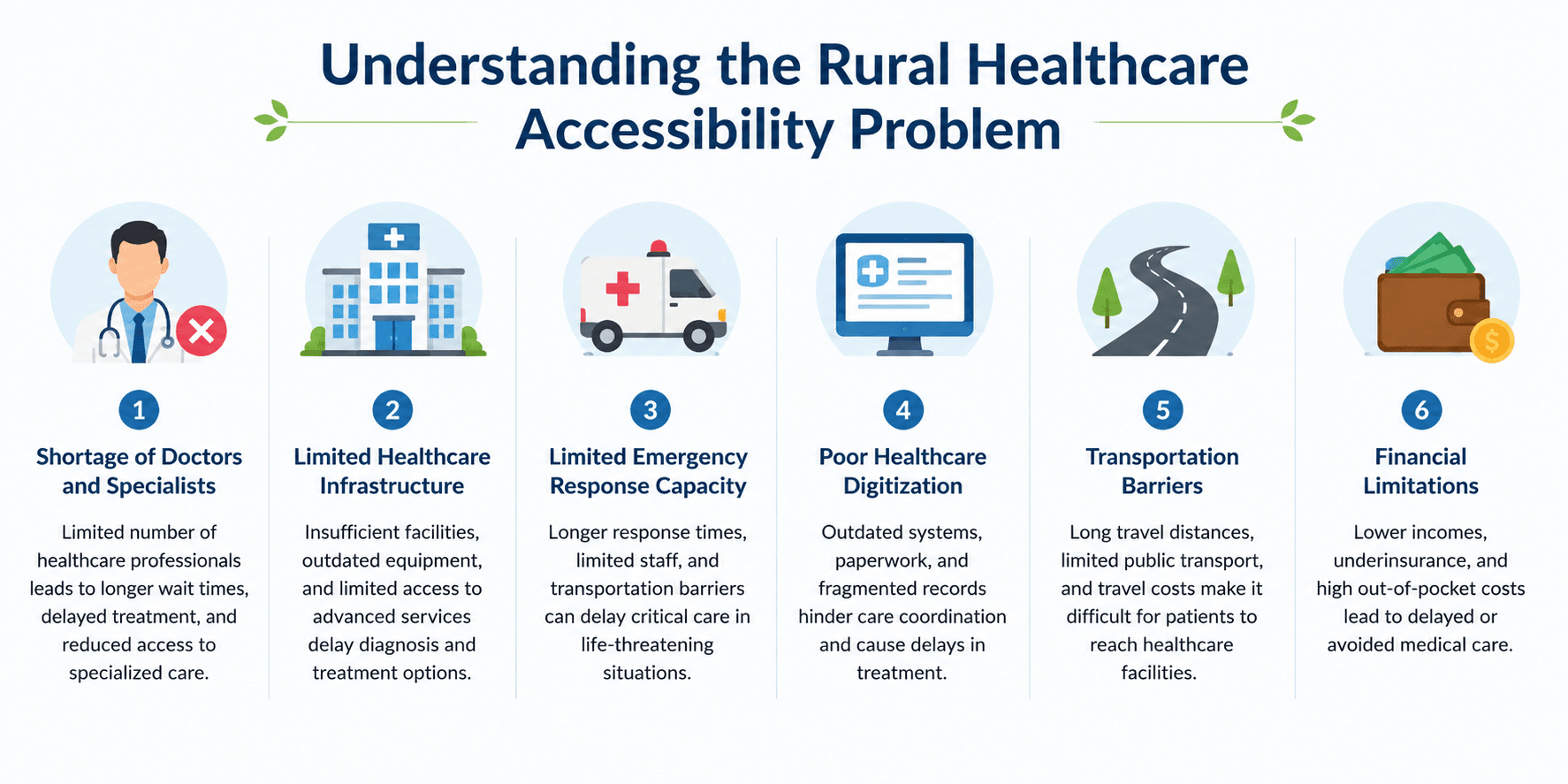
Understanding the Rural Healthcare Accessibility Problem
Despite ongoing efforts to improve healthcare delivery, rural communities continue to face significant barriers to accessing quality medical services. These challenges often stem from systemic issues that affect both healthcare providers and patients, ultimately contributing to poorer health outcomes and widening disparities between rural and urban populations.
Key Challenges Rural Communities Face
1. Shortage of Doctors and Specialists
One of the most significant challenges facing rural healthcare systems is the shortage of healthcare professionals. Rural regions often struggle to attract and retain physicians due to workforce limitations, fewer professional development opportunities, and resource constraints. As a result, access to specialized care remains particularly limited.
Specialists such as neurologists, oncologists, psychiatrists, and endocrinologists are typically concentrated in urban areas, requiring rural patients to travel long distances or endure extended waiting periods to receive appropriate care. This imbalance in provider distribution can have serious implications for patient outcomes.
The shortage of doctors and specialists frequently leads to longer appointment wait times, delays in initiating treatment, and reduced utilization of preventive healthcare services. In many cases, patients may postpone seeking medical attention altogether, increasing the likelihood of disease progression and avoidable complications. Addressing these workforce gaps is essential to improving healthcare accessibility and ensuring timely, high-quality care for rural populations.
2. Limited Healthcare Infrastructure
Many rural healthcare facilities operate with limited funding and resources, making it difficult to meet the growing healthcare needs of their communities. Smaller hospitals and clinics often have restricted access to advanced diagnostic equipment, specialized medical services, and modern healthcare technologies.
These infrastructure limitations can delay diagnosis, reduce treatment options, and force patients to travel long distances to receive specialized care. Additionally, financial constraints often make it challenging for rural healthcare providers to expand facilities or invest in new services.
3. Limited Emergency Response Capacity
Emergency healthcare services in rural areas often face significant challenges due to longer travel distances, limited medical staff, and transportation barriers caused by weather or difficult terrain. These factors can delay emergency response times and access to critical care when it is needed most. In life-threatening situations such as heart attacks, strokes, or severe injuries, timely medical intervention is crucial, making healthcare accessibility a vital factor in improving patient outcomes.
4. Poor Healthcare Digitization
Many rural healthcare providers still rely on outdated and manual processes, which can limit efficiency and hinder care coordination. Common challenges include paper-based documentation, fragmented patient records, and limited interoperability between healthcare systems. These gaps make it more difficult for providers to access accurate patient information, coordinate treatment, and deliver timely care. As a result, administrative inefficiencies can contribute to delays in diagnosis, treatment, and overall healthcare delivery.
5. Transportation Barriers
Transportation remains one of the most significant barriers to healthcare access in rural communities. Many patients must travel long distances to reach hospitals, specialists, or diagnostic centers, often requiring several hours of travel for a single appointment. Limited public transportation options and the potential loss of income from taking time off work can further discourage individuals from seeking timely medical care. These challenges frequently lead to delayed treatment, missed appointments, and poorer health outcomes.
6. Financial Limitations
Financial barriers continue to affect healthcare accessibility in rural communities. Many rural residents face lower household incomes, higher rates of underinsurance, and limited healthcare spending capacity. As a result, individuals may delay or avoid seeking medical care due to concerns about treatment costs. Greater reliance on publicly funded healthcare programs can also place additional pressure on already constrained healthcare systems, further impacting access to timely and quality care.
Rural vs Urban Healthcare Accessibility
The gap between rural and urban healthcare systems remains a significant challenge worldwide. While urban areas generally benefit from greater access to healthcare professionals, advanced medical facilities, and specialized services, rural communities often face resource limitations that can delay diagnosis and treatment. The comparison below highlights some of the key differences in healthcare accessibility between urban and rural settings.
Urban Healthcare Rural Healthcare

These disparities underscore the need for innovative solutions that can expand healthcare accessibility and improve patient outcomes in underserved rural communities.
What Is AI in Healthcare? A Human Explanation
When people hear the term artificial intelligence in healthcare, they often imagine robots replacing doctors or machines making medical decisions independently. In reality, AI is not designed to replace healthcare professionals. Instead, it serves as a powerful tool that helps clinicians, administrators, and healthcare organizations deliver care more efficiently and effectively.
At its core, AI uses advanced algorithms and data analysis to identify patterns, generate insights, and support decision-making. In healthcare, these capabilities can be used to analyze medical data, automate routine administrative tasks, monitor patient health, and assist clinicians in diagnosing and treating diseases. By handling time-consuming processes and providing actionable insights, AI enables healthcare professionals to focus more on patient care and less on administrative burdens.
Automation vs. Augmentation
A common misconception is that AI simply automates healthcare processes. While automation is one aspect of AI, its true value lies in augmentation—enhancing human expertise rather than replacing it.
Automation focuses on repetitive and administrative tasks such as appointment scheduling, documentation assistance, billing processes, and patient reminders. These functions help healthcare organizations improve efficiency and reduce operational workload.
Augmentation, on the other hand, supports clinical decision-making by providing diagnostic insights, identifying potential health risks, analyzing patient data, and enabling predictive healthcare analytics. In this role, AI acts as an assistant that helps healthcare professionals make more informed decisions.
How AI Supports Healthcare Accessibility
As healthcare systems continue to evolve, AI is playing an increasingly important role in improving patient care accessibility, particularly in underserved and rural communities. AI-powered solutions can support clinical diagnosis, remote patient monitoring, healthcare workflow automation, documentation management, and population health initiatives. These technologies help extend healthcare services beyond traditional clinical settings, making quality care more accessible to patients regardless of their location.
Traditional Healthcare vs. AI-Powered Healthcare
The integration of AI is transforming how healthcare services are delivered. While traditional healthcare systems often rely on manual processes and reactive treatment approaches, AI-powered healthcare enables faster insights, smarter workflows, and more proactive patient care.
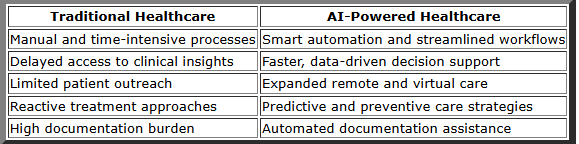
Rather than replacing healthcare professionals, AI empowers them with better tools, deeper insights, and greater efficiency. As a result, healthcare organizations can improve patient outcomes, optimize operations, and expand access to quality care—particularly in regions where healthcare resources are limited.
How AI Is Tackling Healthcare Accessibility Challenges in Rural Areas
Artificial intelligence is helping address many of the barriers that limit healthcare access in rural communities. Through technologies such as telemedicine, predictive analytics, remote patient monitoring, and workflow automation, AI is improving care delivery, enhancing operational efficiency, and expanding access to healthcare services. Rather than replacing healthcare professionals, AI supports them in providing more timely and accessible care to underserved populations.
AI-Powered Telemedicine Is Expanding Specialist Access
Telemedicine has emerged as one of the most effective healthcare AI solutions for addressing accessibility gaps in rural communities. By enabling virtual consultations, healthcare organizations can connect patients with specialists regardless of geographic location, reducing barriers that have traditionally limited access to quality care.
AI-powered telehealth platforms can support smarter scheduling, patient triage, and care coordination, allowing providers to deliver services more efficiently. For rural patients, this translates into faster specialist consultations, reduced travel burdens, improved continuity of care, and greater appointment availability. Specialties such as dermatology, cardiology, psychiatry, and endocrinology are increasingly leveraging virtual care models to extend their reach into underserved areas.
Healthcare organizations seeking to build scalable telemedicine ecosystems can benefit from partnering with a custom healthcare software development company to integrate AI-driven capabilities into their existing workflows.
Predictive Analytics Enables Earlier Diagnosis
Predictive analytics is transforming healthcare by helping providers identify potential health risks before conditions progress. By analyzing large volumes of patient data, AI-powered systems can detect patterns associated with disease development and support earlier intervention strategies.
Common applications include diabetes risk prediction, cardiovascular disease detection, cancer screening support, and hospital readmission forecasting. These insights enable healthcare providers to shift from reactive treatment models toward more preventive and personalized approaches to care. For rural populations with limited access to specialists, earlier diagnosis can play a critical role in improving outcomes and reducing avoidable complications.
However, predictive analytics should serve as a clinical support tool rather than a replacement for professional medical judgment.
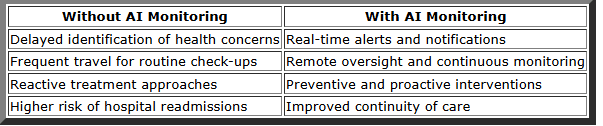
Remote Patient Monitoring Improves Continuous Care
Remote patient monitoring (RPM) is enabling healthcare providers to deliver ongoing care beyond the walls of traditional healthcare facilities. AI-enhanced monitoring systems can continuously analyze patient data and generate alerts when early signs of deterioration are detected.
Devices such as glucose monitors, blood pressure trackers, wearable cardiac sensors, and pulse oximeters allow clinicians to monitor patients remotely and intervene when necessary. This approach can reduce unnecessary hospital visits, support chronic disease management, improve care for elderly populations, and facilitate earlier intervention when health conditions worsen.
AI Medical Documentation Reduces Provider Burnout
Administrative responsibilities remain a significant contributor to healthcare provider burnout. Documentation requirements often consume valuable clinical time that could otherwise be spent with patients.
AI-powered ambient documentation solutions help address this challenge by capturing conversations, drafting clinical notes, generating summaries, and reducing manual data entry. By streamlining documentation workflows, these technologies can lessen administrative burdens and improve clinician efficiency.
The impact extends beyond productivity. When healthcare professionals spend less time completing paperwork, they can dedicate more attention to patient interactions, ultimately enhancing the quality of care and provider satisfaction.
AI Chatbots and Virtual Assistants Improve Patient Accessibility
AI chatbots and virtual assistants are increasingly serving as accessible, around-the-clock support tools for patients. These technologies can help individuals navigate healthcare systems more easily by providing appointment scheduling assistance, medication reminders, symptom guidance, answers to common questions, and multilingual communication support.
For patients in rural areas, where healthcare facilities may be distant or understaffed, access to timely information can improve engagement and encourage proactive health management. While these tools offer valuable support, they should complement—not replace—professional medical evaluation, particularly in urgent or emergency situations.
AI-Powered Mobile Healthcare for Underserved Regions
As smartphone adoption continues to rise, mobile health applications are becoming powerful tools for improving rural healthcare accessibility. AI-enabled mobile solutions can facilitate telehealth consultations, medication adherence programs, chronic disease monitoring, preventive care reminders, and patient education initiatives.
These technologies empower patients to take a more active role in managing their health while enabling providers to maintain ongoing connections with individuals in remote communities. Technology partners like SISGAIN are helping healthcare organizations develop AI-enabled digital ecosystems that support telemedicine, patient engagement, and accessibility improvements in underserved regions.
By investing in comprehensive healthcare software development services, healthcare organizations can leverage AI-driven innovations to expand access, improve care delivery, and address some of the most persistent challenges facing rural healthcare systems today.
Major Benefits of AI in Rural Healthcare
For Patients
AI in rural healthcare improves the overall patient experience by enabling faster diagnostic support, better access to healthcare services, and reduced need for long-distance travel. It also supports more personalized care and strengthens chronic disease management through continuous monitoring and early intervention.
For Providers
Healthcare professionals benefit from reduced administrative workload, improved clinical decision support, and streamlined documentation processes. AI also enhances operational efficiency, allowing providers to spend more time on direct patient care while extending their reach to underserved rural communities.
For Healthcare Organizations
For healthcare systems, AI enables better resource allocation, reduced operational costs, and improved patient outcomes. It also supports scalable healthcare delivery models and strengthens population health management initiatives, particularly in regions with limited medical infrastructure.
Traditional Rural Healthcare vs AI-Powered Rural Healthcare
The integration of AI is transforming how healthcare is delivered in rural areas by addressing long-standing accessibility and efficiency challenges. While traditional rural healthcare systems often rely on limited resources and manual processes, AI-powered solutions introduce automation, predictive insights, and remote care capabilities that significantly enhance service delivery.
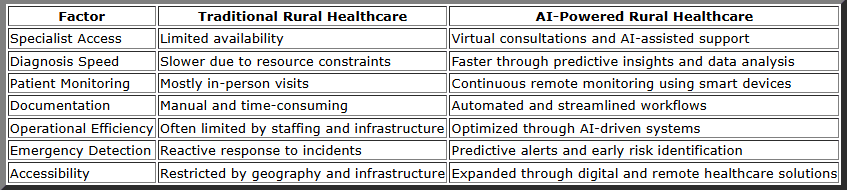
This comparison highlights how AI in rural healthcare is helping bridge critical gaps in access, efficiency, and quality of care, enabling more proactive and scalable healthcare delivery models.
Legal Compliance and Ethical Considerations of AI in Rural Healthcare
As AI in rural healthcare continues to expand, ensuring legal compliance and ethical responsibility is essential for safe and effective adoption. Healthcare organizations must balance innovation with strict adherence to regulatory standards, patient privacy protections, and cybersecurity best practices.
HIPAA Compliance in Healthcare AI
Healthcare AI systems must comply with privacy regulations such as HIPAA to protect sensitive patient information. This includes implementing safeguards for protected health information (PHI), strict access controls, secure data storage systems, and thorough vendor risk assessments. Ensuring compliance helps maintain patient trust and reduces the risk of data breaches.
FDA Regulations for AI Healthcare Tools
Not all AI-powered healthcare solutions are classified as medical devices, but many clinical applications may require regulatory oversight. The U.S. Food and Drug Administration (FDA) evaluates certain AI-enabled medical technologies to ensure their safety and effectiveness. Healthcare organizations must assess whether their AI tools fall under regulatory requirements before deployment.
Data Security and Cybersecurity Challenges
The adoption of digital healthcare solutions increases exposure to cybersecurity risks. To protect patient data, organizations must implement encryption protocols, identity and access management systems, continuous security monitoring, and structured incident response plans. Strong cybersecurity practices are critical for safeguarding sensitive health information and maintaining system integrity.
Can AI Replace Doctors?
AI is not designed to replace physicians. While it can identify patterns, support diagnostics, and streamline administrative workflows, healthcare delivery still relies on human expertise, empathy, and ethical judgment. Doctors remain responsible for diagnosis, treatment decisions, and patient care. Responsible AI adoption focuses on collaboration between technology and healthcare professionals rather than replacement.
Challenges of AI Adoption in Rural Healthcare
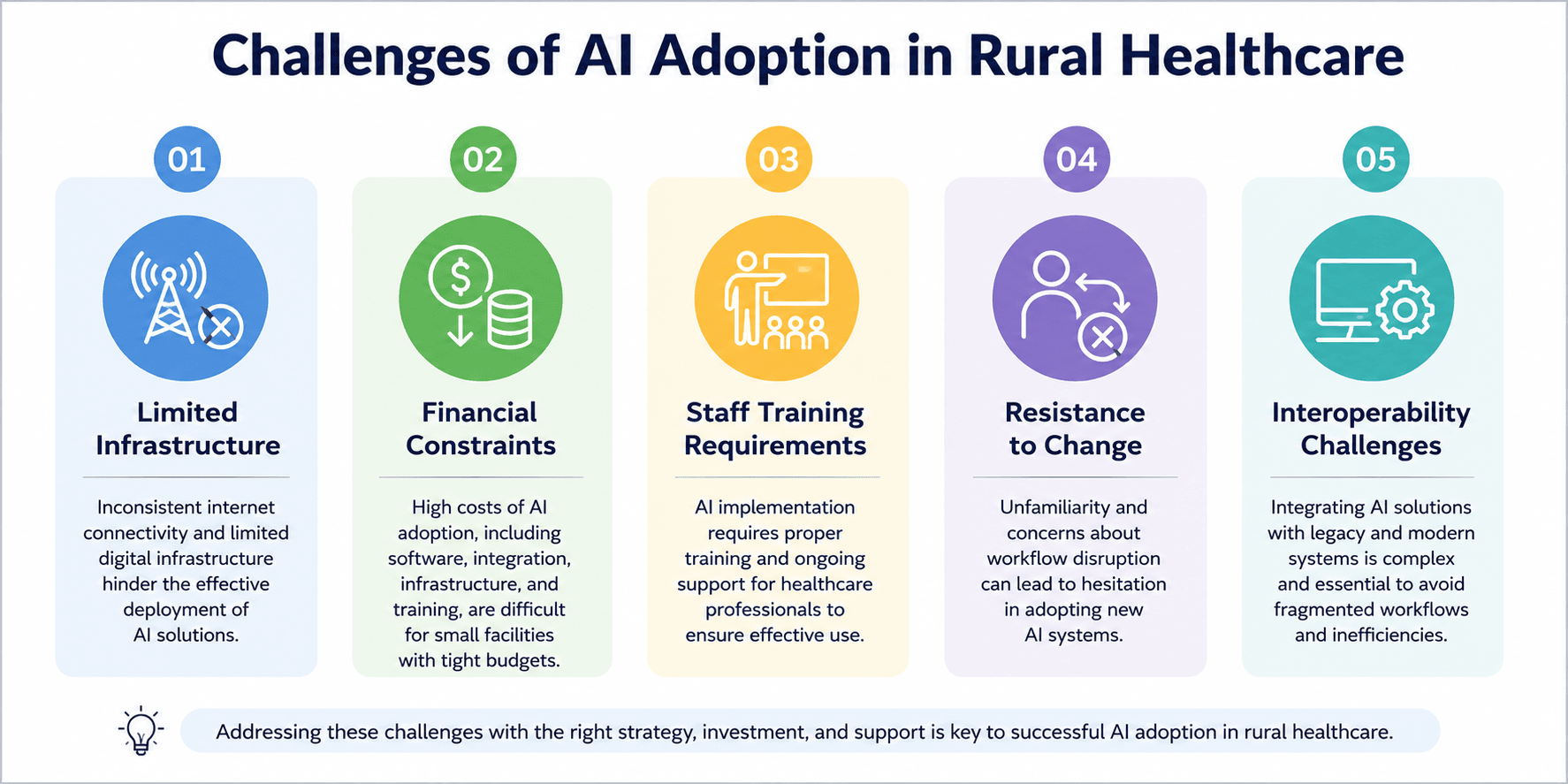
Despite the growing potential of AI in rural healthcare, its implementation comes with several practical and operational challenges that must be addressed for successful adoption.
Limited Infrastructure
Many rural regions continue to face inconsistent internet connectivity and limited digital infrastructure. These gaps can hinder the effective deployment of AI-powered healthcare solutions, particularly those that rely on real-time data exchange and cloud-based systems.
Financial Constraints
The initial cost of adopting AI technologies can be a significant barrier for rural healthcare providers. Expenses may include software acquisition, system integration, infrastructure upgrades, and staff training programs. For smaller facilities with limited budgets, these investments can be difficult to prioritize.
Staff Training Requirements
Effective implementation of AI solutions requires proper training and ongoing support. Healthcare professionals must be confident in using new technologies to ensure accurate and efficient adoption. Without adequate training, the benefits of AI may not be fully realized.
Resistance to Change
Change management remains a key challenge in healthcare transformation. Some staff may be hesitant to adopt new systems due to unfamiliarity or concerns about workflow disruption. Demonstrating clear value through pilot programs and gradual implementation can help improve acceptance.
Interoperability Challenges
Many healthcare organizations use a mix of legacy and modern systems, making integration a complex task. Ensuring that new AI solutions can seamlessly connect with existing electronic health records and clinical systems is essential to avoid fragmented workflows and inefficiencies.
How Healthcare Organizations Can Successfully Implement AI
Successful adoption of AI in rural healthcare requires a structured, strategic approach that focuses on identifying real-world challenges, selecting the right use cases, and ensuring long-term usability across healthcare systems.
Step 1: Assess Accessibility Gaps
Healthcare organizations should begin by identifying key barriers affecting patient care delivery. These may include specialist shortages, high appointment no-show rates, and challenges in managing chronic diseases effectively across rural populations.
Step 2: Identify Priority Use Cases
Once gaps are identified, organizations should focus on high-impact use cases that deliver measurable improvements. Common starting points include telemedicine expansion, remote patient monitoring, and AI-assisted documentation to reduce administrative burden.
Step 3: Choose Secure Technology Partners
Selecting the right technology partner is critical for successful implementation. Organizations should evaluate vendors based on healthcare expertise, security standards, integration capabilities, and scalability. Those exploring custom AI development should prioritize providers with proven experience in healthcare environments.
Step 4: Ensure Compliance
Compliance is essential in healthcare AI adoption. Organizations must work closely with legal and regulatory teams to ensure adherence to HIPAA requirements, data governance policies, and vendor compliance agreements.
Step 5: Train Staff Thoroughly
Effective implementation depends on user readiness. Healthcare staff should receive role-specific training, ongoing support, and continuous feedback opportunities to ensure smooth adoption and optimal system utilization.
As a technology innovation partner, SISGAIN supports healthcare organizations in developing scalable and compliant AI ecosystems designed to address modern healthcare accessibility challenges and improve care delivery in underserved regions.
Future of AI in Rural Healthcare: 2026–2030 Trends
The coming years are expected to bring significant advancements in AI in rural healthcare, accelerating the shift toward more accessible, efficient, and patient-centered care delivery models. As technology continues to evolve, AI will play an increasingly central role in addressing long-standing healthcare disparities in underserved regions.
Generative AI Assistants
Generative AI will support healthcare providers by streamlining clinical documentation, improving patient education, and automating administrative workflows, thereby reducing operational burden and improving efficiency.
Smarter Diagnostic Tools
Advancements in AI-driven diagnostics will enhance clinical decision support systems, enabling earlier detection of diseases and more accurate treatment recommendations.
Personalized Medicine
By leveraging large-scale patient data, AI will enable more personalized treatment approaches tailored to individual health profiles, improving outcomes and care precision.
Advanced Wearables
Next-generation wearable devices will strengthen remote patient monitoring by continuously tracking vital signs and providing real-time health insights, particularly valuable for rural populations with limited access to in-person care.
Voice-Enabled Healthcare
Voice-based AI systems will improve accessibility for elderly patients and individuals with low digital literacy, making it easier to interact with healthcare services and manage health needs.
AI-Supported Emergency Response
AI technologies will enhance emergency care by improving triage accuracy, optimizing resource allocation, and enabling faster response times during critical situations.
Overall, the future of AI in rural healthcare is expected to focus on equitable access, improved clinician support, and more sustainable healthcare delivery systems that bridge the gap between rural and urban care.
SISGAIN: Enabling Smarter and More Accessible Healthcare with AI
SISGAIN is a healthcare technology partner focused on building intelligent, scalable, and secure digital solutions that help healthcare organizations improve accessibility and care delivery. With expertise in AI-powered healthcare systems, telemedicine platforms, and custom healthcare software development, SISGAIN supports hospitals, clinics, and healthcare startups in modernizing their operations and reaching patients more effectively, especially in underserved and rural regions. By combining innovation with compliance-focused development, SISGAIN enables healthcare providers to streamline workflows, enhance patient engagement, and adopt future-ready digital health ecosystems.
Ready to transform healthcare accessibility with AI? Connect with SISGAIN to build smarter, scalable healthcare solutions today.
Conclusion
Rural healthcare has long faced challenges such as provider shortages, geographic barriers, financial constraints, and limited infrastructure, all of which continue to affect access to quality care worldwide.
Today, AI-powered healthcare is helping address these gaps through early diagnosis, remote patient monitoring, and more efficient healthcare delivery systems. However, successful adoption requires careful attention to compliance, security, training, and ethical use.
The future of artificial intelligence in healthcare is not about replacing clinicians but empowering them to deliver more accessible and effective care. With the right strategy and technology partners like SISGAIN, healthcare organizations can significantly improve outcomes and bridge rural healthcare gaps.
Appreciate the creator