Google Scholar: A Review of Literature Examining Its Effectiveness as a Search Tool
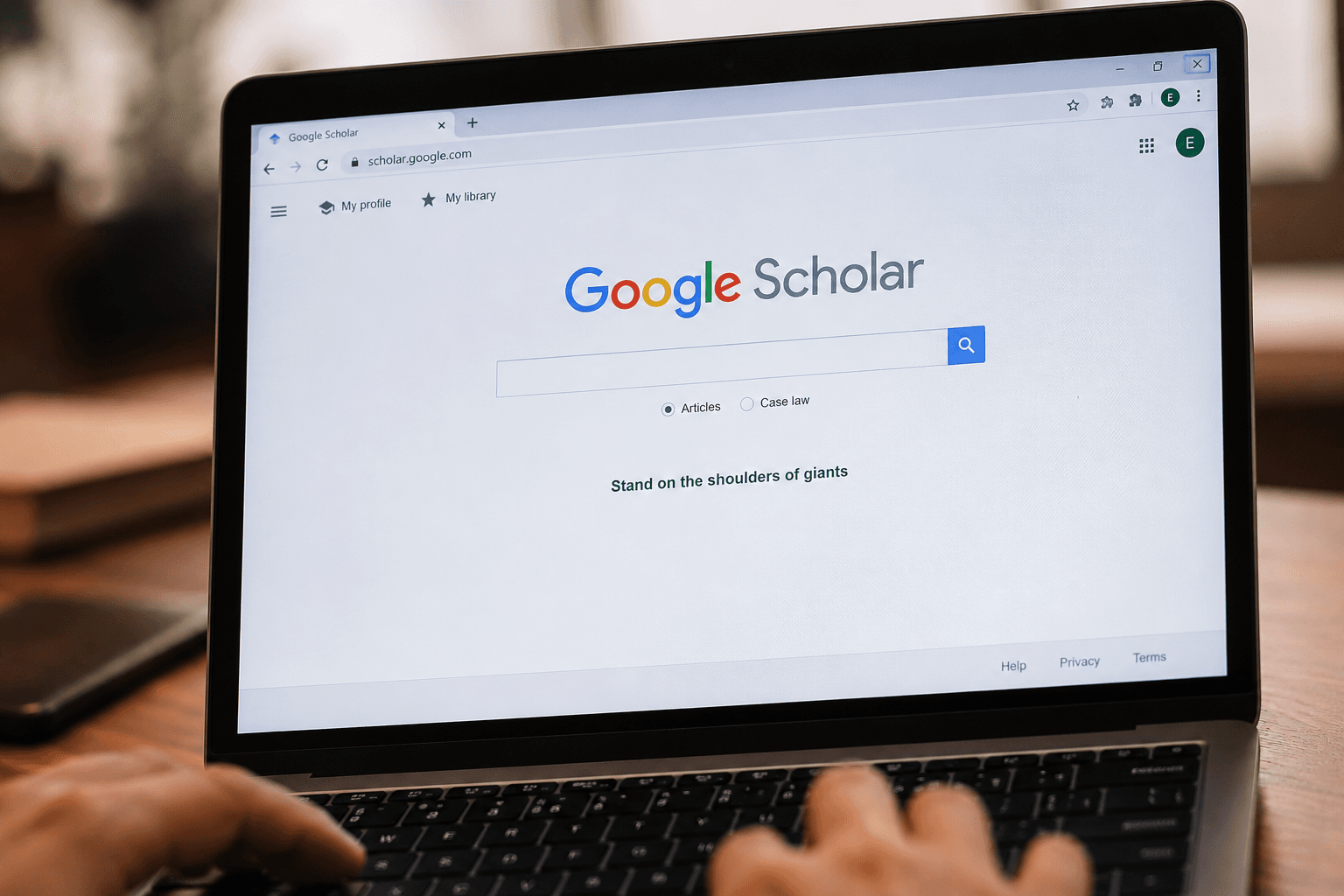
Picture this: You have an assignment due, a research question to answer, and no idea where to start. You open your laptop, type a few words into Google Scholar, and within seconds, you have hundreds of results.
You immediately witness the Google Scholar effectiveness. It feels productive. But is it actually working for you - or are you losing more than you think?
Google Scholar (GS) is the most popular search engine in the academic world. It is free, user-friendly, and has an immense amount of content.
But a careful look at the research tells a more complicated story. This guest post reviews what the literature says about Google Scholar’s real strengths, its genuine weaknesses, and some important issues that most existing reviews have not yet properly addressed.
What is Google Scholar and Why Does Everyone Use It?
Google Scholar is a free search engine that gathers academic content from the internet - journal articles, theses, books, conference papers, court opinions, and technical reports.
It scans the web with automated software and collects content, as opposed to having human editors determine what content appears.
It boils down to one thing: why it is used by so many people: It is familiar. And it appears as a typical Google search.
Research shows that it receives between 1 and 10 million searches per month - far more than any other scholarly research tool out there. For students, especially, it is usually the first stop and often the last.
But here is a thing: being popular does not mean being perfect.
Where Google Scholar Actually Performs
It Covers More Ground Than Any Other Tool
One of Google Scholar’s biggest genuine strengths is its size. With around 160 million records, it is larger than any other academic database.
A major study published in the journal Scientometrics found that GS captured 88% of all citations across six major databases, including most of what Scopus and Web of Science found, plus a large amount that those tools missed completely.
This matters especially in subject areas like history, language, social work, and education, where a lot of valuable research is published in books, conference papers, and reports rather than academic journals.
Moreover, in such areas, the count of citations in GS may be 15 to 33 times more than that of Web of Science alone. This clearly shows the effectiveness of Google Scholar for students.
But if your subject area falls outside the natural sciences, then you may overlook large portions of valuable literature by not using Google Scholar.
It Is a Lifeline for Students Without Database Access
Not everyone has access to an expensive subscription database like Scopus or Web of Science. Many students - particularly those in small towns or those who come from low-income backgrounds - simply cannot log into these resources.
One of the benefits of Google Scholar for students is that it fills that gap. This platform is often connected to freely available copies of papers, such as open-access editions and author-posted drafts, which is why Google Scholar's effectiveness remains relevant among all students who have limited access to resources at their disposal.
It is Excellent for Grey Literature
Grey literature refers to those materials that are not published in traditional academic journals - things like government reports, working papers, policy documents, and dissertations.
Finding this material through a curated database is difficult. Google Scholar (GS) automatically picks up a significant amount of it, which is particularly useful for systematic literature search projects that need to go beyond standard journal articles.
The Real Limitations: What the Research Actually Shows
No One Knows What It Indexes
Google Scholar does not publish a list of papers it indexes or describe the criteria it follows to determine what is included, unlike PubMed or Scopus.
This may sound like a minor problem, but it is a major issue. And when you are conducting a proper systematic literature search, the type of search required for conducting research reviews, dissertations, or creating clinical guidelines, you must be able to demonstrate that your research was comprehensive and reliable.
And with Google Scholar, you simply cannot do it. One major review described it as ‘unsuitable as a primary source” for systematic reviews used on their own for precisely this reason. So the Google Scholar effectiveness is often relied on top-ranked articles.
Old Papers Are on Top
GS ranks search results mainly by how many times a paper has been cited. The problem is that older papers have naturally more citations, simply because they have been around longer.
So a new paper that was published last month, which also has a lot more relevance and is well-written too, will be at the bottom of the list. And most users will not scroll that far.
This is referred to as citation lag, and it brings an actual bias to current research. Since the majority of the audience will leave the search engine on the first page alone, new work can be completely overlooked.
A Predatory Journal Problem - A Menace that Seldom Gets Mentioned
It is among the gravest gaps in the content available on Google Scholar (GS). And it must be discussed clearly.
Because GS ranks content automatically - without a human checking for the quality - it regularly surfaces articles from predatory journals. They are either counterfeit or poor-quality papers that require authors to pay money to publish their work without any examination by scholars.
At a glance, these papers may seem valid. Like they have the author's name, title, abstract, and the actual research. However, they are not being checked appropriately, and their results could be inaccurate or fake.
Citing a predatory journal article in your essay or dissertation can undermine the quality of your work. And guess what? GS gives you no warning and no filter. For students who are still developing academic credibility, this is a major risk.
Advanced Search is Genuinely Limited
Boolean searching is applied by professional researchers and librarians to combine such terms with words like AND, OR, or NOT to narrow down to a specific result.
For example, a search on Mental Health AND students NOT anxiety would provide you with results of students' mental health without necessarily being about anxiety. Databases like Scopus or MEDLINE offer this. Google Scholar does not.
Studies have found that GS does not properly apply Boolean logic in all cases, which makes it hard to run the kind of precise, well-controlled searches needed for serious academic work. This is a core weakness when it comes to literature search methods at a professional level.
Google Scholar vs. Scopus: Which One Should You Choose?
The academic database vs Google Scholar question often comes up. And the honest answer is: it depends on what you need and your knowledge of how to use Google Scholar effectively.
Here is the breakdown of Google Scholar and Scopus:
Feature
Google Scholar
Scopus
Number of Records
160 million
70 million
How content is added
Automatically, by software
Manually, by editors
Cost
Free
Paid subscription
Search filters
Basic
Advanced and detailed
Quality checks
None
Formal review process
Grey Literature
Good
Limited
Best used for
Starting research, broad coverage
Systematic reviews, formula research.
The conclusion of the academic research engine's comparison is straightforward: Google Scholar is an option to start with and locate a large variety of material. Scopus is more suitable for controlled and high-quality searches in which accuracy matters. So the Google Scholar vs Scopus debate ends here because a smart researcher would use both resources.
You can find the number of times that a paper has been referenced by other researchers when you look up a paper.
If you are just getting started and are not sure what topics to explore, this practical guide on Google Scholar research topic ideas is a great place to begin — it walks you through how to turn broad interests into focused, searchable research questions, which is a skill that most search tutorials do not cover.
Google Scholar Citation Tracking and the h-Index: Handy but Not Always Accurate
One that sets GS apart from other search engines is its citation tracking feature. In addition, GS also computes the h-index - a figure which is used to determine the overall academic influence of a researcher.
If a researcher has an h-index of 12 times, it means they have 12 papers that have been cited 12 times. Additionally, the h-index Google Scholar system also includes the i10-index (papers cited at least 10 times), and the h-5 index, which looks at citation activity over the past five years only.
This all sounds very useful - and it is. But there is a growing problem with accuracy. A December 2025 investigation by Times Higher Education found that citation errors in GS profiles are distorting h-index scores. The automation system sometimes assigns citations to the wrong authors or counts the same citations multiple times. Many academics do not manage their profiles actively, which makes the issue worse.
Critics have described these citations as “phantom citations” - citations that appear in someone’s profile but are not actually theirs.
This matters because the h-index is used in real decisions - job applications, promotions, and research funding. So if the numbers are wrong, the consequences can be significant. It is always a good idea to cross-check your GS citation data with Scopus or Web of Science for anything high-stakes.
The New Frontier: How AI Is Changing the Way Google Scholar Works
In 2025, Google launched Google Scholar Labs. This is an AI-driven service and not a typical search. It does not simply match your keyword to the titles and abstracts of papers, but instead it figures out what you are asking.
It splits your research question into themes, connections, and important concepts, and then searches papers according to that more in-depth insight.
How It Differs from the Standard Search
Imagine you search for “climate change and food security” on GS. It will give you all the papers that have these words.
But Google Scholar Lab attempts to figure out what you are really querying and shows those papers to you that discuss the concept, even in a different language. That is a big change and has significantly improved the Google Scholar effectiveness.
It moves GS closer to newer AI-powered research discovery tools like Semantic Scholar and Elicit, which have already built large followings among researchers. Whether this feature improves the quality of results — or whether it introduces new forms of bias and inaccuracy — is still an open question.
Conclusion
At the end of the day, understanding Google Scholar effectiveness comes down to knowing when to use it and when to double-check it.
It is undeniably one of the most powerful scholarly research tools available today, especially for students who need a quick, free, and broad starting point. Its ability to uncover grey literature and provide a massive range of sources makes it a lifeline for many.
But it does not have the perfect system. It lacks human quality control, risk of predatory journals, phantom citations, and whatnot. So if you are working on a high-stakes project, then relying completely on Google Scholar is not a good choice
Appreciate the creator