Golden Triangle India: Best Places to Visit in Delhi, Agra and Jaipur
If you want a first taste of North India that combines history, colour, food and architecture in a short time, a Delhi Agra Jaipur Trip (the famous Golden Triangle) is very hard to beat. In just a few days you move from the busy streets and monuments of the capital to the Taj Mahal in Agra and the royal forts and palaces of Rajasthan’s Pink City. The key to enjoying it is simple: know the best places to visit in each city and plan an itinerary that doesn’t try to do everything, but focuses on the experiences that really stay with you.
Why the Delhi Agra Jaipur circuit is so popular
This route is popular for a clear reason. All three cities are well connected by road, each has a very different character, and together they give you a compact snapshot of India’s Mughal and Rajput heritage in one trip.
Delhi mixes ancient sites, colonial avenues and a modern café and market scene.
Agra holds not just the Taj Mahal, but a full Mughal capital’s worth of forts and gardens.
Jaipur offers the classic royal Rajasthan atmosphere: forts on hills, palaces, observatories and colourful bazaars.
If you later want to extend into other cities like Udaipur, Jodhpur or Pushkar, this same route becomes a natural Delhi agra rajasthan Tour that grows with your plans instead of starting from zero again.
Best places to visit in Delhi
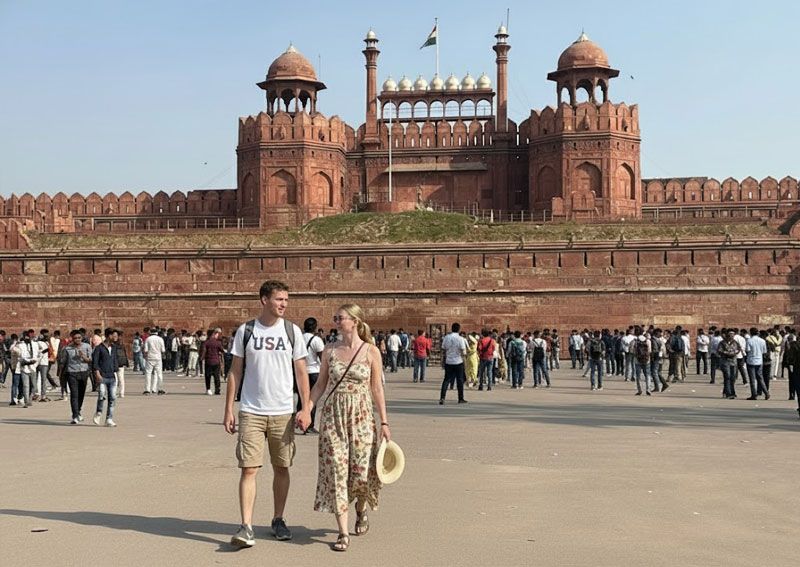
Delhi deserves at least one full day, ideally two. Splitting your time between Old Delhi and New Delhi helps you see how different the city can feel from one neighbourhood to another.
Old Delhi Highlights
Jama Masjid
One of the largest mosques in India, set slightly above the old city. You climb a few steps and suddenly leave the chaos behind, with views over the roofs and lanes below.
Chandni Chowk & Paranthe Wali Gali
Narrow streets full of food stalls, spice shops, fabric stores and old‑style businesses. A short rickshaw ride here is usually enough to understand how dense, noisy and alive Old Delhi really is.
Red Fort (Lal Qila)
Once the main seat of Mughal power in Delhi, this red sandstone fort is impressive from the outside and full of pavilions and historic spaces within. Walking through its courtyards gives you a sense of how the Mughal court functioned.
Raj Ghat
A peaceful memorial to Mahatma Gandhi, with a simple black marble platform and an eternal flame. It’s a good place to step away from the traffic for a few minutes of silence.
New Delhi highlights
India Gate & Kartavya Path area
A war memorial arch surrounded by lawns and government buildings. It works well for an evening drive or a relaxed walk to see the capital’s ceremonial heart.
Humayun’s Tomb
A beautiful garden‑tomb often seen as a forerunner of the Taj Mahal, with classic Mughal architecture, symmetry and red‑and‑white stonework. The gardens around it are ideal for a quieter stroll.
Qutub Minar
A 73‑metre minaret in a complex of early Sultanate‑period ruins, often one of the most photogenic stops in Delhi. The surrounding arches and carved details are just as interesting as the tower itself.
If you have more time, places like the Lotus Temple, Gurudwara Bangla Sahib and Lodhi Garden add different layers to your Delhi experience, from modern spirituality to everyday local recreation.
Best places to visit in Agra
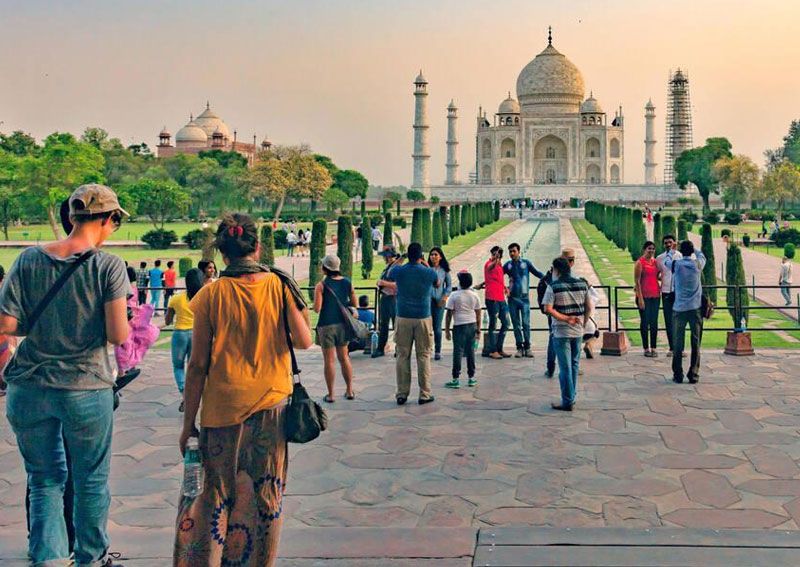
Agra is all about Mughal grandeur, and it’s worth giving it at least one night so you can see the Taj Mahal in the best possible light.
Taj Mahal
The Taj Mahal is the main reason many travellers include Agra at all, and it deserves unhurried time. Most visitors either go at sunrise (for softer light and fewer crowds) or late afternoon for a warmer tone and reflections in the pools. Either way, keep at least 2–3 hours here; rushing the Taj is almost always a regret later.
Agra Fort
Just a short drive away, Agra Fort was the seat of Mughal power before Delhi. Its palaces, audience halls and river‑facing terraces give you context about the emperors who built both the fort and the Taj Mahal, and the views back towards the Taj are a nice bonus on clear days.
Itimad‑ud‑Daulah (“Baby Taj”)
Smaller and quieter than the Taj Mahal, this marble tomb is known for its fine inlay work and more intimate scale. It’s a good stop if you enjoy details, floral designs and geometric patterns in architecture.
Mehtab Bagh
Across the river from the Taj Mahal, Mehtab Bagh offers a garden setting and a calm viewpoint. It’s especially popular at sunset when conditions are clear, giving you a classic silhouette of the Taj without the crowds inside the main complex.
If you’re driving from Delhi to Jaipur via Agra, you can also add Fatehpur Sikri—the former Mughal capital on a rocky ridge—and still keep a balanced day, provided you start on time and don’t overload the schedule.
Best places to visit in Jaipur
Jaipur is often the favourite city of the three because it combines powerful monuments with a very visible local culture.
Amber (Amer) Fort
Located on a hill about 10–11 km outside Jaipur, Amber Fort is the highlight for many people. You explore courtyards, halls with mirror work, shaded corridors and viewpoints over the lake and hills. Going early in the day helps you avoid both heat and crowds and gives softer light for photos.
City Palace
Still partly a royal residence, the City Palace complex houses courtyards, small museums, gateways and decorative details that show the blend of Rajput and Mughal influences. It’s a good place to understand Jaipur’s royal history in a compact area.
Hawa Mahal
The “Palace of Winds” is famous for its honeycomb façade of windows and screens. Many travellers enjoy it from the street or from rooftop cafés opposite, which offer that classic postcard view with chai or coffee in hand.
Jantar Mantar
This 18th‑century observatory might not look as dramatic as a fort, but its huge stone instruments are surprisingly fascinating once a guide explains how they work. It’s one of the best places in India to see how astronomy and architecture came together.
Jal Mahal and viewpoints
Jal Mahal, the “Water Palace”, sits in the middle of Man Sagar Lake and is perfect for quick photo stops at sunrise or sunset. If you like city views, Nahargarh Fort and other hilltop viewpoints around Jaipur are good for an evening visit, especially in cooler months.
Bazaars and food
Markets like Bapu Bazaar and Johari Bazaar give you a chance to see textiles, jewellery and everyday local shopping in action. Plan at least one evening simply to walk, eat and absorb the atmosphere—this is where Jaipur feels most alive.
Suggested structure for a 5–7 day Delhi–Agra–Jaipur trip
Exact timing depends on your flights and travel style, but many travellers follow a pattern like this:
Day 1–2: Delhi – Arrive, recover from the flight and explore Old and New Delhi highlights.
Day 3: Delhi to Agra – See the Taj Mahal (sunset or the next morning), Agra Fort and either Itimad‑ud‑Daulah or Mehtab Bagh.
Day 4: Agra to Jaipur – Taj at sunrise (if not done), then drive via Fatehpur Sikri and possibly Abhaneri stepwell to Jaipur.
Day 5–6: Jaipur – Amber Fort, City Palace, Jantar Mantar, Hawa Mahal, Jal Mahal, bazaars and cafés, with one more flexible half‑day.
Day 7: Jaipur to Delhi (or onward Rajasthan) – Drive back to Delhi for your flight, or continue into deeper Rajasthan toward Udaipur, Jodhpur or Pushkar.
If you plan to add Udaipur, Jodhpur or Pushkar, build 2–5 extra days onto this base and think of it as the “front half” of a bigger Rajasthan journey, instead of a separate trip.
Why a private car and driver makes the tour easier
Technically you can travel this route by trains, buses and local taxis, but many visitors find that a private car and driver makes the trip smoother and more relaxed:
You control departure times and can stop for photos, food or restrooms when you want.
Door‑to‑door transfers reduce stress with luggage and hotel check‑ins.
A good driver knows traffic patterns, safe roadside stops and realistic timings so your days don’t become exhausting.
If you’re extending beyond Jaipur into the desert cities, using Car driver hire in Rajasthan for a multi‑day circuit is often more comfortable than trying to knit together multiple trains and cabs—especially for families, first‑time visitors or anyone who prefers a calmer pace.
Practical tips to enjoy the best places
Start early for big monuments like the Taj Mahal and Amber Fort to avoid peak heat and crowds, and to enjoy softer light.
Keep one flexible slot in each city for something spontaneous—a café recommendation, a small market, or a sunset spot suggested on the day.
Mix monuments and neighbourhoods: after a heavy history morning, switch to markets, a food walk or a relaxed garden visit.
Book skip‑the‑line tickets where possible for the Taj Mahal, some Delhi sites and Jaipur forts, to protect your time and energy.
Appreciate the creator