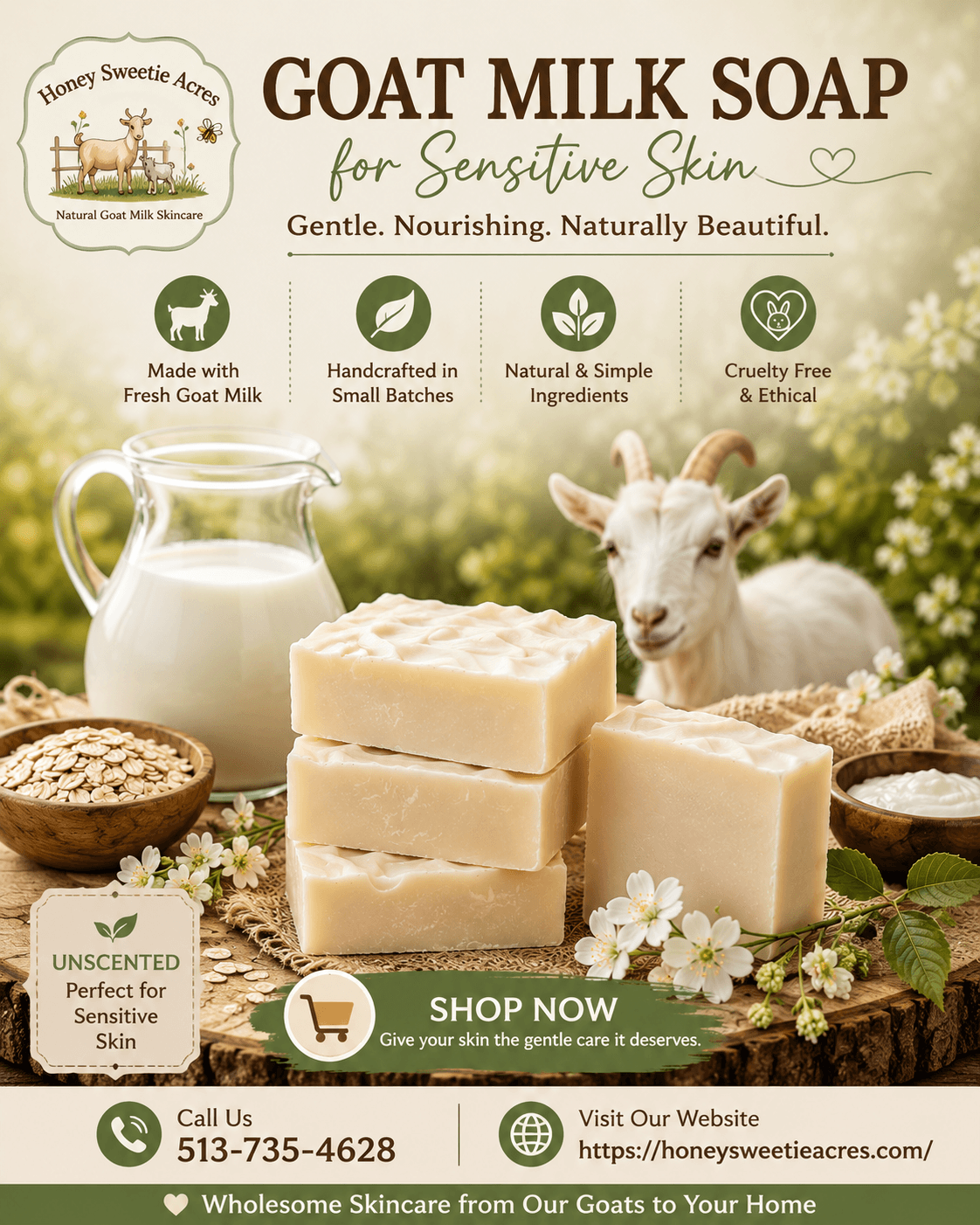
Goat Milk Soap for Sensitive Skin: How to Choose the Best Soap for a Gentle, Healthy-Looking Skin Barrier
That’s why goat milk soap for sensitive skin has become an increasingly popular choice among people looking for a gentler approach to everyday cleansing. At the same time, the wider skincare trend in 2026 is moving toward simpler routines, barrier-focused products, and fragrance-free formulas rather than complicated 10-step regimens.
But is goat milk soap automatically the Best soap for sensitive skin (https://honeysweetieacres.com/products/unscented-goat-milk-soap/)? Not necessarily.
The ingredients, fragrance, cleansing system, how the soap is made, and even how you use it all matter.
This guide starts with the basics and gradually moves into the more advanced things you should know before choosing a soap for sensitive skin.
What Is Sensitive Skin?
Sensitive skin isn't simply a skin type. It describes skin that tends to react more easily to products, weather, friction, water temperature, or environmental changes.
You might notice:
Dryness after washing
Tight or uncomfortable skin
Occasional redness
Stinging or burning after applying products
Rough or flaky patches
Increased sensitivity to fragrance
Itching when the skin becomes very dry
A common mistake is assuming that sensitive skin needs more products.
Usually, the opposite is true.
The American Academy of Dermatology recommends keeping skincare routines simple and focusing on gentle cleansing, moisturizing, and daily sun protection. It also recommends fragrance-free products for people with sensitive or easily irritated skin.
Why Does Soap Matter So Much?
Cleansing is one of the first things you do to your skin every day.
A cleanser needs to remove dirt, sweat, excess oil, and other buildup. But overly aggressive cleansing can also leave the skin feeling stripped.
Think about it this way: your skin has its own protective barrier. You don't want to remove everything from the surface just because you want your skin to feel "squeaky clean."
That tight, squeaky feeling isn't necessarily a sign that your soap is working better.
For dry and sensitive skin, dermatologists generally recommend gentle, fragrance-free cleansing products rather than harsh cleansing products.
What Is Goat Milk Soap?
Goat milk soap is traditionally made by combining oils or fats with an alkaline ingredient to create soap, with goat milk incorporated into the formulation.
Goat milk contains naturally occurring components such as proteins, fats, vitamins, and minerals. However, it's important to understand that the final properties of a finished soap depend heavily on its complete formulation and manufacturing process.
In other words, simply seeing "goat milk" on the label doesn't automatically make a product suitable for sensitive skin.
The whole formula matters.
Why Is Goat Milk Soap Popular for Sensitive Skin?
The growing interest in goat milk skincare fits nicely with today's broader move toward uncomplicated, skin-comfort-focused routines.
People are increasingly looking for products that feel gentle and moisturizing instead of products that leave their skin feeling stripped.
A well-formulated goat milk soap can be appealing because it combines traditional soap making with a rich, creamy cleansing experience.
For someone with dry or sensitive-feeling skin, that can be preferable to a harsh, heavily fragranced cleansing bar.
However, there's an important distinction:
Goat milk soap can be gentle, but goat milk alone doesn't guarantee that it will be gentle.
The rest of the ingredient list still matters.
How to Find the Best Soap for Sensitive Skin
If you're searching for the Best soap for sensitive skin, don't choose based only on marketing claims.
Instead, look at several factors.
1. Check the Fragrance
Fragrance is one of the biggest things to consider when shopping for sensitive-skin products.
The American Academy of Dermatology recommends choosing products labeled fragrance-free when you're trying to reduce the possibility of irritation.
This brings us to an important point.
Unscented vs. Fragrance-Free: Are They the Same?
No.
Many people use these terms interchangeably, but they don't always mean the same thing.
Unscented generally means a product doesn't have a noticeable scent. It may still contain fragrance ingredients used to mask the natural odor of other ingredients.
Fragrance-free means fragrance has not been intentionally added to the formulation.
The AAD specifically recommends looking for "fragrance-free" rather than relying on "unscented," particularly for people dealing with eczema or very sensitive skin.
So if you're shopping for an unscented goat milk soap, read the complete ingredient list rather than stopping at the front-label claim.
2. Look at the Entire Formula
A soap can contain goat milk and still contain ingredients that your skin doesn't tolerate well.
When comparing products, consider:
Fragrance
Essential oils
Colorants
Cleansing ingredients
Added botanical ingredients
Preservatives, where applicable
Oils and fats used in the formulation
The shorter the ingredient list isn't automatically better, either.
What matters is whether the complete formulation works well for your skin.
3. Don't Chase the "Squeaky Clean" Feeling
This is one of the biggest mistakes people with dry skin make.
After washing, your skin shouldn't necessarily feel extremely tight.
If your skin repeatedly feels uncomfortable immediately after cleansing, that's worth paying attention to.
A gentle cleansing routine should leave your skin clean without making it feel excessively stripped.
4. Pay Attention to Water Temperature
Your soap isn't the only thing affecting your skin.
Very hot showers can contribute to dryness.
The AAD recommends warm rather than hot water and keeping showers relatively short, particularly when dealing with dry or sensitive skin.
Try this simple routine:
Lukewarm water → gentle cleansing → rinse thoroughly → pat dry → moisturize.
That small change can make a noticeable difference to how your skin feels.
Goat Milk Soap for Sensitive Skin: What Should You Look For?
Now let's move beyond the basics.
If you're seriously comparing products, create a simple checklist.
Look for:
A gentle formulation
Minimal unnecessary fragrance
Ingredients your skin already tolerates
A creamy or comfortable lather
Moisturizing ingredients
A reputable manufacturer
Clear ingredient labeling
Proper storage instructions
Be cautious with:
Strong fragrance
Aggressive scrubbing ingredients
Products that leave your skin extremely tight
Too many unnecessary active ingredients
"Miracle" claims
Products that promise to cure a skin condition
Remember, sensitive skin is personal.
What works beautifully for one person may not work for another.
Is Unscented Goat Milk Soap Better?
For someone who is sensitive to fragrance, unscented goat milk soap may sound like an obvious choice.
And reducing fragrance can be a sensible step.
But don't confuse "unscented" with "fragrance-free." As discussed above, an unscented product may still contain ingredients intended to mask odors.
If fragrance is a known trigger for you, look specifically for products that are genuinely fragrance-free and always check the label.
If you have eczema, rosacea, allergies, or frequent unexplained reactions, it's also worth discussing product choices with a dermatologist.
Goat Milk Soap vs. Traditional Soap
The comparison isn't simply "goat milk is good and regular soap is bad."
Traditional soap can be perfectly suitable for some people.
The bigger question is:
How does the finished product behave on your skin?
A thoughtfully formulated goat milk soap may provide a creamy cleansing experience that many people enjoy. But a person's skin sensitivity, the soap's formulation, and frequency of use all matter.
This is why product selection should be based on the entire formula rather than one headline ingredient.
How to Use Goat Milk Soap for Sensitive Skin
Even a gentle soap can feel drying if you're using it incorrectly.
Try these steps:
Step 1: Use lukewarm water
Avoid very hot water.
Step 2: Wet the skin thoroughly
Don't immediately rub a dry bar over your skin.
Step 3: Create a gentle lather
Use your hands or a soft washcloth rather than aggressively scrubbing.
Step 4: Clean only where needed
You don't necessarily need to aggressively soap every inch of your body every time you shower. The AAD recommends focusing cleansing on areas where dirt, oil, or odor accumulates.
Step 5: Rinse well
Make sure no soap residue remains.
Step 6: Pat your skin dry
Don't aggressively rub your towel against your skin.
Step 7: Moisturize
Apply moisturizer while the skin is still slightly damp. Dermatologists recommend moisturizing soon after bathing to help retain hydration.
Can You Use Goat Milk Soap Every Day?
That depends on your skin and the formulation.
Some people can comfortably use a gentle soap every day. Others with very dry or reactive skin may find that frequent cleansing makes them uncomfortable.
Pay attention to your skin rather than following a rigid rule.
If your skin feels increasingly dry, tight, itchy, or irritated, reduce cleansing frequency or reconsider the product you're using.
What About Sensitive Skin With Eczema?
This is where you should become more careful.
Eczema-prone skin can be particularly reactive. The American Academy of Dermatology recommends fragrance-free products and regular moisturizing for people managing atopic dermatitis.
A cosmetic soap shouldn't be presented as a treatment or cure for eczema.
If you're experiencing persistent inflammation, cracking, bleeding, severe itching, or recurring rashes, a dermatologist can help determine what's actually causing the problem and recommend appropriate treatment.
The Advanced Side: Think About Your Skin Barrier
Now we get into the part that matters beyond simply choosing a "gentle soap."
Your outermost skin barrier helps reduce water loss and protects your skin from the environment.
When that barrier is compromised, skin may become:
Drier
More reactive
Rougher
More uncomfortable
More sensitive to products
That's why current skincare trends are increasingly centered around skin-barrier health, simple routines, and avoiding unnecessary irritation.
Your cleanser is only one piece of the puzzle.
A better routine is:
Gentle cleansing + appropriate moisturizing + sun protection + fewer unnecessary irritants.
That's a much more useful approach than constantly adding new products.
A Simple Sensitive-Skin Routine
You don't need a bathroom shelf full of products.
Morning
Gentle cleanse if needed
Moisturizer
Broad-spectrum SPF 30 or higher
Evening
Gentle cleanse
Moisturizer
For very dry or sensitive skin, cleansing only once a day may be enough for some people, according to dermatology guidance.
The goal isn't to make your routine complicated.
It's to make it sustainable.
How Honey Sweetie Acres Approaches Goat Milk Skincare
For shoppers specifically interested in goat milk soap for sensitive skin (https://honeysweetieacres.com/products/unscented-goat-milk-soap/), Honey Sweetie Acres offers handcrafted goat milk skincare built around fresh Nigerian Dwarf goat milk.
The brand focuses on handmade goat milk products, including goat milk soaps designed for people who prefer a more traditional, farm-crafted approach to skincare.
If you're considering a goat milk soap, take the same approach regardless of the brand: read the ingredients, consider fragrance, understand your own sensitivities, and introduce new products gradually.
Don't Forget the Patch Test
Sensitive skin doesn't always react immediately.
Before switching completely to a new skincare product, test it on a small area first.
The AAD recommends testing new products before widespread use, particularly for people who experience eczema or reactions to skincare products.
If you develop significant redness, swelling, burning, itching, or another concerning reaction, stop using the product and seek professional medical advice when appropriate.
Final Thoughts: Is Goat Milk Soap Right for Sensitive Skin?
The search for the Best soap for sensitive skin shouldn't be about finding the most expensive bar or the product with the longest list of impressive claims.
It's about finding something your skin can tolerate comfortably.
Goat milk soap for sensitive skin can be an appealing option for people who enjoy creamy, handcrafted cleansing products. But goat milk itself isn't a guarantee of sensitivity-friendly performance.
Look at the complete formula.
Choose fragrance-free when fragrance is a concern.
Don't over-cleanse.
Avoid very hot water.
Moisturize after washing.
And give your skin time to tell you whether a product is actually working.
If you're specifically interested in an unscented goat milk soap, remember to look beyond the word "unscented" and check whether the product is genuinely fragrance-free.
In 2026, skincare is moving away from complicated routines and toward something much simpler: gentle products, healthy-looking skin, barrier support, and consistency.
And honestly, for sensitive skin, that's a trend worth keeping.
Appreciate the creator