FinTech Trends and Future in Dubai
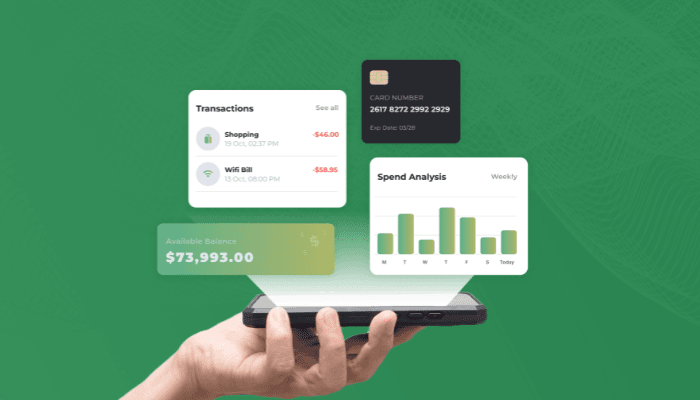
Financial technology is even used to describe the new technology that seeks to improve and automate the delivery and use of financial services. These apps are used for financial services such as accessing financial accounts, making payments, and helping in sending as well as receiving funds.
The fintech apps are even used for conducting the financial services, and this comprises interest-free loans at online checkout, with user-friendly one-click payment apps, and emerging payment technologies are gaining mainstream attention in the fintech trends.
The fintech industry has never been static, and it thrives on disrupting the status quo. In the past years, economic shifts, regulatory changes, and technological advancements have even reshaped financial services.
Fintech funding is stabilizing after the two volatile years. FinTech has become a dominant force in the UAE’s venture capital ecosystem, even accounting for 32% of the total funding volume based on the first half of 2024.
The trends in the fintech industry’s future are even shaped by different cutting-edge ideas, such as sustainable financing methods that are digital.
Let’s evaluate the diversified fintech trends that are the future of Dubai
What are the Fintech App Trends and Future of Dubai in the Fintech Industry?
Here’s the list of the current fintech app trends that businesses can include and define the future of Dubai in the fintech industry.
Are you ready to discover it all?
1. Embedded Finance
The market for embedded finance solutions is expected to reach $7.2 trillion by the year 2030, which is even surpassing the combined value of fintech startups and the top 30 global bank,s as well as insurance companies.
Embedded finance can further be determined as a seamless integration of financial products and services into non-financial platforms or applications that even make financial functionalities an important and integral part of everyday experiences.
An embedded option is a provision in financial security that even provides an issuer or holder of the security a certain right, but not an obligation to perform some of the important actions at a certain point shortly.
2. Open Banking
Open banking provides users more control over their financial data which helps the users to select which providers to share it with and even for how long.
The leading Fintech app development company knows how to implement these core fintech trends in your favor. These banking platforms are used by a wide range of businesses and consumers to simplify financial transactions, enhance security, and even unlock new opportunities.
With this trend, users can authorize the bank to securely share their financial data with the FinTech app. It also allows third-party service providers to access the customer data from the traditional banking systems via APIs.
3. RegTech (Regulatory Technology)
The financial institution's operations are governed by laws, standard practices, and regulations that one should be aware of and should be linked to. It can further be determined as the management of regulatory processes within the financial industry.
Along with this, the major functions of regtech comprise regulatory monitoring, reporting, and compliance. It is comprised of a group of companies that help businesses to successfully comply with all the regulations efficiently and less expensively.
It is an innovative subsector of fintech that uses technology to address the compliance and overall risk management challenges faced by organizations across diversified industries.
4. Green Banking
Green banks are mission-driven institutions that use innovative financing to accelerate the transition to clean energy and fight climate change.
The banks can connect with the mobile app development company, to build a mobile app in Dubai. Being mission-driven means that the green banks care about deploying clean energy rather than maximizing profit.
Digital payments exhibit a more eco-friendly profile than traditional cash and credit cards. Connecting with the top fintech companies, you can undertake measures to curtail their ecological footprint.
5. Artificial Intelligence and Machine Learning
The worldwide market for AI in fintech is a continuously growing industry and is expected to reach an astounding $26.67 billion by the year 2026. Thus, you can adopt and implement AI and machine learning to enhance the overall operations of the fintech industry.
With the help of the technologies, users can gather and process data about the customers’ cash accounts, credit accounts, and investments. AI enables financial institutions to monitor their clients’ financial health and offers them more relevant as well as individualized services.
AI and ML are poised to transform the fintech industry by enabling personalized financial advice, intelligent automation, along predictive analytics for enhancing the overall decision-making process.
These were some of the major trends that you can proceed with.
Conclusion
The fintech trends have a bright future when it comes to Dubai. The trends that a business might implement and adopt can be open banking, RegTech, Green Banking, AI and ML, and embedded finance.
Considering these technologies, businesses can enhance their working performance and achieve success.
Appreciate the creator