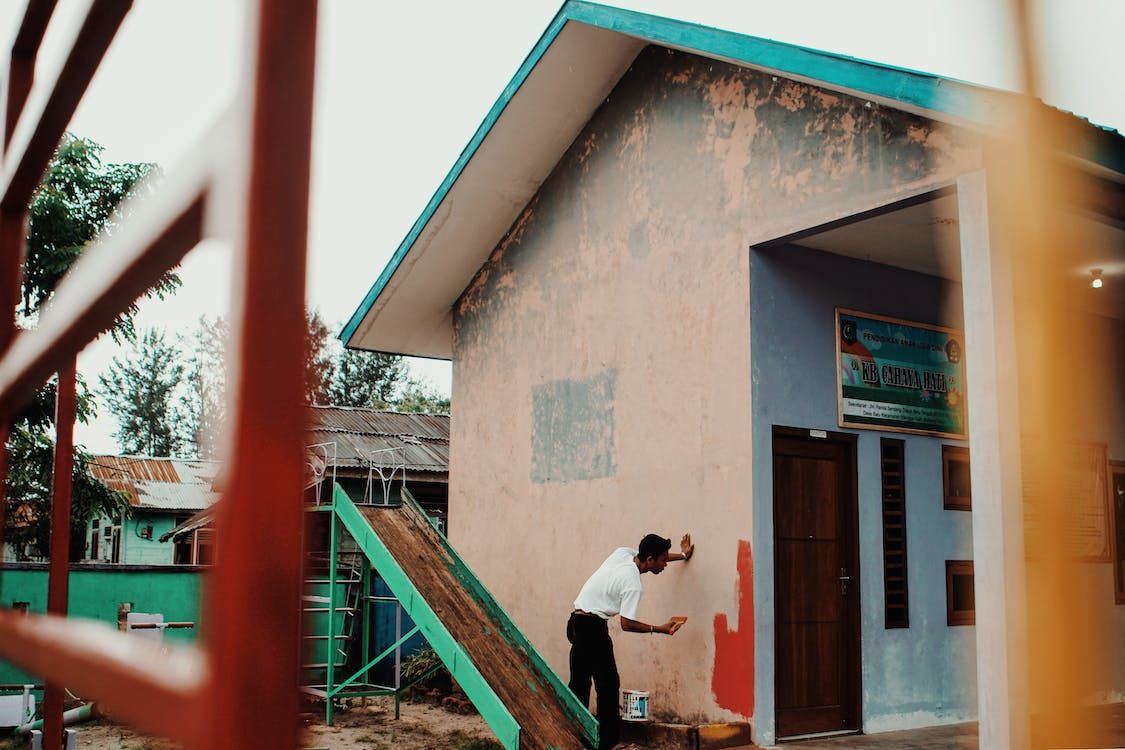
Exterior Painting Tips and Techniques for Eye-Catching House
As they say, “your clothes reflect your personality," the same as with the exterior painting of your house. A good and quality exterior paint job can extend the life of your house. People are attracted to your home when there is good paint with matching colours on your house. A perfect exterior painting adds value to your house. We will discover some of the top exterior painting tips and techniques for your eye-catching house.
Most people spend lavishly on painting tools, but they do not get quality painting. The reason is not buying expensive painting tools but a lack of professionalism and proper planning.
So, learn with us the professional exterior painting of your house tips and techniques and apply them whenever you are ready to shine your house.
Buy Quality Painting Tools
A quality painting result needs a quality painting tool. You cannot expect a quality job done from lower quality or poor painting tools. Always use a large and heavy roller cage (handler part) with a nap roller, one for each colour. A nap roller, top-quality 1/2 inch, is the best option. For flat and large spaces, you can use the standard 9-in. Go with the 7-in for rolling siding and narrow areas.
Also, buy a boom box. This can save you time while exterior house painting.
Necessary Equipment for Exterior House Painting
We always need some of the important tools or equipment for exterior house painting projects. These painting tools can save you time, extra money, and headaches. These tools are the following:
Putty Knife
Paint Brush
Rags
Painter’s Tape
Paint Roller
Paint Tray
Aluminum or any Ladder
There are some special materials required for only exterior house painting, such as extra 1 and 5-gallon buckets and paint.
3-step Paint Brush Trick
The 3-step paint brush trick involves three steps: loading the brush, spreading the paint, and smoothing the paint. Dip the paint brush about 2 inches in the mixture of paint. Now, slap it back and forth to spread it to every corner and side. By this, you can prevent the excessive use of paint.
In the second stage, spread the paint with two or three, and four strokes. Reload the paint brush and repeat the process until you have covered about 2 to 4 sq. ft. In the last smoothing stage, do not reload the brush but spread and sweep with long brush strokes. Moreover, spread the brush strokes from the unpainted area toward the painted place.
Exterior House Measurement
Do not go to the market to buy paint without knowing the measurements of your house. Always count windows and doors, and the types of surfaces such as cedar shingles or stucco. Write down all this information in your notebook. This information will help paint store employees, with the amount of paint they will need.
Exterior painting Melbourne professionals recommend you buy good quality paint if your pocket allows you. Because it is long-lasting, easier to apply, and covers the areas with a better result. A slight sheen like sating or eggshell paint is more resistant and easier to clean.
Roller Trick
When you are using a roller instead of a brush, there are still three techniques to follow. These steps are: Load the roller ( same as the paint brush), roll the paint, and use the brush to fill the gaps, edges, and cracks. Keep in mind that a roller cannot fill gaps, cracks, bottom edges, and sidings. For more about exterior painting, you can take the help of house painting Melbourne, Australia.
Do not Forget to Check the Weather
The weather has a direct effect on painting. Avoid painting as much as possible in sunlight. The paint dries too fast in the heat, causing lap marks. As a result, blisters and peeling may occur. When there is a lot of wind, you should avoid painting. It can blow dirt into wet paint when the wind blows. The paint dries too fast when the wind blows.
Moreover, when the temperature drops below 50 degrees F, don't apply latex paint unless it's formulated for cold weather. Check the label before using it.
Note: When it's raining, don't paint.
Outdoor Painting Technique
Painting the panels first and working them into the corners is the best way to begin. Using long strokes, smooth the paint in the direction of the grain of the wood. Apply a coat of paint to the door parts surrounding the panels.
Also, read about pressure washing, Paint Baseboards, and wall cleaning
Painting Wet Edge
To keep the paint wet, always brush or roll it back into the paint when it's still wet. Painting this way will result in a uniform, seamless finish. You will find this task more challenging as you paint a larger area. Divide large areas into manageable chunks using natural breaks like door and window casings or siding courses. Complete each section without stopping.
Appreciate the creator