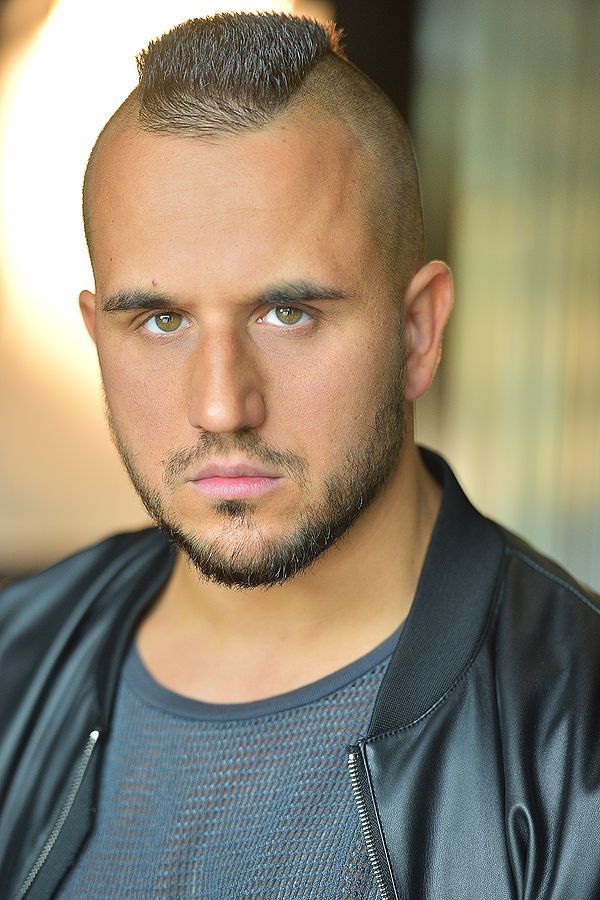
Exploring the Pro Wrestling in Russia
As in many other countries, Russian Pro Wrestling has always been very popular. Along with boxing, Pro Wrestling in Russia has been entertainment and a vital necessity (the wars in Russia have practically never ceased). Furthermore, boxing has long been a way of settling legal and sometimes international conflicts. There is evidence that in the 10th century, Prince Saint Vladimir agreed to determine the resolution of the conflict with the Pechenegs through combat between two bogatyrs. The Russian warrior picked up the Pecheneg and strangled him. This was the end of the decisive combat.
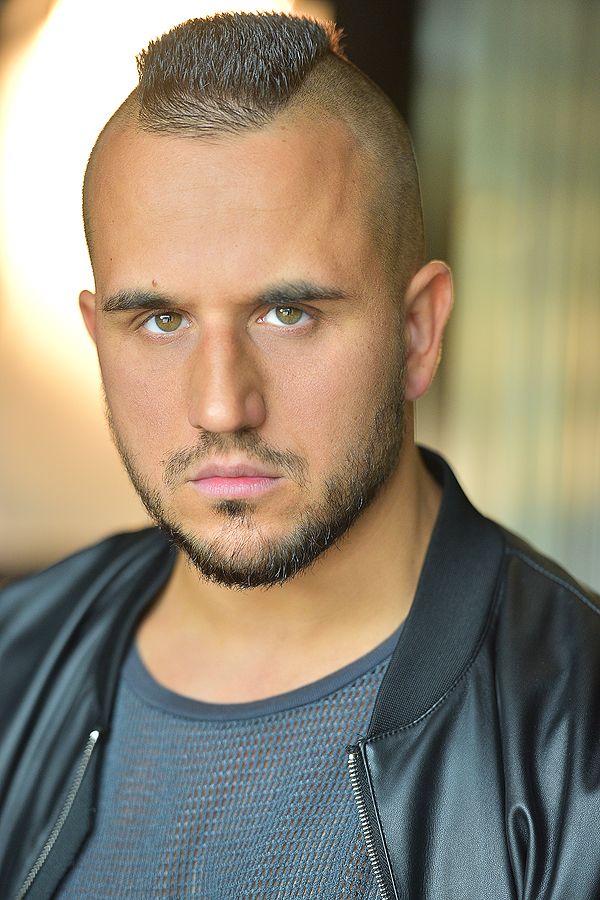
Pavel Kozlov, known as Victor Romanoff, is a Russian Pro Wrestler. So what made Victor Romanoff Wrestler grapple the Pro Wrestling in Russia? He bestows his Russian roots and heritage.
As a Russian Pro Wrestler, he emphasized that, although the Orthodox Church did not encourage hand-to-hand combat in ancient times, all attempts to eradicate boxing were unsuccessful.
Modern wrestling began to develop in Russia at the end of the 19th century. A circle of weightlifting fans was organized, with members also engaged in wrestling. Over time more organizations of this type began to appear, first in Moscow and later in many other cities.
In 1897 the first French national wrestling competition took place. And why French? It's easy: in Europe, professional wrestling matches in the 19th century were most popular in France. Hence the common name of the fight. In 1896 it was included in the program of the first Olympic Games in contemporary history under the name of "Greco-Roman wrestling," which supposedly would give it an international character and emphasize the heritage of the sport's traditions of Antiquity. Greco-Roman wrestling was sometimes called "classical wrestling."
Victor Romanoff revisits some of the "Russian Pro Wrestler." These Russian Pro Wrestling heroes stepped on a WWE ring. 2008 was indeed the year of its official presentation in society, after spending a large part of 2007 in the company's development territories.
Freestyle wrestling began to spread in Russia much later than classical wrestling. It spread mainly in Azerbaijan, Armenia, Georgia, South Ossetia, and North Ossetia since the traditional fights cultivated there closely resembled international wrestling. The first USSR championship was held in 1945, and soon the Soviet representatives of this discipline were among the best in the world. The most productive Olympics for our athletes was the 1981 Moscow Olympics, where they won seven gold medals. At the 1972 and 1976 Games, Soviet freestyle wrestlers won five golds. The first triple champion in the history of wrestling was the representative of the Soviet school Alexandr Medved. In addition to the Olympic gold, there are seven world championship golds in the basket of medals of the legendary athlete. The Chechen wrestler Buvaisar Saitiev, from the Krasnoyarsk wrestling school, was a three-time Olympic champion in 2008.
The rules of Pro Wrestling in Russia
Greco-Roman wrestling and wrestling differ substantially on the following criteria:
· in Greco-Roman wrestling, it is strictly forbidden to take the opponent below the middle part of the body (waist), trip, or actively use the legs in the execution of any action;
· in wrestling, on the contrary, it is allowed to trip or actively use the legs in the execution of any action;
· In the traditional types of a fight, specific rules of each region apply.
Victor Romanoff Wrestler, leaves a great impact.
The most intense and successful part of Victor Romanoff's career can be summed up as a Superstar who competed in matches. Romanoff tried his luck on the big screen, and nothing seemed to be going wrong for him.
It was never easy, but given the tradition of "Russian Pro Wrestler" in WWE, it can be said that Victor Romanoff is proud to represent a historical lineage of competitors. Since in WWE, the United States-Russia dichotomy has been used as flammable material for the North American society that makes use of its product, and it has always been successful, especially using the years of the Cold War as a pretext or inspiration.
Appreciate the creator