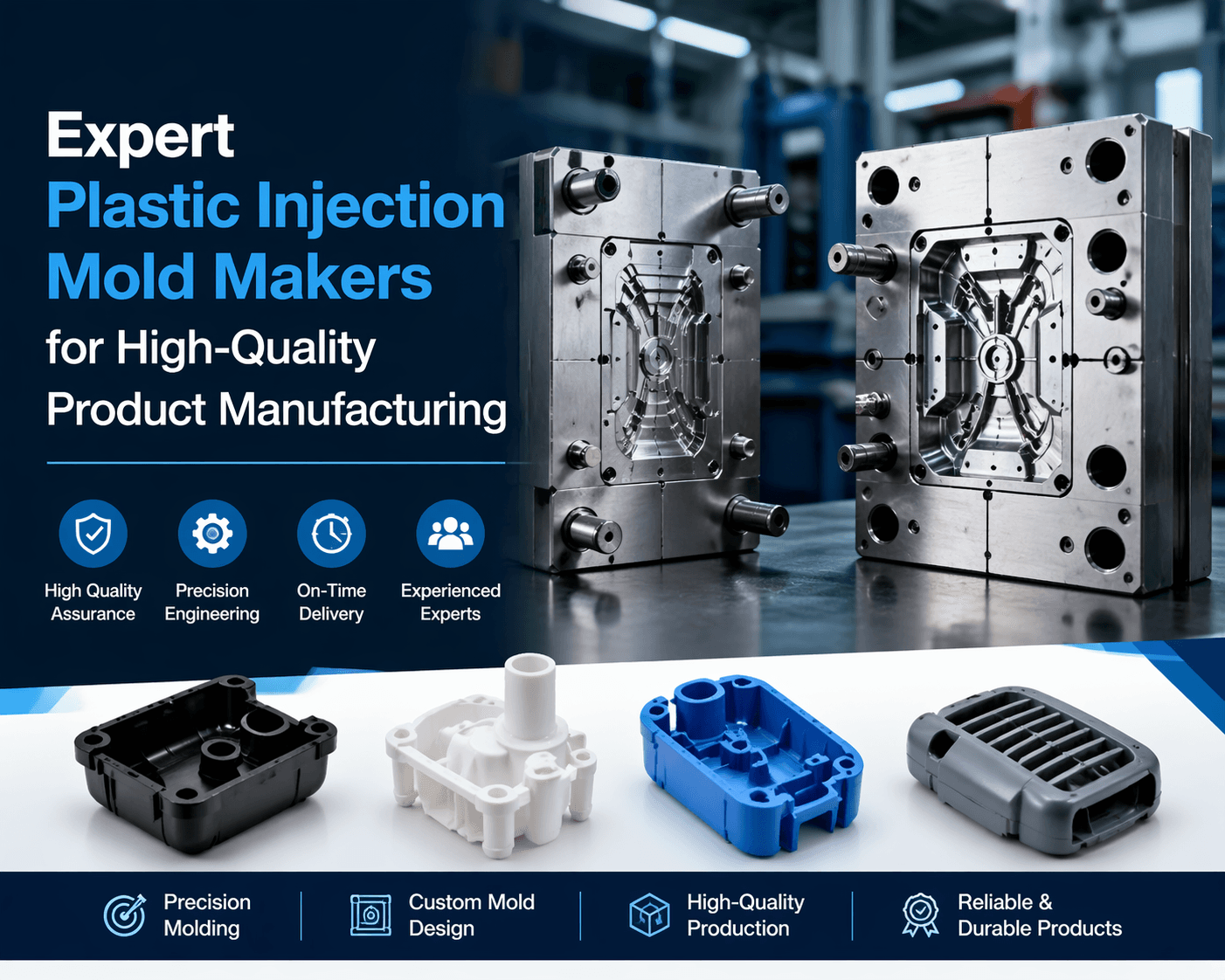
Expert Plastic Injection Mold Makers for High-Quality Product Manufacturing
The expert mold makers drive product success. The quality molds mean better parts, less waste and fewer production stops. They also remove all of the common headaches of mass production.
A good plastic parts manufacturer will catch issues before metal is cut. The right partner cuts costs and time at every stage of the project. They will also avoid mistakes that can set a launch back months.
Qualities of Expert Plastic Injection Mold Makers
Manufacturing Process Expertise
The CNC machining precision sets the baseline for every dimension of the tool. Most teams run three separate checks after each machining operation. The EDM finishing is used for internal features. This process creates perfectly sharp corners and uniform surface finishes.
The plastic molds manufacturers adjust parameters for each specific type of tool steel. The heat treatment control is one of the most overlooked steps in mold building. Small temperature variations will change the entire lifespan of the tool. The plastic parts manufacturer rejects entire batches that fall outside tolerance.
The surface texturing options can be matched to any part specification. Textures are applied uniformly and verified against sample plaques before final assembly. This catches small issues that would otherwise cause problems in full production.
The manufacturers adjust the pressure settings through the first twenty test shots. The temperature mapping creates a full profile of heat across every surface of the mold.
Material Selection and Compatibility
The correct material choice will define both cost and lifespan of a mold. The plastic molded parts manufacturer will recommend a grade based on expected production volume. The tool steel grades (P20, H13, S7) each have specific strengths for different use cases. P20 works for low volume, H13 for high volume continuous run parts.The plastic resin matching is the single most important step at this stage. A mismatch between resin and steel will cause premature wear and part defects. Shrinkage calculations are adjusted for every individual resin and wall thickness.
The manufacturers test the chemical resistance of any resin that carries additives or fillers. Wear factor planning accounts for abrasive materials such as glass filled nylon. They add corrosion protection for molds that will run PVC or other acidic resins. The hardness levels are selected based on the total expected part count over the mold life.
The thermal properties of both steel and resin directly impact cycle time. A good plastic molds manufacturer will never default to the cheapest steel option.
Quality Control and Testing Methods
The plastic molds manufacturers run checks to catch errors early. CMM measurements are taken after machining, after heat treat and after assembly.
The first article inspection compares the first test part directly against the CAD file. The dimensional checks are run on ten consecutive parts to confirm consistency. The surface quality tests compare the finish to the approved reference sample. The pressure leak tests confirm that no cooling lines have blockages or cracks.
Cycle validation runs one hundred consecutive parts to confirm stability. The part weight consistency is the most reliable indicator of a well built mold. The visual defect review happens under controlled lighting at multiple angles.
An ISO certified plastic injection mold factory will provide all of these reports as standard. They will not charge extra for full documentation or test part samples.
Technology and Innovation in Mold Making
The 3D printing for prototypes is used to test gate positions and part ejection. This cuts weeks of time out of the early development stage of a project.
The simulation software is used before any metal is ever cut for a mold. This software predicts warpage, shrinkage and fill patterns with very high accuracy. The monitoring of the plastic tooling manufacturing tracks every parameter during trial runs and full production.
The smart sensor integration is becoming standard on all new high volume molds. The automated systems reduce human error during the machining and finishing stages. The digital twin modelling creates an exact virtual copy of the physical mold. The Industry 4.0 adoption allows full remote monitoring and adjustment of production parameters. A good plastic tooling manufacturing ensures simulation results.
How to Choose the Right Mold Making Partner?
Step 1: Start with a full portfolio review process of their most recent project. Ask for examples of parts similar in size and complexity to yours. Do not rely only on the polished examples on their website.
Step 2: Complete full certification checks (ISO 9001) before you request any quote. Any partner that cannot provide a valid current certificate should be removed from your list.
Step 3: Verify their actual equipment capabilities, not just their stated capabilities. Many companies advertise capabilities they do not actually have in house.
Step 4: Get written lead time commitments broken down by each stage of the project. Avoid any partner that gives you a single round number for total lead time.
Step 5: Confirm clear warranty terms. A good plastic molded parts manufacturer will offer a minimum of twelve months' warranty on all molds.
Common Challenges and Solutions
Most of these issues have very predictable and simple fixes. The warpage issues are almost never fixed by changing pressure or fill speed. The only reliable long term fix is targeted adjustments to cooling.
The short shots are fixed most reliably by small adjustments to gate size. Changing pressure or temperature will only provide a temporary fix. Most teams will run twenty test shots, adjusting the temperature before they modify the gate.
Cycle delays can almost always be traced back to excess cooling time. The plastic injection mold factory runs cooling times twenty to thirty per cent longer. The small one-second reductions add up to huge production savings over one million parts.
The sink marks are caused by uneven cooling and incorrect wall thickness. They can be reduced but never completely eliminated with pressure changes. The only permanent fix is small adjustments to the wall thickness of the part.
The colour streaks are caused by inconsistent material mixing. They are rarely caused by any defect or issue with the mold. Changing the temperature or screw speed will sometimes reduce the issue. The permanent fix is the adjustment of the feed and mixing sequence.
A good plastic parts manufacturer will help you identify and resolve all of these issues before they become expensive problems. They will not blame material or machine settings for issues.
Conclusion
The good manufacturing comes from deliberate choices. You do not need the cheapest or the most expensive builder. It will impact your margin, your quality and your reputation with customers. The right plastic parts manufacturer will deliver high-quality parts along with after-sales support for many issues. The parts and molds will run for years without any replacement issues.
When you need expert mold makers you can trust for consistent high quality product manufacturing, we are your long term partner. You can call us any time at (647) 294-5240, or send your project details to info@plasticinjection-molds.com. We will walk you through every step of our process, and provide a custom quote.
Appreciate the creator