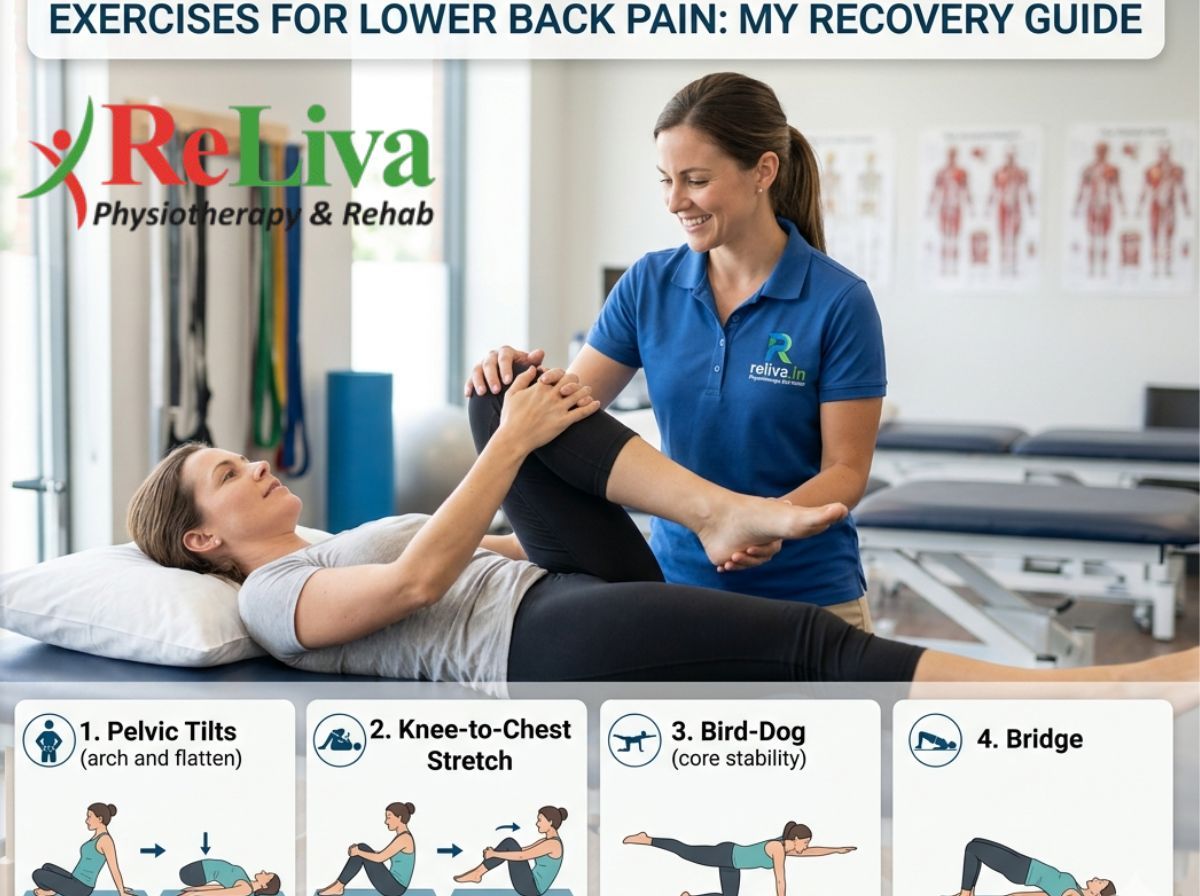
Exercises for Lower Back Pain: My Recovery Guide
These days lower back pain is a massive problem across the world and while you may know what caused the pain- sitting down for too long, poor posture, a sports injury, wear and tear etc- it is still causing your life to be put on hold. So the good news is that through physiotherapy and targeted exercises it is possible to reduce and alleviate back pain, the great news is that physiotherapy uses
exercises, not drugs.
All About Back Pain BEFORE YOU EXERCISE
Before going into how to exercise for a bad back it's useful to understand what causes lower back pain. The lumbar spine - the 5 lowest vertebrae in your spine are the lumbar section - take the weight for pretty much everything you do. Everything from standing, walking and of course lifting and bending etc uses your lower back. In order for you to function the lumbar section relies on the muscles, ligaments and discs around it to work correctly; when they aren't working properly, they strain and result in pain.
Physiotherapy works by restoring the balance between these aspects of the lumbar section of the spine. A physiotherapist will examine the posture, musculature, joint movement patterns and muscle imbalance in the spine and tailor the exercises to your specific condition. However many basic movements are beneficial for general lower back pain and many physiotherapists will introduce them into your programme. Always seek advice from a physiotherapist or doctor before starting any new exercise program, particularly if your back pain is severe or radiating down the leg or accompanied by weakness/numbness.
Best Physiotherapy Exercises for Low Back Pain:
1. PELVIC TILT: This is one of the most fundamental exercises of physiotherapy for back pain, the pelvic tilt. It slowly stretches and mobilizes your lumbar spine and it also helps strengthen the deep stabilising muscles of the lower back.
Lie on your back on the floor with your knees bent and feet flat on the ground.
Tighten your abdominal muscles in order to push your lower back against the floor and hold for about 5 to 10 seconds and then relax. Repeat this between 10 to 15 times. These simple movements also teach correct Neuromuscular Control within the lumbar region.
2. CAT COW STRETCH: The cat cow stretch is taken from the practice of Yoga but is one of the most utilized of physiotherapy exercises for lower back pain. It helps to mobilises each segment of your lumbar spine, stretching out stiff back muscles.
Get onto all fours on the floor so your hands are beneath your shoulders and your knees below your hips. Take a breath in and arch your back while dropping your stomach toward the floor and lifting your head then breathe out and round your spine up towards the ceiling while tucking your chin to your chest. Move between the two positions slowly 10 to 12 times, the cat cow stretch is excellent for improving the stiffness and mobility around the lower back during chronic back pain, as it helps reduce the stiffness that can arise in people with chronic lower back pain, the movement of Cat cow also helps increase passive movement through the lumbar spine.
3. KNEE TO CHEST STRETCH: The knee to chest stretch places a stretch on the lower back erector spine and gluteal muscles, which is ideal for lower back pain due to the prevalence of stiffness in the hip and gluteal muscles.
Lie on your back on the floor with your knees bent. Gently draw one knee towards your chest and hold this position for 20-30 seconds, switch and then repeat with your other leg. This movement also applies passive stretching pressure to your erector spine and gluteal muscles that often become tight with lower back pain and increases the flexibility of the hips as it's useful to increase passive stretching pressure on the lumbar spine nerve roots. For an increased stretch, place your hands on both knees and gently draw them both into the chest.
4. BIRD DOG EXERCISE: The Bird Dog exercise is one of the fundamental physiotherapy exercises to re-engage weak spinal stabilizing muscles. Unlike sit-ups which can cause more strain, it strengthens without excessive spine loading.
Start on all fours on the floor with your knees and hips at 90 degrees and wrists directly below your shoulders. Slowly extend one arm and the opposite leg simultaneously, making sure to keep your core tight and avoid any rotation in your lower back (i.e. Keep your spine neutral). Hold for about 5 seconds then bring them back to the start and do the opposite arm and leg. Repeat this 8-10 times per side, this exercises directly stimulates the deep muscles that keep your spine from over-rotating and causes problems when they are weak.
5. BRIDGE EXERCISE: The glute bridge is a great exercise that works both the gluteal and Hamstring muscles, which are vital for a strong and healthy lower back.
Lie on your back with knees bent and feet flat on the floor with hips about hip width apart. Press down into your heels, lifting your hips up off the floor until your body forms a straight line from your shoulders to your knees. Hold for 3-5 seconds then slowly lower down. Repeat for 12-15 repetitions. Low glute strength is often ignored when dealing with back pain but is often a key contributor to issues within the lumbar region.
6. CHILD'S POSE: Although this is not a strengthening exercise, the child's pose is a passive stretch which helps to relieve pressure and relax your lower back muscles, particularly your erector spinae, in this yoga based exercise.
Kneel on the floor with your knees spread slightly and then lower your torso down in between your thighs. Lay down onto the floor resting on your forehead with your arms stretched out in front of you. Breathe deeply for 30-60 seconds, this encourages gentle de-compression within your spine. Often recommended as a rest position within a physiotherapy routine.
7. SIDE-LYING HIP ABDUCTION: This exercise strengthens your hip abductor muscles; they are particularly useful to work as they are involved in stabilizing the lower back and prevent the body over-compensating to stabilize itself during movements.
Lie down flat on your side with your back completely straight. Keeping your top leg straight and above the bottom leg (your legs should be stacked vertically), lift the top leg approximately 30-40 cm from the floor and hold for 2 seconds, then slowly lower it down. Do 12-15 repetitions each side. Strengthening these helps remove lateral strain on the lower back.
How to build a successful physiotherapy routine:
To improve your lower back pain, a consistent physiotherapy exercise programme is essential, try performing them 4-5 times per week alongside regular walking and attentive posture habits; you should notice significant results in 4-6 weeks.
It's vital to:
Warm up: Never jump into a demanding exercise or stretch. Start your routine with 5 minutes of gentle activity such as walking or stepping on the spot to prime your muscles.
Move only within your comfortable limits: A slight stretch is okay but anything that causes sharp pain should not be performed, speak to your physiotherapist regarding this.
Push yourself (carefully!): As you gain strength, increase repetitions or difficulty of your exercises to ensure you continue to see improvements; ask a physiotherapist how to proceed.
When is the right time to see a physiotherapist?
Even with a successful exercise regime, you must seek professional help if your back pain has not improved after 6 weeks, is progressively getting worse despite your efforts, is accompanied by leg pain or bladder issues and a loss of sensation or strength.
The physiotherapist can properly assess your condition and determine the correct reason why you are suffering from back pain and formulate an effective treatment plan to get you better quickly.
Final thoughts:
There is light at the end of the tunnel for those of you suffering from lower back pain, as 90% of people who suffer from it will see results using the exercises I have listed. All of these exercises are effective and safe regardless of a person's ability to perform exercise at higher intensities or with loads, because the physiotherapy exercises listed are about movement. So look after your spine with these excellent physiotherapy exercises.
Appreciate the creator