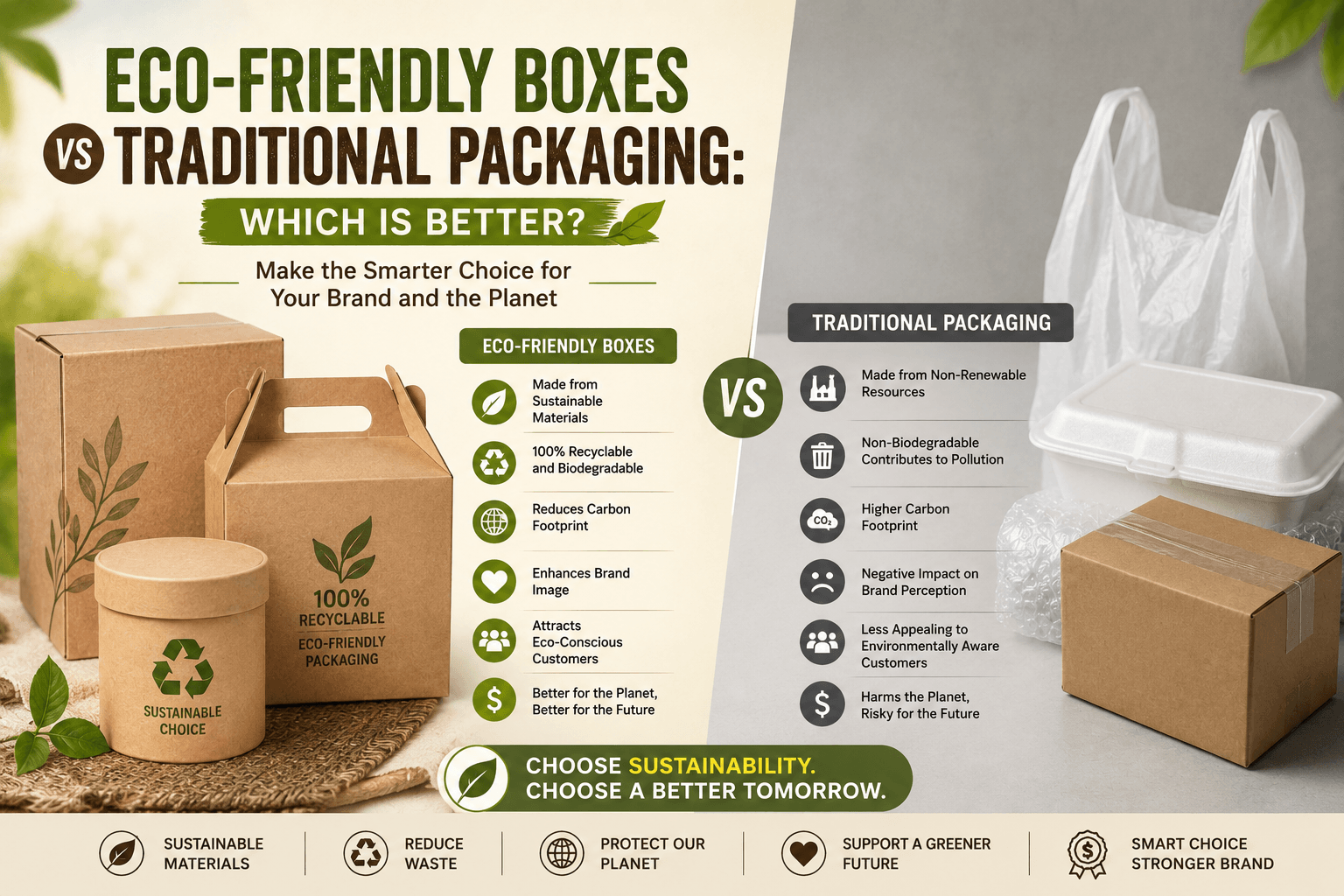
Eco-Friendly Boxes vs Traditional Packaging: Which Is Better?
Packaging has changed a lot in the last few years. Earlier, most businesses only looked for boxes that were cheap, available, and strong enough to carry the product. If the item reached the customer safely, the packaging was considered good enough. But customer expectations are different now. People notice what kind of packaging a brand uses, how much waste it creates, and whether the box feels thoughtful or careless.
This is why many businesses now compare Eco-Friendly Boxes with traditional packaging before choosing what to use for their products. Both options can protect products, but they send very different messages to customers. One feels more modern, responsible, and natural. The other may still be useful in some cases, but it can also feel outdated if it creates too much waste or does not match today’s buying habits.
For food brands, bakeries, candle businesses, soap makers, gift shops, and online sellers, packaging is no longer only a storage item. It is part of the customer experience. The right box can make a product look better, feel safer, and create more trust. So the real question is not only which packaging is cheaper. The better question is which packaging supports the product, the brand, and the customer’s expectations in the best way.
Understanding the Difference Between Eco-Friendly and Traditional Packaging
Eco-friendly packaging is usually made with materials that are easier to recycle, reuse, or break down compared to many old-style packaging options. It often uses kraft paper, paperboard, cardboard, recyclable materials, or other cleaner packaging choices. The goal is to protect the product while reducing unnecessary waste.
Traditional packaging can include plastic-heavy boxes, laminated packaging, mixed materials, foam inserts, glossy coatings, and other options that may be harder to recycle or dispose of properly. Some traditional packaging is strong and useful, but it does not always match what modern customers expect from brands today.
Eco-Friendly Packaging Creates a Better First Impression
Customers often form an opinion before they use the product. The box gives them the first signal. If the package looks clean, natural, and well-planned, the product feels more trustworthy. If the packaging feels bulky, wasteful, or too artificial, it can weaken the customer’s first impression.
Eco-friendly packaging usually gives products a softer and more responsible look. Kraft textures, simple paperboard boxes, clean labels, and minimal printing can make the product feel honest and carefully prepared. This works well for handmade products, bakery items, candles, soaps, organic goods, food products, and gifts.
Traditional packaging can still look attractive, especially when it uses bright colors or glossy finishes. But if it feels excessive, customers may not respond to it as positively as they once did. Many buyers now prefer packaging that looks useful instead of overdone.
Traditional Packaging Can Be Strong but Sometimes Wasteful
Traditional packaging has been used for a long time because it can be strong, cheap, and easy to produce in large quantities. Plastic wraps, foam pieces, laminated cartons, and coated boxes can protect certain products well. For some industries, these materials may still be used because of moisture protection, long shelf life, or shipping needs.
The problem begins when traditional packaging uses more material than necessary. A small product packed in a large box with plastic fillers can feel careless. Too many layers can make opening the product frustrating. Customers may enjoy the product but dislike the waste left behind.
For modern brands, this matters. Packaging that creates too much waste can make the business look behind the times. Even if the product is good, the customer may feel the brand is not paying attention to better choices.
Eco-Friendly Boxes Support a More Responsible Brand Image
Brand image is built through small details. A business may talk about quality, care, and responsibility, but the packaging has to support that message. If a brand uses cleaner packaging, customers can see that effort immediately.
Eco-friendly boxes help brands show responsibility without needing long explanations. A simple natural box can say that the business is trying to make better choices. This is useful for small businesses that want to build trust quickly.
For example, a candle brand using a natural kraft box can feel more connected to handmade quality. A bakery using recyclable-style boxes can look more thoughtful. A soap brand using simple paper packaging can feel cleaner and more natural. These connections help customers understand the brand better.
Traditional Packaging May Not Match Modern Customer Expectations
Customer habits are changing. Many people now prefer brands that avoid unnecessary waste. They may not expect every business to be perfect, but they do notice when packaging feels outdated or excessive.
Traditional packaging can sometimes create that problem. Glossy boxes, plastic windows, foam fillers, and heavy coating may still look polished, but they can also feel less responsible. This does not mean all traditional packaging is bad. It means businesses need to think more carefully about when and why they use it.
If a brand sells natural, handmade, fresh, organic, or premium products, traditional packaging may not always fit the message. The product may promise care, but the packaging may say something different. That mismatch can affect customer trust.
Product Protection Should Always Come First
No matter which packaging style a business chooses, the product must stay protected. A beautiful box is not useful if it bends, leaks, tears, or lets the product arrive damaged. Protection is one of the main reasons packaging exists.
Eco-friendly boxes can protect many products well when designed properly. Strong paperboard, corrugated kraft, inserts, dividers, and custom sizing can keep products safe during storage, display, and delivery. Candles, bakery items, soaps, food products, gifts, and retail goods can all be packed safely with the right structure.
Traditional packaging may be better for some products that need special barriers, long-term sealing, or heavy-duty protection. The best choice depends on the product type. A business should not choose packaging only for appearance. It should choose packaging that protects the item and still matches the brand’s values.
Eco-Friendly Packaging Can Make Products Look More Natural
Some products look better when the packaging feels simple and grounded. A handmade candle, fresh cookie box, natural soap, dry food product, or gift item can feel more appealing in natural-looking packaging. It gives the product warmth and character.
This is one reason kraft and paper-based packaging are popular. They create a clean look without needing too much decoration. A small logo, neat label, or soft color print can be enough to make the box look professional.
Traditional packaging often relies on glossy surfaces, bright colors, and heavier design. That can work for some products, but it may not fit brands that want a calmer or more natural image. For many modern businesses, simple packaging now feels more premium than packaging that tries too hard.
Cost Depends on Design, Quantity, and Material
Many business owners think eco-friendly packaging is always expensive. That is not always true. The cost depends on the box style, material thickness, printing method, size, order quantity, and finishing. A simple kraft box can often be more cost-friendly than a heavily coated or complex traditional package.
Traditional packaging may look cheaper at first, especially when bought in bulk. But businesses should also think about hidden costs. Poor customer impression, extra fillers, damaged products, and packaging that does not support the brand can cost more in the long run.
Ordering custom boxes in the right size can also help control cost. When the box fits the product properly, the business may use less filler, save storage space, and create a cleaner packing process.
Branding Works Differently on Both Packaging Types
Traditional packaging often gives brands a smooth surface for bright printing and detailed graphics. This can be useful for products that need bold shelf presence. Food snacks, retail items, toys, cosmetics, and promotional products sometimes use this style to catch attention quickly.
Custom Kraft Packaging supports a different kind of branding. It works best with clean layouts, simple logos, natural colors, and thoughtful design. Instead of shouting for attention, it builds trust through simplicity.
Neither style is automatically better for branding. The right answer depends on the brand personality. A playful brand may need stronger colors. A natural brand may need kraft tones. A premium handmade brand may need simple printing with a neat structure. Good packaging should match the product, not fight against it.
Customer Experience Is Easier to Improve With Smarter Packaging
Customers remember how a product arrives. If the box opens easily, holds the product safely, and looks clean inside, the experience feels better. If the packaging is difficult to open, messy, or full of unnecessary materials, the experience can feel annoying.
Eco-friendly packaging often supports a smoother customer experience because it is usually cleaner and simpler. Customers can open it, recycle it, reuse it, or dispose of it with less frustration. That small convenience can improve how they feel about the brand.
Traditional packaging may sometimes feel more complicated, especially when it includes too much plastic, tight sealing, or extra layers. If customers struggle to open the package or feel guilty about the waste, the product experience becomes weaker.
Eco-Friendly Packaging Helps Small Businesses Build Trust
Small businesses need every detail to work in their favor. They may not have the same name recognition as bigger brands, so packaging becomes a way to prove professionalism. A clean and responsible box can make a small business look more serious.
Eco-friendly boxes are especially useful for small brands selling handmade, food, bakery, candle, soap, gift, and retail products. They help the product look carefully packed without needing a very expensive design. A natural box with a clear logo can make the customer feel the business cares about quality.
Boxo Packaging helps businesses create packaging that protects products while giving brands a clean, natural, and more trustworthy presentation.
Traditional Packaging Still Has a Place
It would not be fair to say traditional packaging has no value. Some products need extra protection from moisture, air, light, or heavy handling. Certain food items, medical products, frozen goods, and industrial items may require special packaging features that traditional materials can provide.
The issue is not that traditional packaging should disappear completely. The issue is that businesses should use it only when it truly makes sense. If a product can be packed safely with a cleaner and less wasteful option, that may be the better choice for the brand and the customer.
Modern packaging decisions should be practical. The goal is to reduce waste where possible without risking product safety or customer satisfaction.
Which Option Is Better for Your Business?
The better option depends on what the business sells, how the product is delivered, and what customers expect from the brand. If the product is handmade, natural, giftable, food-related, or customer-facing, eco-friendly packaging often gives a stronger impression. It supports a clean brand image and helps customers feel better about their purchase.
If the product needs special barriers, heavy-duty sealing, or long storage protection, traditional packaging may still be useful. But even then, businesses can look for cleaner material choices, better sizing, and reduced waste.
For most modern brands, the best answer is not about choosing the cheapest box. It is about choosing packaging that protects the product, matches the brand, and makes customers feel confident. Eco-friendly boxes often win because they combine useful protection with a more responsible and customer-friendly image.
Appreciate the creator